Cinnamon apple cake bakes up with a soft, tender crumb, warm spice in every bite, and just enough fresh apple to keep each slice moist without turning heavy. The cinnamon cream cheese frosting brings a tangy finish that plays against the brown sugar base, and the whole cake holds together with the kind of sturdy, fork-tender texture that makes it worth slicing thick.
The trick here is balance. Brown sugar adds depth, sour cream keeps the crumb plush, and the apples need to be diced small enough to disappear into the batter instead of sinking in pockets. That combination gives you a cake that tastes like apple season without becoming dense or wet in the middle. The frosting is whipped until fluffy so it spreads cleanly and doesn’t drag at the crumb.
Below, I’ve added the small details that matter most: how to keep the layers even, why finely diced apples work better than larger chunks, and what to do if you want to make this cake ahead of time.
The cake stayed incredibly moist for two days, and the frosting set up fluffy instead of sliding off. I loved how the diced apples stayed spread through every slice instead of sinking to the bottom.
Save this cinnamon apple cake for the days when you want soft spice layers, fluffy cream cheese frosting, and apples in every bite.
The Detail That Keeps This Cake Light Instead of Heavy
The biggest trap with apple cake is overloading the batter. Too much apple, too many big chunks, or a heavy hand with the mixing can turn a tender crumb into a dense, gummy one. Finely diced apples solve most of that problem because they disperse evenly and soften into the cake as it bakes instead of dropping straight to the bottom.
Sour cream matters here too. It adds moisture and a little tang, but it also gives the batter enough body to support the fruit. If you use yogurt instead, plain full-fat Greek yogurt works best. Regular yogurt is thinner and can make the crumb a little less even, though the cake will still bake up well.
What Each Ingredient Is Doing in the Pan
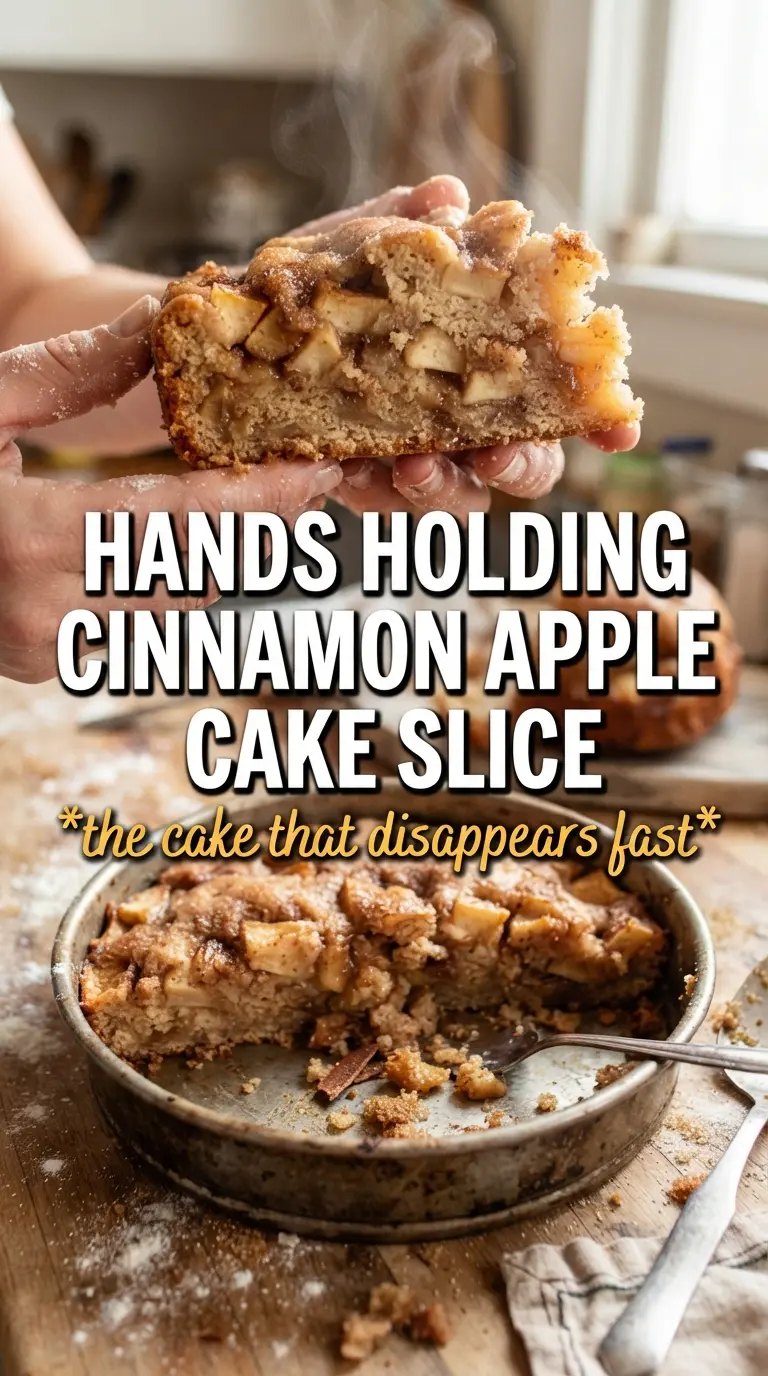
- Brown sugar — This gives the cake a deeper caramel note than white sugar and helps keep the crumb soft. Light brown sugar works fine; dark brown sugar will push the flavor a little richer and molasses-heavy.
- Sour cream — This is one of the main reasons the cake stays moist for more than a day. Full-fat sour cream gives the best texture, and plain Greek yogurt is the closest substitute if that’s what you have.
- Apples — Dice them finely. That’s the difference between a cake with apple throughout and one that collapses around fruit pockets. A firm baking apple like Honeycrisp, Granny Smith, or Braeburn holds its shape best.
- Cream cheese — Use block-style cream cheese for the frosting, not the spreadable tub kind. The tub version has more water and makes frosting loose.
- Cinnamon — It carries the cake and the frosting. Since the spice shows up in both places, use fresh cinnamon if yours has been sitting in the cabinet for years.
Building the Batter and Frosting Without Losing Texture
Start with the butter and sugar
Beat the butter and brown sugar until the mixture looks lighter and a little fluffy, not just combined. That step adds air, which helps the layers rise without feeling tight. Once the eggs go in, mix only until they disappear; overbeating at this stage can make the cake tougher than it needs to be.
Alternate the dry ingredients and sour cream
Add the dry mixture in batches, alternating with the sour cream. This keeps the batter smooth and prevents the flour from clumping at the bottom of the bowl. Stop mixing as soon as the last streak of flour disappears. If you keep going, you’ll develop more gluten and the cake will bake up firmer.
Fold in the apples last
Stir the diced apples in by hand, just until they’re evenly distributed. The batter should look thick and speckled, not loose or soupy. If the apples are wet from rinsing, pat them dry first so they don’t add extra moisture to the pan.
Bake until the centers spring back
Divide the batter evenly between the pans and bake until the tops are set and a toothpick comes out with a few moist crumbs, about 50 to 55 minutes. If the cakes brown too quickly before the centers are done, lay a loose piece of foil over the top for the last 10 to 15 minutes. Cool the layers completely before frosting or the cream cheese frosting will slide.
Whip the frosting until it spreads like clouds
Beat the cream cheese and butter until smooth before adding the powdered sugar. Once the sugar goes in, keep mixing until the frosting turns pale, fluffy, and easy to spread. If it looks soft, chill it for 10 to 15 minutes before assembling the cake. That short rest makes the layers cleaner and the top much easier to swirl.
Three Ways to Make This Cake Fit Your Table
Make it gluten-free
Use a good 1:1 gluten-free baking flour that already contains xanthan gum. The texture will be a little more delicate, but the sour cream and apples help keep it from drying out. Don’t swap in almond flour here; the structure won’t hold the layers well.
Turn it into a sheet cake
Bake the batter in a greased 9×13-inch pan and start checking it a little earlier, since the thinner layer cooks faster. You’ll get a slightly less dramatic presentation, but it’s easier to serve for a crowd and the frosting can go on in a thick, generous layer.
Reduce the sweetness a touch
Cut the frosting sugar by about 1/2 cup if you like a tangier finish. The frosting will still spread well, but it won’t hold the same thick pipeable texture, so keep it as a more rustic swoop over the layers.
Storage and Reheating
- Refrigerator: Store covered for up to 4 days. The frosting firms up in the fridge, but the cake stays moist.
- Freezer: Freeze unfrosted layers tightly wrapped for up to 2 months, or freeze frosted slices on a tray before wrapping. The texture holds up well if you thaw it slowly.
- Reheating: Let refrigerated slices sit at room temperature for 20 to 30 minutes before serving. If you warm them, do it briefly and gently; too much heat softens the frosting and makes the crumb greasy.
Answers to the Questions Worth Asking
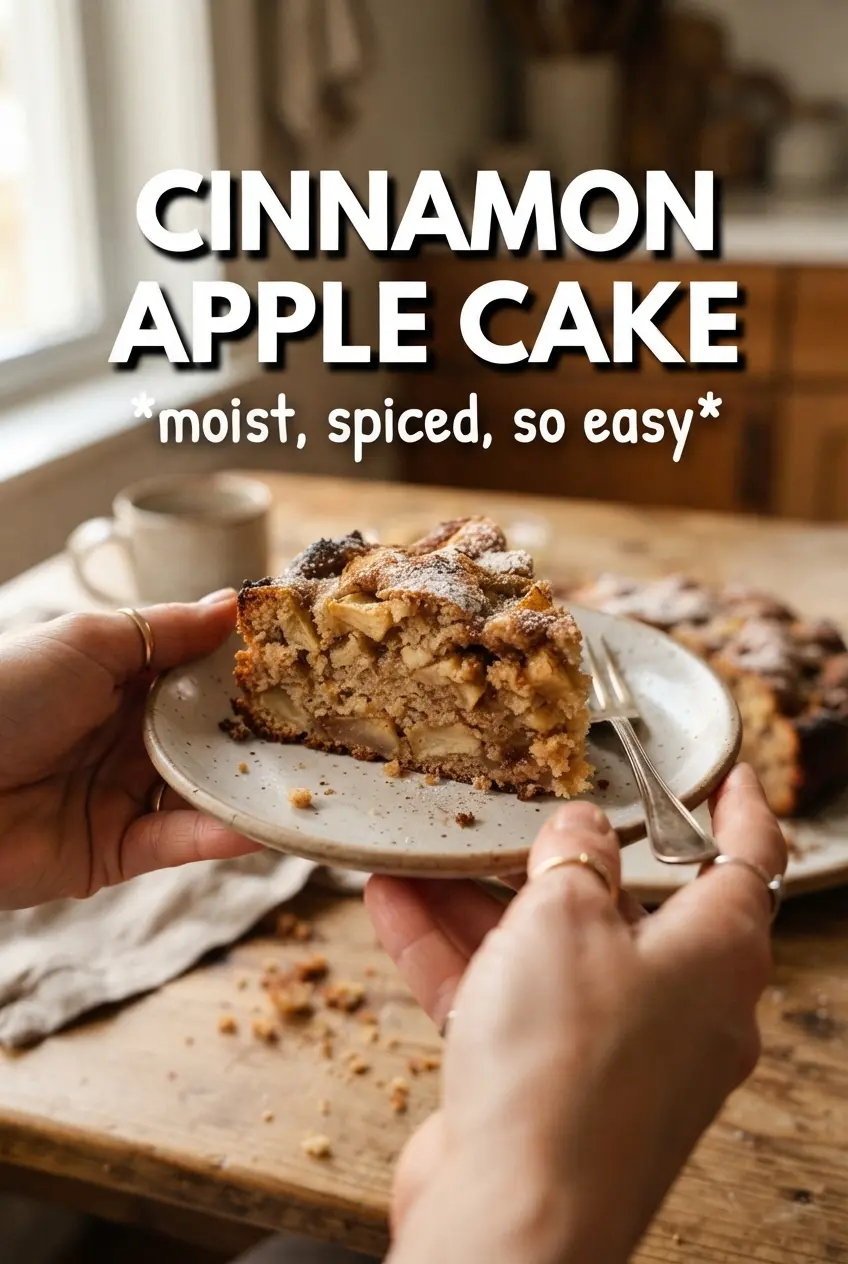
Cinnamon Apple Cake
Ingredients
Equipment
Method
- Preheat oven to 350F, then grease two 9-inch round pans with a light coating so the layers release cleanly (visual cue: pan surfaces look shiny, not dusty).
- Beat butter and brown sugar until smooth, then add eggs one at a time and beat in the vanilla (visual cue: mixture looks paler and thicker).
- Alternate adding dry ingredients and sour cream, mixing just until combined after each addition (visual cue: batter becomes uniform with no dry streaks).
- Fold in finely diced apples until evenly distributed (visual cue: specks of apple are suspended throughout the batter).
- Divide batter evenly between the two pans, then bake at 350F for 50-55 minutes (visual cue: tops spring back and a toothpick comes out clean).
- Cool cake layers completely before frosting (visual cue: layers are fully room-temperature with no warmth at the centers).
- Beat frosting ingredients until very fluffy, using a longer beat so it lightens in texture (visual cue: frosting holds soft peaks).
- Frost between the layers and then spread frosting over the top and sides (visual cue: smooth, even coverage with a lightly swirled top).