Glossy chicken stir fry is one of those dinners that disappears fast when the sauce clings to every strip of chicken and every crisp vegetable. The best versions don’t drown the pan in sauce. They give you that takeout-style sheen, a little caramelized edge on the chicken, and vegetables that still taste like themselves instead of going soft and gray.
This version gets there by tossing the chicken with cornstarch before it hits the wok. That thin coating helps the chicken brown and gives the sauce something to grab onto later. The sauce itself is balanced on purpose: soy sauce for salt, oyster sauce for depth, hoisin for a little sweetness and body, and just enough brown sugar and sesame oil to round it out without making it sticky-sweet.
Below, I’ll show you the heat cues that matter in a stir fry, why the vegetables go in before the garlic and ginger, and the one swap I reach for when I need to make this without oyster sauce.
The chicken stayed tender and the sauce thickened right in the pan instead of turning watery. I added the vegetables in batches like you suggested, and everything kept that crisp edge even after tossing with the sauce.
Save this Chinese chicken stir fry for the nights when you want glossy takeout-style sauce, crisp vegetables, and dinner on the table in 30 minutes.
The Cornstarch Coating That Gives the Chicken Its Takeout Texture
Most stir fries go wrong in one of two places: the chicken steams instead of browns, or the sauce turns thin and slips right off the pan. The cornstarch coating fixes both. It helps the chicken sear faster and gives the sauce enough body to cling without turning gluey.
The other piece that matters is heat. You want the wok or skillet hot enough that the oil shimmers and the chicken sizzles on contact. If the pan isn’t hot, the chicken will leak moisture before it browns, and once that happens you’re no longer stir-frying — you’re simmering.
- Chicken breasts — Thin slices cook fast and stay tender. Cut them against the grain so they don’t turn stringy.
- Cornstarch — This is what gives the chicken that light, velvety coating and helps the sauce thicken later. Flour won’t behave the same way here.
- Oyster sauce — It adds the deep, savory note that makes the sauce taste like it came from a good Chinese takeout spot. If you skip it, the sauce loses some of its backbone.
- Chicken broth — Use low-sodium if your soy sauce runs salty. Water works in a pinch, but the sauce tastes flatter.
What Each Ingredient Is Actually Doing in the Pan
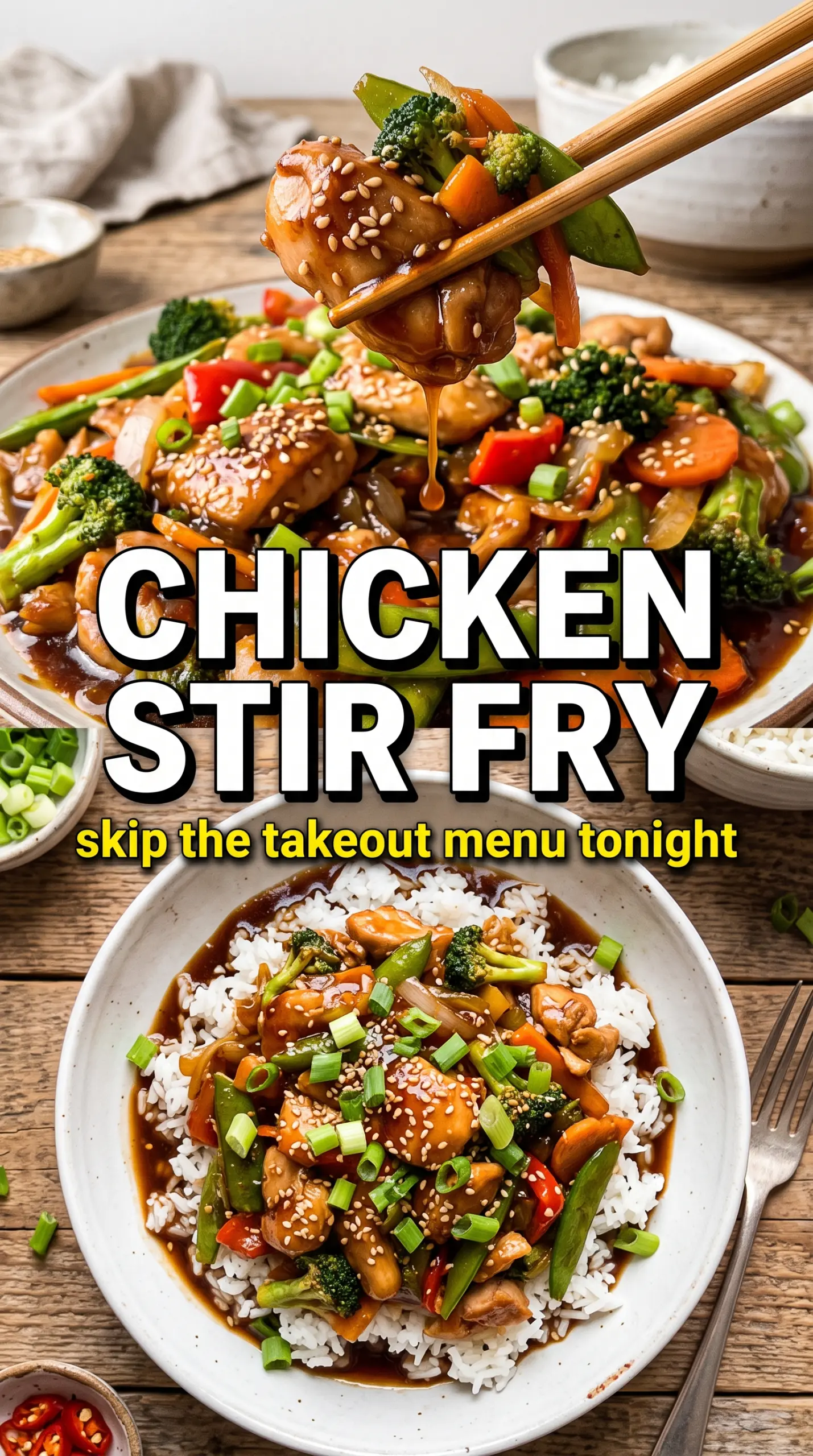
- Bell peppers, broccoli, and carrot — These bring color, crunch, and enough sweetness to balance the sauce. Cut them into similar sizes so they cook evenly, and don’t let them sit too long in the pan or they’ll lose that crisp edge.
- Garlic and ginger — They go in after the vegetables have started to soften because they burn fast over high heat. Thirty seconds is plenty; once you smell them bloom, move on.
- Soy sauce, hoisin, and brown sugar — This is the sweet-salty base. Soy sauce seasons, hoisin gives body, and brown sugar helps the sauce gloss up as it thickens.
- Sesame oil — A little goes a long way. It should taste nutty in the background, not like the dish was cooked in it.
- Chicken broth plus cornstarch — The broth loosens the sauce enough to toss cleanly, while the cornstarch turns it from thin and shiny to thick enough to coat the chicken in a minute or two.
Getting the Stir Fry to Coat Instead of Steam
Whisk the sauce before the wok goes on the heat
Mix the sauce ingredients in a bowl first so the cornstarch dissolves before it hits the pan. If the cornstarch goes in dry or clumps at the edge of the skillet, you’ll get little floury pockets instead of a smooth sauce. Keep the bowl nearby and give it one last stir before pouring, since cornstarch settles fast.
Brown the chicken in a single hot layer
Add the chicken to the smoking-hot oil and leave it alone long enough to get some color. If you crowd the pan, the temperature drops and the chicken releases liquid, which is why many stir fries turn pale and soft. Cook it in batches if your skillet is small; that extra minute is worth it for the browning.
Cook the vegetables until bright, not limp
Stir-fry the peppers, broccoli, and carrot just until the broccoli turns vivid green and the carrot loses its raw edge. You want some crunch left because the sauce will soften the vegetables slightly when it goes in. Garlic and ginger only need a short stay in the pan — if they start turning brown, the heat is too high or they went in too early.
Finish with the sauce and return the chicken at the end
Once the sauce hits the hot pan, it should thicken within a minute or two and look glossy, not cloudy. Add the chicken back only after that happens so it stays juicy and picks up the sauce instead of overcooking while the sauce reduces. Toss everything just until coated, then pull it off the heat while the vegetables still have a little snap.
Three Smart Ways to Adapt This Stir Fry
Make it gluten-free without losing the sauce body
Use tamari or a certified gluten-free soy sauce in place of regular soy sauce, and check that your oyster sauce and hoisin are labeled gluten-free as well. The flavor stays close, and the cornstarch still gives you the same glossy finish.
Swap in chicken thighs for a richer result
Boneless thighs stay a little juicier and handle high heat well, especially if you like a deeper chicken flavor. Slice them a touch thinner than breasts so they finish in the same amount of time.
Turn it into a vegetarian stir fry
Replace the chicken with extra-firm tofu or sliced mushrooms. Tofu needs to be pressed and well dried before it hits the pan; mushrooms should be cooked until they give off their moisture and start to brown so the stir fry doesn’t taste watery.
Use what vegetables you already have
Snap peas, baby corn, sliced onions, or cabbage all work here. Keep the total amount close to the original so the pan doesn’t get crowded, and cut denser vegetables a little smaller so they finish at the same time as the chicken.
Storage and Reheating
- Refrigerator: Store leftovers in an airtight container for up to 4 days. The vegetables soften a bit, but the flavor holds up well.
- Freezer: It freezes, but the vegetables lose their crispness. If you plan to freeze it, undercook the broccoli slightly so it doesn’t go mushy after thawing.
- Reheating: Reheat in a skillet over medium heat with a small splash of water or broth. The microwave works, but it softens the vegetables fastest and can make the chicken feel a little dry.
Answers to the Questions Worth Asking
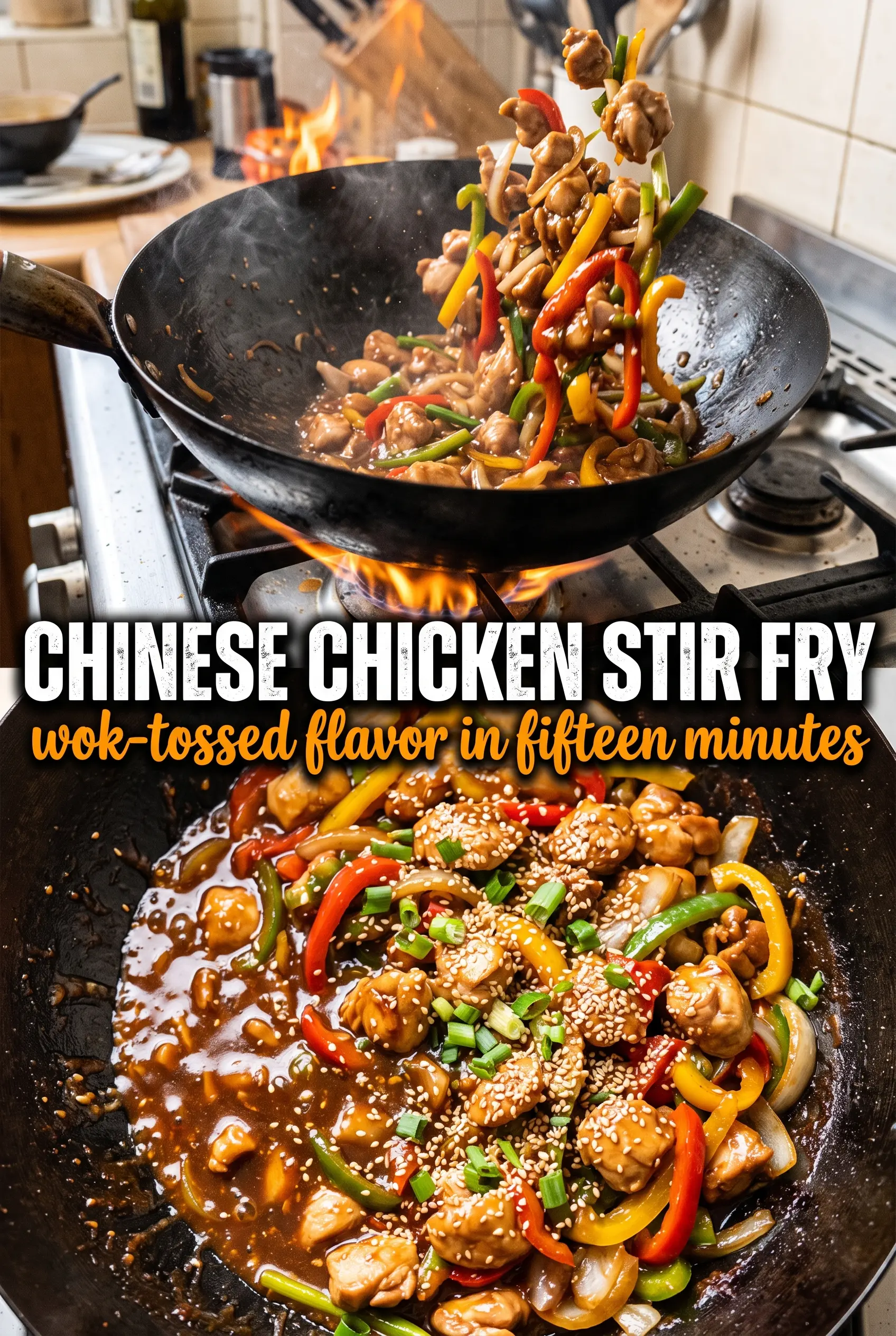
Chinese Chicken Stir Fry
Ingredients
Equipment
Method
- Toss the thinly sliced boneless skinless chicken breasts with cornstarch, salt, and white pepper until evenly coated.
- Whisk together the soy sauce, oyster sauce, hoisin sauce, brown sugar, sesame oil, cornstarch, and chicken broth until smooth.
- Heat vegetable oil in a wok or large skillet over high heat until smoking, then add the chicken strips in an even layer.
- Cook for 4-5 minutes, stirring occasionally, until golden and cooked through, then remove to a plate.
- Stir-fry the red bell pepper, green bell pepper, broccoli florets, and carrot for 3-4 minutes until bright and just tender-crisp.
- Add the minced garlic and grated fresh ginger and stir-fry for 30 seconds until fragrant.
- Pour in the stir-fry sauce and stir for 1-2 minutes until thickened and glossy.
- Return the cooked chicken and toss to coat the chicken and vegetables in the sauce.
- Serve the Chinese chicken stir fry over cooked white rice and top with sesame seeds and green onions.