
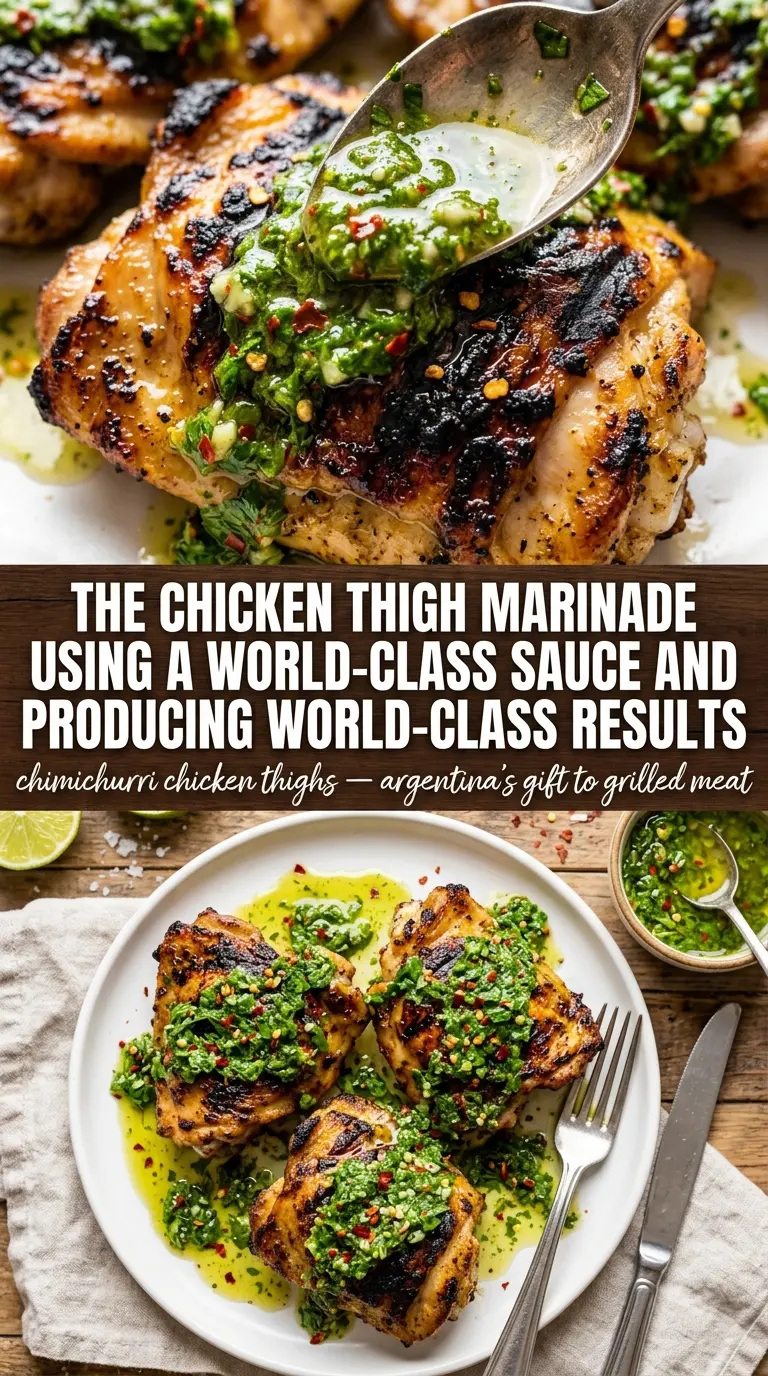
Charred chicken thighs and a bright, herb-loaded chimichurri are one of those combinations that never get old. The chicken stays juicy underneath a crisp, seasoned exterior, and the sauce brings the kind of sharp, garlicky lift that keeps every bite interesting. It’s the sort of dinner that looks casual on the plate but tastes like you paid attention.
What makes this version work is how the chimichurri is used twice. A portion goes on the chicken before it hits the grill, which seasons the meat from the outside and helps the herbs cling to the surface. The rest stays fresh for serving, so you get both the deeper, cooked flavor and the bright raw sauce at the end. That contrast is what keeps chimichurri chicken thighs from tasting flat.
Below, I’ve included the little details that matter: how long to marinate without muddying the herbs, what to look for on the grill, and the best way to swap in boneless thighs if that’s what you’ve got.
The chimichurri stayed bright and the chicken picked up great grill flavor without drying out. I marinated it for about an hour and the thighs were juicy with crisp edges.
Save these chimichurri chicken thighs for a grilled dinner with crispy edges and a bright parsley-oregano sauce.
The Trick to Keeping Chimichurri Bright After It Hits the Grill
Chimichurri can go muddy fast if the whole batch gets cooked hard from the start. The herbs and garlic are freshest when some of the sauce is reserved for serving, because heat softens the parsley, dulls the oregano, and turns that sharp vinegar edge into something flatter. Using only half as a marinade gives the chicken enough time to pick up flavor without sacrificing the finish.
Chicken thighs are the right cut here because they handle direct heat without drying out the way breasts can. Bone-in thighs take a little longer and give you a little more margin for error; boneless thighs cook faster and are easier for weeknights, but they’ll need closer attention so the sugars in the marinade don’t scorch before the center is done.
- Parsley — This is the backbone of the sauce, and flat-leaf parsley gives the best texture and color. Packed leaves matter here; loose handfuls leave the chimichurri thin and watery.
- Fresh oregano — Dried oregano won’t give you the same bright, almost grassy bite. If you can’t find fresh oregano, use a much smaller amount of dried, about one-third as much, because it can take over fast.
- Red wine vinegar — This sharpens the herbs and keeps the sauce from tasting oily. Another vinegar will work in a pinch, but red wine vinegar gives the most classic edge for chimichurri.
- Olive oil — Use a good everyday olive oil, not necessarily your fanciest bottle. It carries the herbs and softens the garlic, but the vinegar needs to stay strong enough to keep the sauce lively.
- Chicken thighs — Bone-in thighs stay juicier over the grill, while boneless thighs are faster and easier to turn. If you use boneless, shorten the cooking time and watch for flare-ups, since they can char before they’re fully cooked.
What Each Ingredient Is Actually Doing in Chimichurri Chicken Thighs
- Protein (quality, proper thickness) — Good quality protein tastes better. Even thickness ensures even cooking.
- Seasoning (bold, distributed throughout) — Don’t be shy with salt and pepper. Quality seasoning elevates everything.
- Oil or fat (protective and flavorful) — The fat helps develop crust and carries flavors. Use generously.
- Heat management (appropriate temperature for the protein) — Too high and the outside burns before the inside cooks. Too low and it steams.
- Technique (sear, then finish based on thickness) — Proper technique creates flavor. Sear for crust, then cook through gently.
- Aromatics and seasonings (garlic, herbs, spices) — These add complexity and depth. Distribute them throughout the cooking process.
- Resting time (let it rest before serving) — Resting allows juices to reabsorb. This keeps the protein moist and tender.
- Optional: finishing sauce or glaze — A light sauce adds richness without overwhelming. Apply at the very end.
Grilling the Thighs Without Burning the Herbs
Build the Chimichurri First
Blend the parsley, oregano, garlic, vinegar, olive oil, red pepper flakes, and salt until the sauce is smooth but still a little textured. You want a spoonable sauce, not a puree, so stop before it turns paste-like. If it gets too thick, add a small splash of olive oil or vinegar to loosen it. Taste it before it touches the chicken; it should be punchy, salty, and sharp enough to stand up to heat.
Season and Coat the Chicken
Pat the thighs dry, then season them with salt and pepper before brushing on half the chimichurri. That dry surface matters, because wet skin or damp meat steams instead of searing. Keep the reserved sauce clean for serving; once raw chicken has touched it, don’t bring it back to the table. Let the chicken sit while the grill heats so the marinade has time to cling and start working.
Cook Over Medium-High Heat
Preheat the grill fully before the chicken goes on. You want a hot grate that gives the thighs immediate color, then enough steady heat to cook them through without turning the outside bitter. Grill about 6 to 7 minutes per side, depending on thickness, and look for deep grill marks, crisp edges, and juices that run mostly clear. If the outside is darkening too quickly, move the thighs to a cooler part of the grill and finish them there.
Rest and Finish With Fresh Sauce
Let the chicken rest for 5 minutes before serving so the juices settle back into the meat. That short rest keeps the first cut from spilling all over the board. Spoon the remaining chimichurri over the top right before serving so the herbs stay vibrant and the vinegar stays bright. The contrast between the hot chicken and the cold sauce is what makes the dish sing.
How to Adapt This for Different Grills and Different Dinner Plans
Boneless Thighs for Faster Cooking
Boneless thighs shave off several minutes and are easier to portion, but they brown faster because there’s less insulation from the bone. Keep the grill at medium-high, watch them closely, and pull them as soon as they reach 165°F. The tradeoff is a slightly less juicy interior, but you gain speed and easy serving.
Dairy-Free and Naturally Gluten-Free
This recipe already fits both of those needs as written, which is part of why it’s such a good weeknight main. Just keep an eye on any store-bought vinegar or seasoning blends if you’re using them, since the chicken and chimichurri themselves don’t need any dairy or gluten to work.
No Grill, Use a Cast Iron Pan
A heavy skillet gives you good browning and keeps the herb coating from falling through grates. Heat the pan until it’s hot, then cook the thighs in batches so they sear instead of steam. You won’t get the same smokiness, but the chicken still gets those crisp edges and the chimichurri still tastes fresh.
Storage and Reheating
- Refrigerator: Store cooked chicken in an airtight container for up to 4 days. Keep any extra chimichurri separate so the herbs stay bright.
- Freezer: The chicken freezes well for up to 2 months, but the chimichurri is best made fresh because the herbs lose their punch after thawing.
- Reheating: Warm the chicken gently in a covered skillet over low heat or in a 300°F oven until heated through. High heat dries out thighs fast and can make the sauce taste harsh, so reheat just until the center is warm.