Silky buttered noodles and golden sliced chicken make the kind of dinner that disappears fast because every bite hits the same comforting note: tender chicken, glossy noodles, garlic, herbs, and Parmesan all in one bowl. The noodles carry the sauce instead of sitting in it, which keeps the dish rich without turning heavy or greasy.
The trick here is keeping the chicken simple and getting the pan hot enough for real browning before the butter ever goes in. That sear gives the noodles a deeper savory base once you melt the butter and scrape up the good bits left behind. A little pasta water loosens the sauce just enough to cling to the egg noodles instead of pooling at the bottom of the skillet.
Below, you’ll find the exact cues I watch for so the chicken stays juicy and the noodles stay glossy. There’s also a few smart swaps for when you want to stretch the dish, lighten it up, or work with what’s already in the kitchen.
The noodles soaked up the garlic butter without getting greasy, and the chicken stayed juicy after slicing. I added a splash of pasta water at the end and it brought everything together perfectly.
Save these chicken with buttered noodles for the nights when you want a fast skillet dinner with glossy garlic butter and no extra fuss.
The Reason the Noodles Stay Glossy Instead of Heavy
Butter noodles can go wrong fast when the sauce turns greasy or the pasta clumps into a tight, slippery mass. The fix is in the timing: the butter goes into the skillet after the chicken is cooked, and the noodles go in while the pan is still warm enough to help the sauce coat evenly. That way the butter emulsifies with a little pasta water instead of separating and sitting on top.
Egg noodles are the right shape here because they catch the garlic butter in all those little folds. If you use a denser pasta, the dish gets less silky and needs more pasta water to loosen it. Parmesan also matters more than people think; it thickens the coating slightly and adds the salty finish that keeps the dish from tasting flat.
What Each Ingredient Is Actually Doing in the Pan
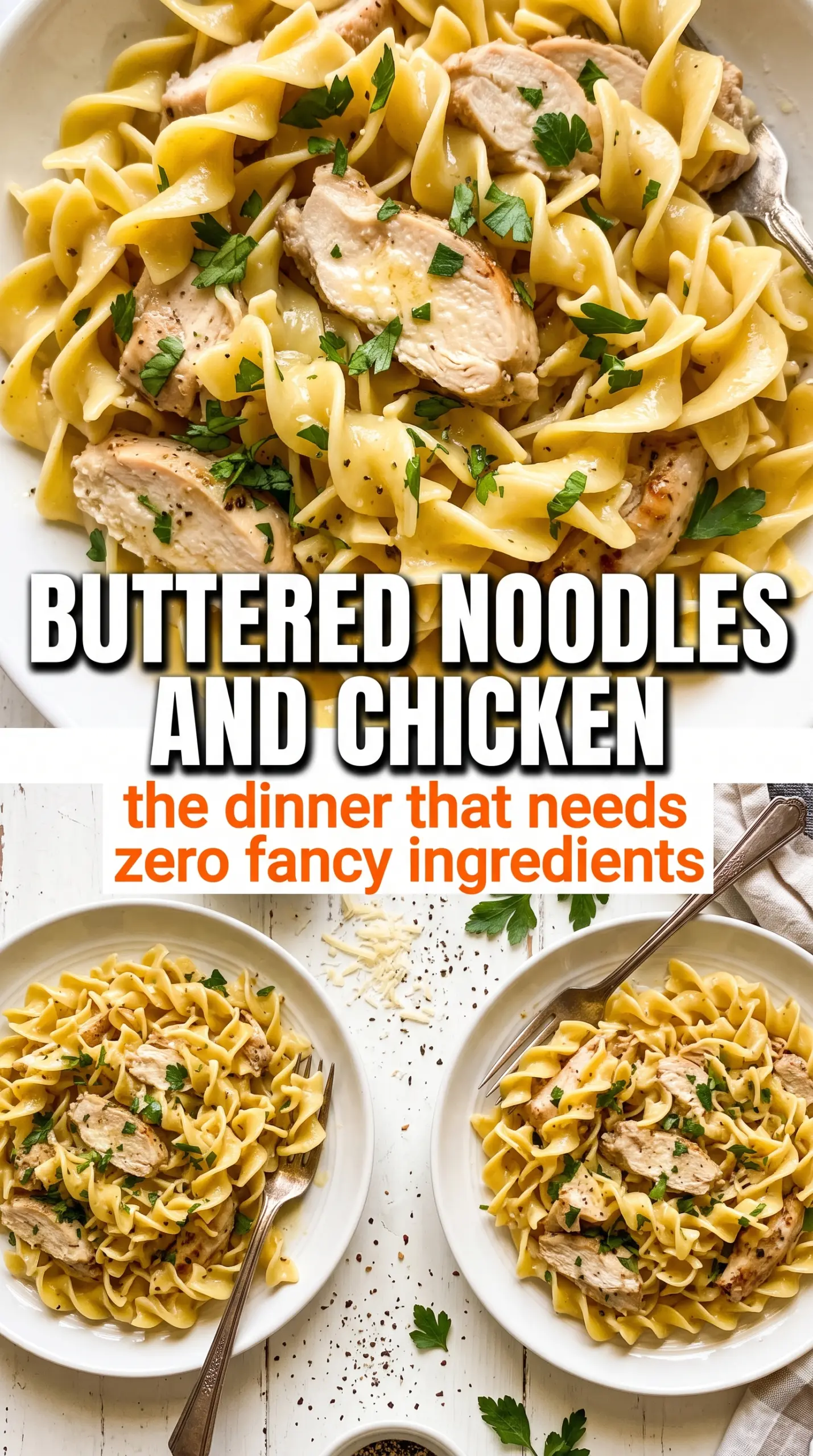
- Chicken breasts — Thin, even slices cook fast and stay tender. If the thick end is much larger than the thin end, pound it lightly so the whole piece finishes at the same time. Chicken thighs work too if you want a richer result, but they’ll need an extra minute or two in the skillet.
- Egg noodles — These give you the soft, buttery texture this dish is known for. Don’t swap in dry spaghetti unless that’s what you have; it won’t hold the sauce the same way. Reserve the pasta water before draining because that starchy liquid is what helps the butter coat instead of slide off.
- Butter and garlic — This is the whole sauce, so the garlic needs gentle heat. If the garlic browns hard, the noodles pick up a bitter edge. Cook it just until fragrant, then toss quickly so the butter doesn’t sit long enough to split.
- Parmesan — Freshly grated Parmesan melts into the noodles better than the shelf-stable kind. The pre-grated stuff can work in a pinch, but it won’t disappear as smoothly into the sauce. Add it at the end so it clings to the hot noodles instead of clumping.
Building the Skillet in the Right Order
Season and Sear the Chicken
Season the chicken well on both sides with salt, pepper, garlic powder, and Italian seasoning, then cook it in olive oil over medium-high heat until you get a deep golden crust. The pan should sizzle as soon as the chicken hits it. If the heat is too low, the chicken steams and you lose the browning that gives the dish its backbone. Pull the chicken when it reaches 165°F, then let it rest before slicing so the juices stay in the meat instead of running onto the cutting board.
Use the Same Pan for the Sauce
Don’t wash out the skillet. Those browned bits are what make the butter taste like more than melted fat. Lower the heat to medium, melt the butter, and stir in the garlic and red pepper flakes just until fragrant. If the garlic starts to brown fast, the pan is too hot; take it off the burner for a few seconds and keep stirring.
Toss the Noodles Until They Shine
Add the cooked egg noodles straight into the garlic butter and toss until every strand looks coated and glossy. Add a splash of pasta water only if the noodles seem dry or sticky; you want a light sheen, not a puddle in the bottom of the pan. Stir in the parsley, taste for salt and pepper, then mound the noodles onto plates and top with the sliced chicken. Finish with Parmesan while the noodles are still hot so it melts a little on contact.
How to Tweak Chicken with Buttered Noodles Without Losing the Point
Chicken Thigh Version
Boneless skinless thighs give you a juicier, richer bite and forgive a little extra cook time. They also bring more flavor to the pan, which works well if you like a deeper, more savory finish. Keep the heat moderate so the fat doesn’t burn before the centers cook through.
Dairy-Free Swaps
Use a good plant-based butter and skip the Parmesan or replace it with a dairy-free hard-style topper. The sauce will still coat the noodles, but it won’t have the same savory finish, so lean harder on salt and a little extra garlic. Choose a butter substitute that actually melts smoothly; some brands separate and leave the noodles oily.
Gluten-Free Option
Use your favorite gluten-free egg noodle or a short pasta with a similar shape. Cook it just to al dente, since gluten-free pasta gets soft faster once it hits the butter. Save a little extra pasta water because it can thicken the sauce more quickly as it sits.
Storage and Reheating
- Refrigerator: Store leftovers in an airtight container for up to 3 days. The noodles will absorb some of the butter as they sit.
- Freezer: I don’t recommend freezing this one. The noodles turn soft and the butter sauce loses its fresh texture after thawing.
- Reheating: Warm it gently in a skillet over low heat with a splash of water or chicken broth. The biggest mistake is blasting it in the microwave until the chicken turns dry and the noodles tighten up.
Questions I Get Asked About This Recipe
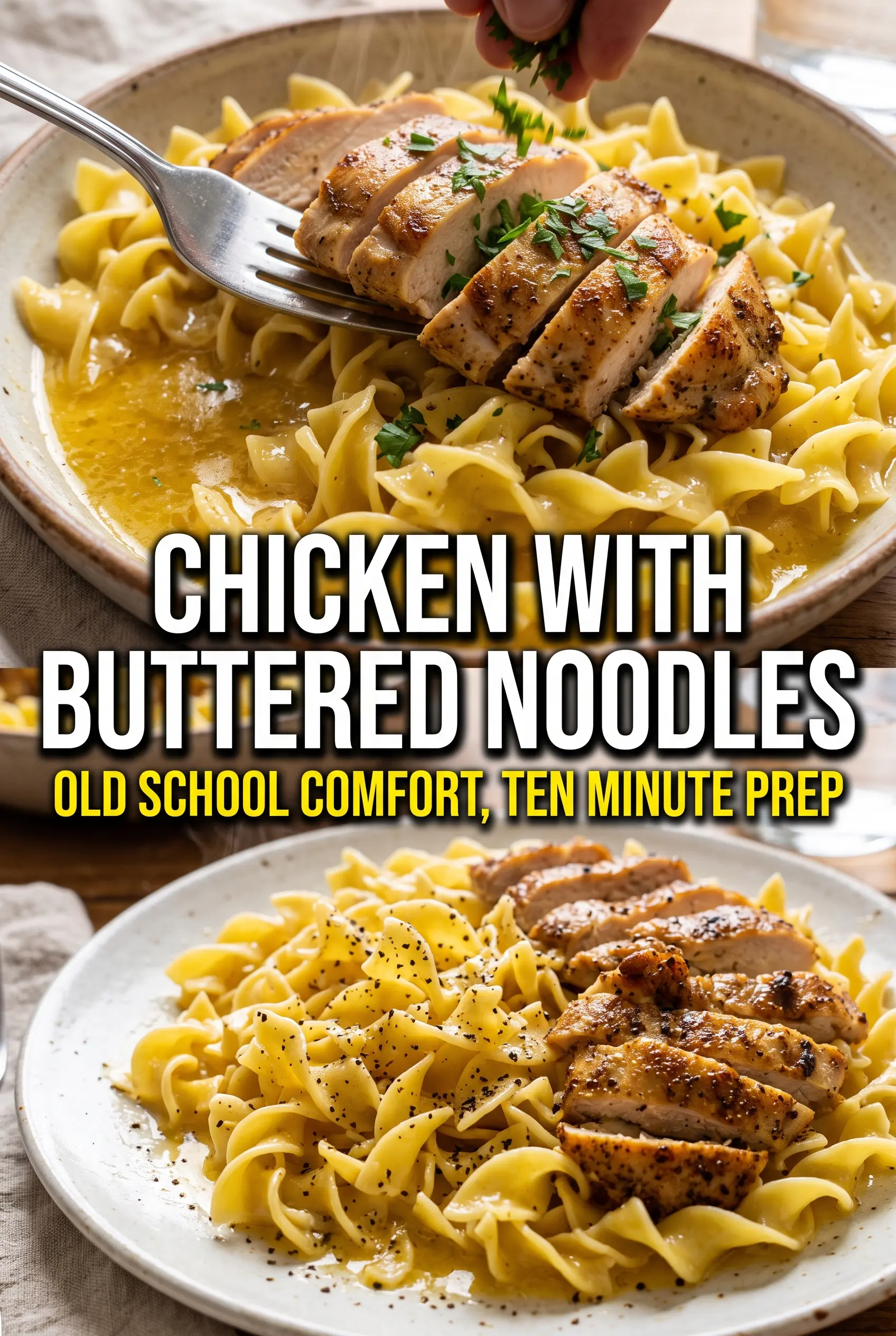
Chicken with Buttered Noodles
Ingredients
Equipment
Method
- Season the chicken breasts with salt, pepper, garlic powder, and Italian seasoning. Heat olive oil in a skillet over medium-high heat and sear until golden, 5-6 minutes per side, until the internal temperature reaches 165°F; rest briefly, then slice.
- Melt the butter in the same skillet over medium heat. Add minced garlic and red pepper flakes and cook for 1-2 minutes until fragrant, watching for a lightly golden garlic color.
- Add the cooked egg noodles to the garlic butter. Toss to coat, adding reserved pasta water a splash at a time as needed for a silky, glistening sauce that clings to the noodles.
- Season with salt and pepper, then stir in the chopped fresh parsley. Continue tossing just until the parsley is evenly distributed and the sauce looks glossy.
- Divide the noodles among plates and top with the sliced chicken. Scatter Parmesan generously over the top and serve immediately while the butter is still coating the noodles and the chicken stays warm.