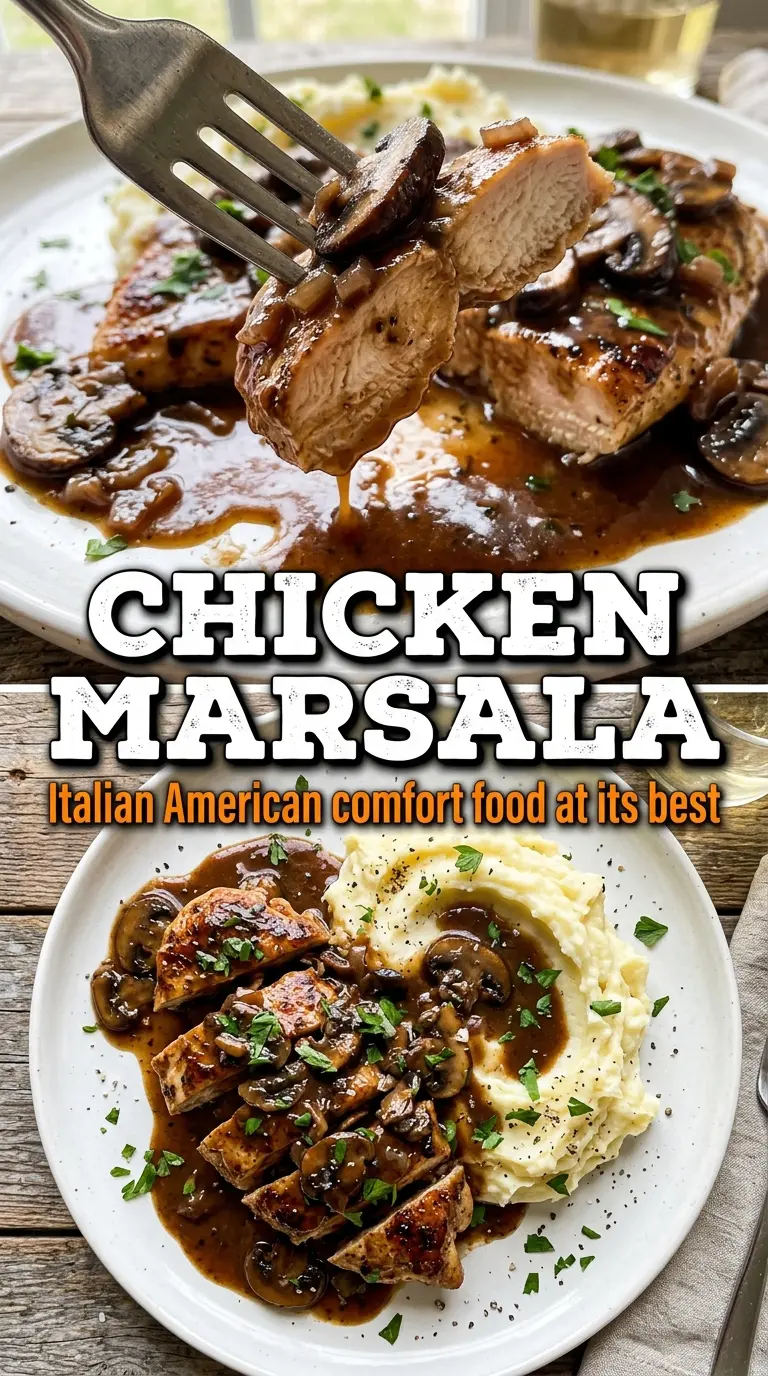
Golden chicken cutlets under a dark Marsala mushroom sauce earn their place on the dinner table fast. The chicken stays crisp at the edges, the sauce turns silky without getting heavy, and the whole dish tastes like it came from a restaurant kitchen that knows exactly when to stop stirring. It’s the kind of meal that looks polished but still lands comfortably on a weeknight plate.
What makes this version work is the sequence. The chicken gets a light flour coating, which helps it brown and gives the sauce just enough body later on. Then the mushrooms cook in the same pan until they pick up color instead of steaming, and the Marsala bubbles long enough to lose its raw edge before the broth and cream go in. That order builds depth without making the sauce muddy or thin.
Below, I’ve included the small details that matter most here: how thin the cutlets should be, when the sauce is ready for butter, and what to do if you want to serve it with pasta, mashed potatoes, or something lighter.
The sauce thickened beautifully and the Marsala flavor came through without tasting too sweet. My chicken stayed golden even after I put it back in the pan, and the mushrooms picked up every bit of flavor from the skillet.
Save this Chicken Marsala for the nights when you want a glossy mushroom sauce and pan-fried cutlets without a lot of cleanup.
The Secret Is Browning the Cutlets Before the Sauce Starts
Chicken Marsala falls flat when the pan gets crowded or the cutlets go in cold and wet. Thin chicken needs space and heat. If the skillet is overloaded, the flour coating turns pasty instead of crisp, and the mushrooms later inherit all that moisture instead of the fond left behind by the chicken.
The goal is a deep golden surface on each cutlet, not a pale sear. Once the chicken comes out, leave the browned bits in the pan and build everything else right there. That’s where the dish gets its restaurant-style depth. If the pan looks dry after the chicken is removed, that’s fine. The butter and mushrooms will loosen the flavor stuck to the bottom.
- Chicken cutlets — Halving the breasts into thin pieces helps them cook fast and evenly. If one side is much thicker, give it a quick pound with a rolling pin or skillet so the whole cutlet finishes at the same time.
- Marsala wine — Use dry Marsala here. Sweet Marsala can push the sauce toward dessert territory. The wine should simmer long enough to lose the sharp alcohol edge and concentrate into something deeper and more savory.
- Cremini mushrooms — These hold their shape and bring more flavor than standard white mushrooms. Slice them thick enough that they brown instead of collapsing.
- Butter — The cold butter swirled in at the end gives the sauce that glossy finish. Don’t boil it once the butter goes in, or the sauce can look greasy instead of smooth.
What Each Ingredient Is Actually Doing in This Recipe
- Primary ingredient (the star) — Quality matters most. Choose the best you can find.
- Cooking medium (oil, butter, or broth) — This carries flavors and prevents dryness.
- Seasonings (salt, pepper, spices, herbs) — Layer flavors so nothing overpowers. Build depth gradually.
- Aromatics (garlic, onion, herbs) — Cook with fat to bloom flavors. Become the foundation.
- Supporting ingredients — Complement the main ingredient without overpowering it.
- Sauce or liquid (if applicable) — Brings flavors together. Balance richness with acid.
- Acid (lemon, vinegar, wine, or other) — Brightens and prevents flat-tasting results.
- Final finish (garnish, glaze, or sauce) — Prevents one-dimensional taste and adds visual appeal.
What Each Pan Move Does to the Final Sauce
Coating and Browning the Chicken
Season the cutlets, dredge them in flour, and shake off the excess so the coating stays thin. That light dusting helps the chicken brown and later gives the sauce a little body. Cook the cutlets in olive oil and part of the butter over medium-high heat until each side is golden and the chicken releases easily from the pan. If it sticks hard, it needs another minute; forcing it too early tears the crust.
Cooking the Mushrooms Until They Color
Add the mushrooms and shallots to the same pan and leave them alone long enough to take on color. They’ll first release liquid, then that liquid will cook off, and only after that will you get browning. That shift matters. If you rush this stage, the sauce tastes flat because the mushrooms never develop their deeper, almost meaty edge.
Reducing the Marsala and Finishing the Sauce
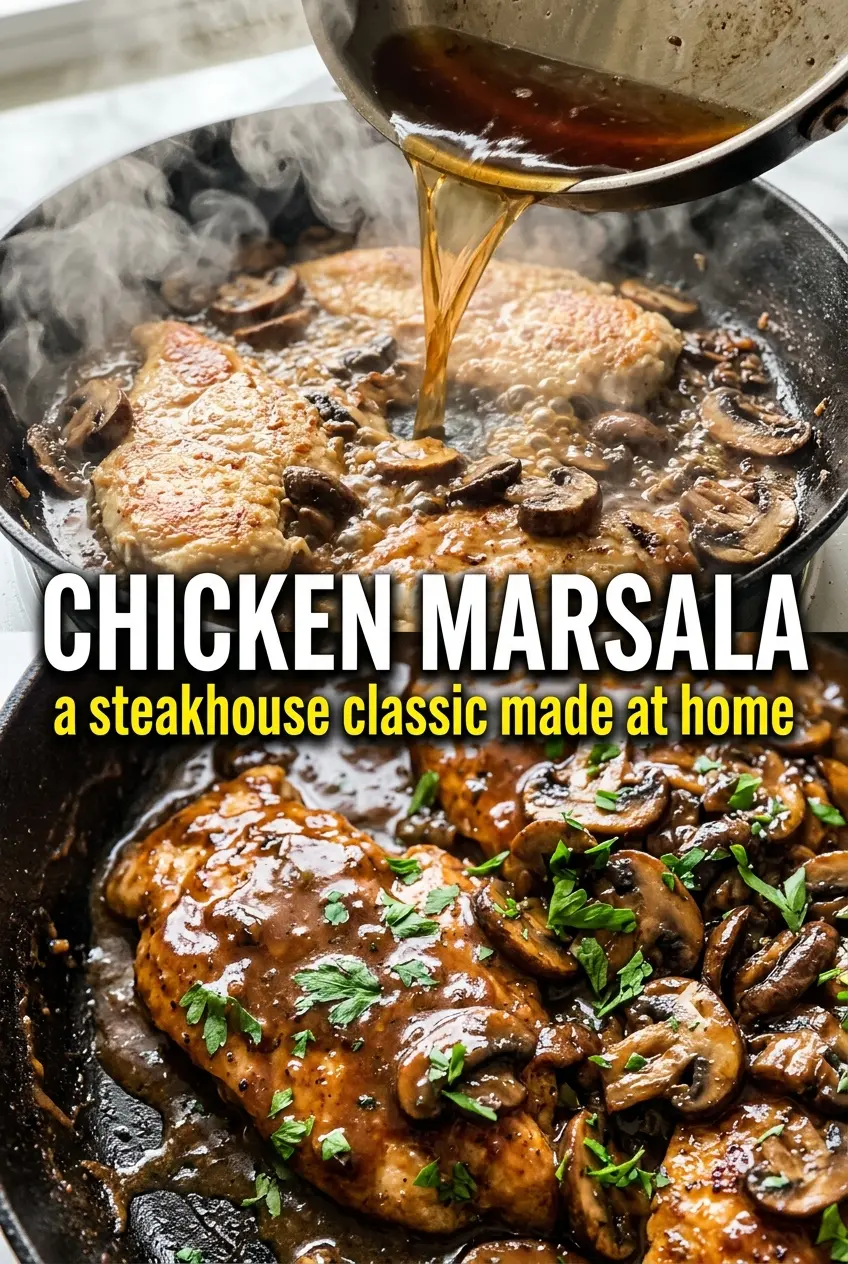
Pour in the Marsala wine and let it bubble for a couple of minutes before adding broth and cream. That step softens the wine and concentrates its flavor. Once the sauce simmers, it should lightly coat a spoon rather than run off like broth. Swirl in the remaining cold butter off the heat or at a very low simmer. If the sauce turns oily, the heat was too high when the butter went in.
Bringing the Chicken Back Without Losing Texture
Return the chicken to the pan just long enough to warm through and pick up the sauce. Spoon the mushrooms over the top and finish with thyme and parsley. The chicken should stay tender and the coating should still have some structure. If you leave it simmering too long, the crust softens and the whole dish loses that contrast between crisp chicken and silky sauce.
How to Adapt Chicken Marsala Without Losing the Character of the Dish
Gluten-Free Chicken Marsala
Swap the all-purpose flour for a fine gluten-free flour blend. You still get browning and a lightly thickened sauce, but the coating can be a little more delicate, so handle the cutlets gently when turning them.
Dairy-Free Version
Use all olive oil instead of butter for the chicken and mushrooms, then finish the sauce with a small drizzle of olive oil instead of the final butter swirl. You’ll lose some of the gloss and richness, but the Marsala and mushrooms still carry the dish.
Serving It Over Pasta
Toss the sauce with cooked egg noodles or pappardelle and lay the chicken on top. The noodles catch the sauce well, but they’ll soak it up fast, so serve immediately after tossing.
Storage and Reheating
- Refrigerator: Store leftovers in an airtight container for up to 3 days. The sauce thickens as it chills, and the chicken softens a bit, but the flavor stays good.
- Freezer: It freezes, but the cream sauce can separate slightly when thawed. If you want the best texture, freeze the chicken and sauce separately from any pasta.
- Reheating: Warm gently in a covered skillet over low heat with a splash of broth to loosen the sauce. High heat is the fastest way to make the sauce break or overcook the chicken.
Answers to the Questions Worth Asking
Chicken Marsala
Ingredients
Equipment
Method
- Season the chicken cutlets with salt and pepper, then dredge them in the all-purpose flour, shaking off excess so they stay lightly coated. Set aside while you prep the sauce ingredients.
- Heat olive oil with 2 tablespoons butter in a cast iron skillet over medium-high heat until hot, then add cutlets and cook for 3-4 minutes per side until golden. Remove to a plate.
- In the same skillet, cook sliced cremini mushrooms and minced shallots for 5-6 minutes until golden, stirring as needed to brown. Add minced garlic and cook for 1 minute until fragrant.
- Pour in the dry Marsala wine and let it bubble for 2-3 minutes to reduce slightly. Add chicken broth and heavy cream, then simmer for 5 minutes.
- Swirl in the remaining 2 tablespoons cold butter until the sauce looks glossy, then stir in fresh thyme leaves for an aromatic finish. Turn off the heat if needed to prevent thickening too fast.
- Return the chicken cutlets to the pan and spoon the Marsala mushroom sauce over the top, then garnish with fresh parsley before serving.