Chicken Alfredo zucchini lasagna brings all the comfort of a bubbling white lasagna, but the zucchini keeps it lighter and a little fresher on the plate. The best versions slice cleanly, hold their layers, and still spoon out with that creamy, cheesy pull that makes people go back for a second square before they’ve finished the first.
What makes this one work is simple: the zucchini gets salted and roasted before it ever hits the baking dish, which keeps the lasagna from turning watery. The Alfredo sauce is built low and slow so the parmesan melts into the cream instead of clumping, and the ricotta layer adds enough structure to keep the finished dish from sliding apart.
Below, I’ll walk you through the moisture control, the layering order, and the small rest at the end that makes the difference between a messy pan and neat, creamy slices.
The zucchini stayed firm instead of turning mushy, and the Alfredo thickened up beautifully. I let it rest the full 15 minutes and got clean slices that held together on the plate.
Love the creamy layers and zucchini-noodle swap in this chicken Alfredo lasagna? Save it to Pinterest for a low-carb dinner that still bakes up rich and comforting.
The Trick Is Removing Water Before the Bake Starts
Zucchini is the one ingredient that can sink this whole dish if you treat it like pasta. It releases a lot of moisture as it bakes, and if those planks go into the oven raw, the lasagna turns loose and soupy instead of layered and creamy.
Salting the zucchini first pulls out surface water, and the short roast does the rest. That extra step also gives the planks a little structure, so they don’t collapse into the sauce. The goal isn’t browned zucchini. The goal is zucchini that looks dry at the edges and flexible enough to layer without breaking.
The rest time matters for the same reason. Straight out of the oven, the sauce is still loose. Give it 15 minutes and the cheese settles into the layers instead of running all over the pan.
What Each Layer Is Doing Here
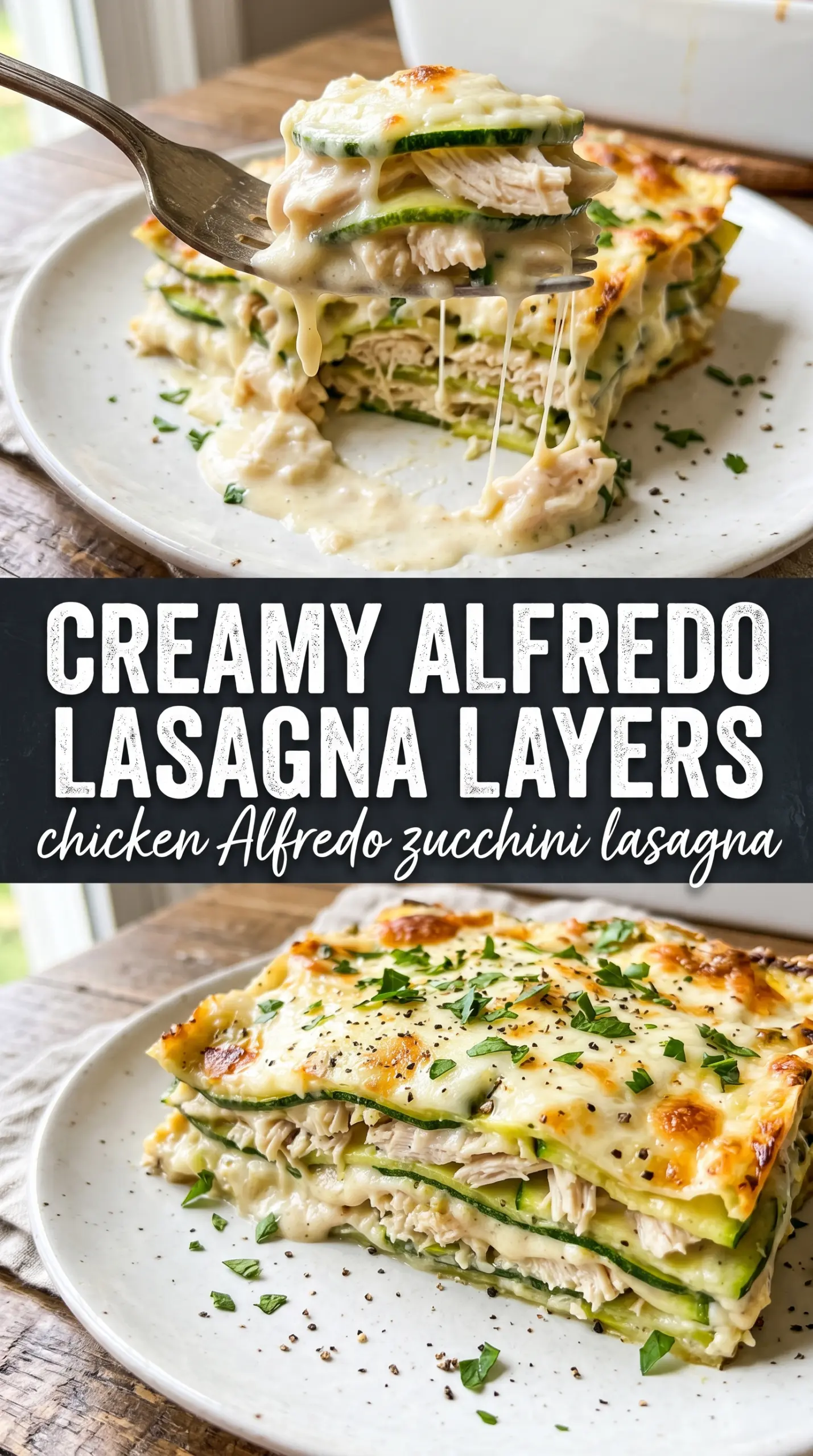
- Zucchini planks — These replace the noodles, but only if they’re prepped to lose moisture first. Thin, even slices roast and stack better than thick ones, which can stay firm in the middle and make the lasagna uneven.
- Heavy cream and parmesan — This is the base of the Alfredo flavor and the part that needs the most attention. Freshly grated parmesan melts smoother than pre-shredded, which often contains anti-caking starches that can make the sauce grainy.
- Ricotta and egg — The egg gives the ricotta enough body to hold the layers together. Without it, the filling can slide when you cut into the pan.
- Shredded chicken — Use cooked chicken that’s already seasoned or well salted, because the sauce and ricotta do the heavy lifting but the chicken still needs to taste like something on its own. Rotisserie chicken works fine here as long as you shred it small enough to spread evenly.
- Mozzarella — This is the melt and the stretch. Low-moisture shredded mozzarella gives you better browning and less excess liquid than fresh mozzarella, which is too wet for this style of bake.
Building the Sauce and Layers Without a Watery Pan
Drying the Zucchini
Slice the zucchini into thin planks, salt them, and let them sit long enough for beads of moisture to appear on the surface. Pat them dry before roasting, then roast just until they lose some of their raw stiffness. If they’re still wet when you assemble the lasagna, that water ends up in the bottom of the pan.
Making the Alfredo Smooth
Melt the butter and cook the garlic only until fragrant. If it browns, the sauce picks up a bitter edge that doesn’t belong in a white lasagna. Add the cream and let it simmer gently before the parmesan goes in; high heat is what causes Alfredo to seize or turn grainy.
Layering for Clean Slices
Start with a thin layer of sauce on the bottom so the zucchini doesn’t stick. Then build in even layers, keeping the chicken and ricotta spread out instead of piled in the middle. End with sauce and mozzarella on top so the cheese forms a cap that browns while the lasagna bakes underneath.
Baking and Resting
Cover the dish first so the center heats through without scorching the top. Uncover it at the end to let the mozzarella brown and bubble. When it comes out of the oven, the center will still look loose; that’s normal. Let it rest the full 15 minutes so the starches and cheeses settle before you slice it.
How to Adapt This Lasagna When You Need a Different Finish
Make It Gluten-Free Without Changing the Structure
This recipe is already naturally gluten-free as written, so the main job is keeping cross-contamination low if that matters for your kitchen. Use a clean baking dish, a fresh spoon for the cheese layers, and double-check the parmesan if you’re buying a pre-grated version.
Swap the Chicken for Spinach and Mushrooms
For a vegetarian version, sauté mushrooms until their moisture cooks off, then add wilted spinach and squeeze it dry before layering. You’ll lose the savory, meaty bite of the chicken, but the mushrooms bring enough umami that the lasagna still feels hearty.
Use Part-Skim Dairy for a Lighter Dish
You can use part-skim ricotta and a little less mozzarella if you want a lighter finish, but the lasagna won’t taste as rich and the filling can be a touch looser. If you go this route, let the dish rest a few extra minutes before slicing so the lower-fat cheese has time to set.
Make the Sauce Ahead for Faster Assembly
The Alfredo sauce can be made a day ahead and reheated gently before assembling. Warm it over low heat and stir often, because Alfredo that boils on reheating can separate or turn oily.
Storage and Reheating
- Refrigerator: Store leftovers covered for up to 4 days. The zucchini will soften a bit more as it sits, but the flavor stays excellent.
- Freezer: This freezes well in portions. Wrap tightly and freeze for up to 2 months, then thaw overnight in the fridge before reheating.
- Reheating: Reheat covered in a 325°F oven until hot in the center. Microwave reheating works for a single slice, but use short bursts so the sauce doesn’t separate and the cheese doesn’t turn rubbery.
Answers to the Questions Worth Asking
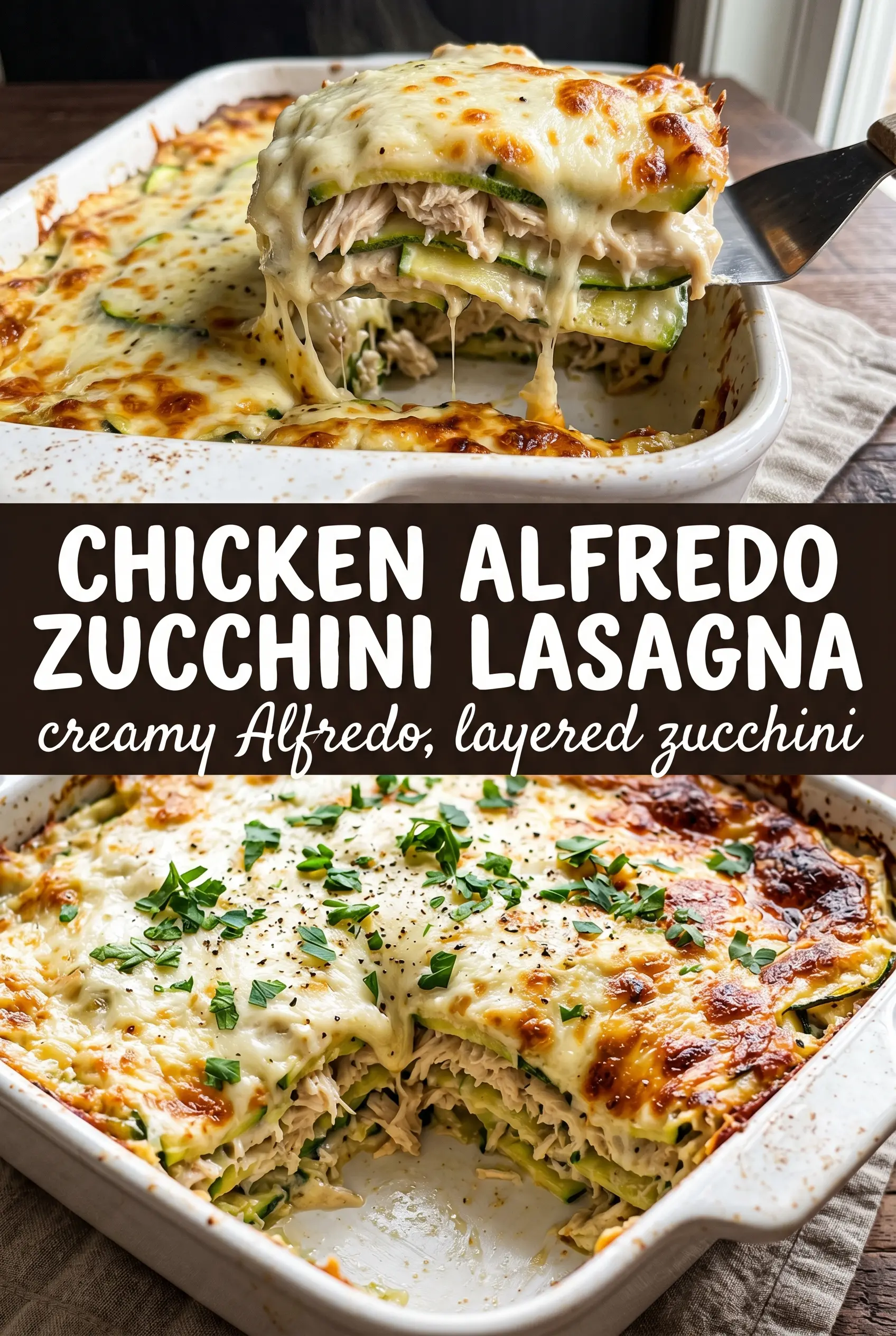
Chicken Alfredo Zucchini Lasagna
Ingredients
Equipment
Method
- Salt the zucchini planks and let sit for 20 minutes, then pat dry to remove excess moisture. Visual cue: the zucchini should look slightly wilted after sweating.
- Roast the dried zucchini on a sheet pan at 425°F for 10 minutes. Visual cue: edges turn lightly golden and the planks look drier, not watery.
- Melt the butter over medium heat, then sauté the garlic for 1 minute. Visual cue: garlic becomes fragrant and just starts to soften, not brown.
- Pour in the heavy cream and simmer for 5 minutes, stirring occasionally. Visual cue: sauce thickens slightly and looks more velvety.
- Stir in the parmesan, nutmeg, salt, and white pepper until smooth. Visual cue: the sauce turns glossy and cohesive with no grainy cheese streaks.
- Mix ricotta with the egg, chopped parsley, salt, and pepper until fully combined. Visual cue: mixture should be smooth and evenly speckled with herbs.
- Preheat the oven to 375°F and grease a 9x13 baking dish. Visual cue: the dish coating should be visible as a thin, even film.
- Spread 1/2 cup Alfredo on the bottom, then layer zucchini planks. Visual cue: the bottom is covered with overlapping planks for even layers.
- Add the ricotta layer over the zucchini, followed by the shredded chicken. Visual cue: ricotta is dotted or spread evenly before chicken blankets it.
- Pour over Alfredo sauce, then top with shredded mozzarella. Visual cue: mozzarella should cover the surface in an even layer.
- Repeat the layering (zucchini, ricotta, chicken, Alfredo, mozzarella), ending with Alfredo sauce and mozzarella on top. Visual cue: top looks fully coated with a creamy surface.
- Cover with foil and bake for 35 minutes at 375°F. Visual cue: bubbling starts around edges and the zucchini looks tender.
- Uncover and bake 12–15 minutes until golden and bubbly. Visual cue: mozzarella is browned in spots and sauce bubbles actively at the center.
- Rest the lasagna for 15 minutes before slicing. Visual cue: layers settle and sauce becomes less loose for clean cuts.
- Serve with extra parmesan and fresh parsley. Visual cue: finishing herbs look bright and freshly scattered on top.