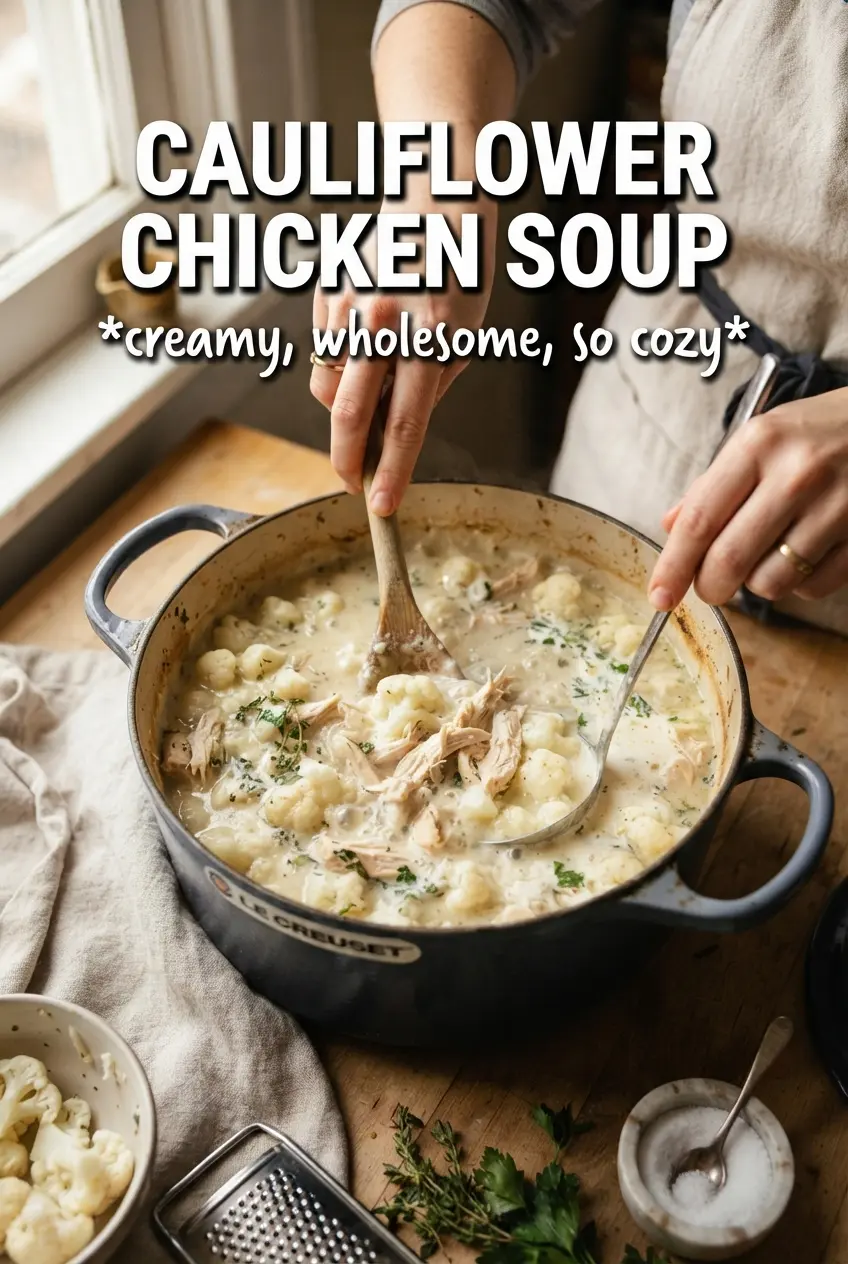
Cauliflower chicken soup lands in that sweet spot between comforting and substantial. The broth turns creamy and rich, the cauliflower softens enough to help thicken the pot, and the chicken stays tucked into spoonable bites instead of disappearing into the background. What you get is a soup with body, not just creaminess for its own sake.
The trick is in the order. Onion and garlic build the base first, then the chicken cooks briefly before the broth and cauliflower go in, so the meat finishes gently instead of turning stringy. Blending only part of the pot keeps the texture interesting, and the cheddar goes in at the end on low heat so it melts smooth instead of turning grainy.
Below, I’ve laid out the one step that keeps the soup from getting gluey, plus a few smart swaps if you want to make it lighter or stretch it with what’s already in the fridge.
The soup got creamy without feeling heavy, and blending just half kept the cauliflower pieces from disappearing. My husband asked for seconds before I even sat down.
Like this cauliflower chicken soup? Save it to Pinterest for a creamy, hearty bowl with tender chicken, cauliflower, and cheddar.
The Step That Keeps This Soup Creamy Instead of Thick and Gluey
Cauliflower can go from tender to mushy in a hurry, and that matters here because it’s doing double duty as both a vegetable and part of the body of the soup. If you blend the whole pot, you’ll get a texture closer to baby food than a proper bowl of soup. Blend only about half, and leave enough florets intact for contrast.
The other place people get into trouble is the cheese. Cheddar wants low heat and patience. If the soup is boiling when you stir it in, the fat can separate and the texture goes grainy. Pull the pot down to a gentle simmer, then add the cheese a handful at a time so it melts cleanly into the broth.
What Each Ingredient Is Actually Doing in This Pot

- Chicken breast — Diced chicken breast cooks fast and stays in neat, spoonable pieces. Cut it small and keep the simmer gentle so it stays tender. Chicken thighs will work too, but they bring a little more richness and a softer texture.
- Cauliflower — This is what gives the soup body without needing flour. Fresh florets hold their shape better than frozen, which can turn watery and break down faster. If you use frozen, add a few extra minutes and expect a softer finish.
- Heavy cream — Cream rounds out the broth and gives the soup that velvety finish. Half-and-half can work, but the soup will be thinner and a little less stable when reheated. Add it after the cauliflower is tender, not before.
- Cheddar — Sharp cheddar is the flavor anchor here. Freshly shredded cheese melts more smoothly than pre-shredded, which often has anti-caking agents that can make the soup a little grainy. Stir it in off a boil for the best texture.
- Butter, onion, garlic, smoked paprika, garlic powder — These build the base and keep the soup from tasting flat. The smoked paprika adds depth without making the soup taste smoky in a loud way, and the garlic powder reinforces the fresh garlic so the flavor reads through the cream.
Building the Soup So the Cheese Melts Smoothly
Sweating the Onion
Melt the butter first, then cook the onion until it turns soft and translucent, not browned. That gives the soup sweetness without any sharp raw edge. If the butter starts to color too fast, lower the heat; browned onion changes the tone of the whole pot.
Cooking the Chicken Briefly
Add the diced chicken and cook it just until the outside loses its pink color. It doesn’t need to be cooked through yet because it finishes in the broth. If you let it sit too long in the hot butter before adding liquid, the pieces can toughen before they ever reach the simmer.
Simmering the Cauliflower
Once the broth and cauliflower go in, bring the pot up to a boil only long enough to get it moving, then lower it to a steady simmer. You want the florets soft enough to crush easily with a spoon. If the heat stays too high, the broth reduces too fast before the cauliflower is tender.
Blending and Finishing
Use an immersion blender to puree about half the soup right in the pot. Stop while there are still obvious pieces left. Stir in the cream, let it warm through gently, then add the cheddar in small handfuls until melted. If the soup looks oily or grainy, the heat was too high; take it off the burner for a minute and stir until it comes back together.
Make It Lighter Without Losing the Creamy Texture
Swap the heavy cream for half-and-half and cut the cheddar back slightly. The soup will be a little less rich, but the blended cauliflower still gives it enough body to feel substantial. Don’t use milk here unless you’re fine with a thinner finish.
Use Chicken Thighs for a Deeper, Softer Bowl
Boneless, skinless thighs give you a richer flavor and a more forgiving texture if the soup simmers a little longer than planned. They’re a good choice if you want the chicken to taste a little more pronounced against the cauliflower. The broth will pick up a touch more savoriness from the fat.
Make It Gluten-Free Without Changing the Method
This recipe is naturally gluten-free as written, as long as your broth is certified gluten-free. Nothing about the method needs to change. That’s one reason the cauliflower works so well here: it thickens the soup without flour.
Add Bacon or Broccoli for a Heartier Variation
Crisped bacon on top adds salt and crunch, and chopped broccoli can replace part of the cauliflower if that’s what you have on hand. Broccoli gives the soup a greener, slightly sweeter edge, but it won’t blend as smoothly as cauliflower, so the texture will be a little less velvety.
Storage and Reheating
- Refrigerator: Store for up to 4 days. It thickens as it chills, so expect a denser texture the next day.
- Freezer: It freezes reasonably well, but the cream can separate a bit after thawing. Cool it completely, freeze in portions, and stir well as it reheats.
- Reheating: Reheat gently over low heat on the stove, adding a splash of broth if needed. Don’t boil it hard or the cheese and cream can break.
Answers to the Questions Worth Asking
Cauliflower Chicken Soup
Ingredients
Equipment
Method
- Melt the unsalted butter in a large pot over medium heat until just foamy, then add the diced onion and sauté for 4 minutes until softened (no browning).
- Add the minced garlic and cook for 1 minute, stirring constantly, until fragrant and lightly sizzling.
- Add the diced chicken breast and cook for 4-5 minutes, stirring occasionally, until the chicken loses its pink color.
- Pour in the chicken broth, then add the cauliflower florets, garlic powder, and smoked paprika and stir to combine.
- Bring the soup to a boil, then reduce to a simmer and cook for 15-18 minutes until the cauliflower is very tender and easily pierced.
- Use an immersion blender to blend about half the soup until creamy, leaving visible cauliflower chunks for texture.
- Stir in the heavy cream and return to a gentle simmer until the soup is hot and smooth, without boiling.
- Stir in the shredded cheddar until melted and glossy, then season with salt and pepper to taste.
- Ladle the soup into bowls and top with extra cheddar and chives for serving.