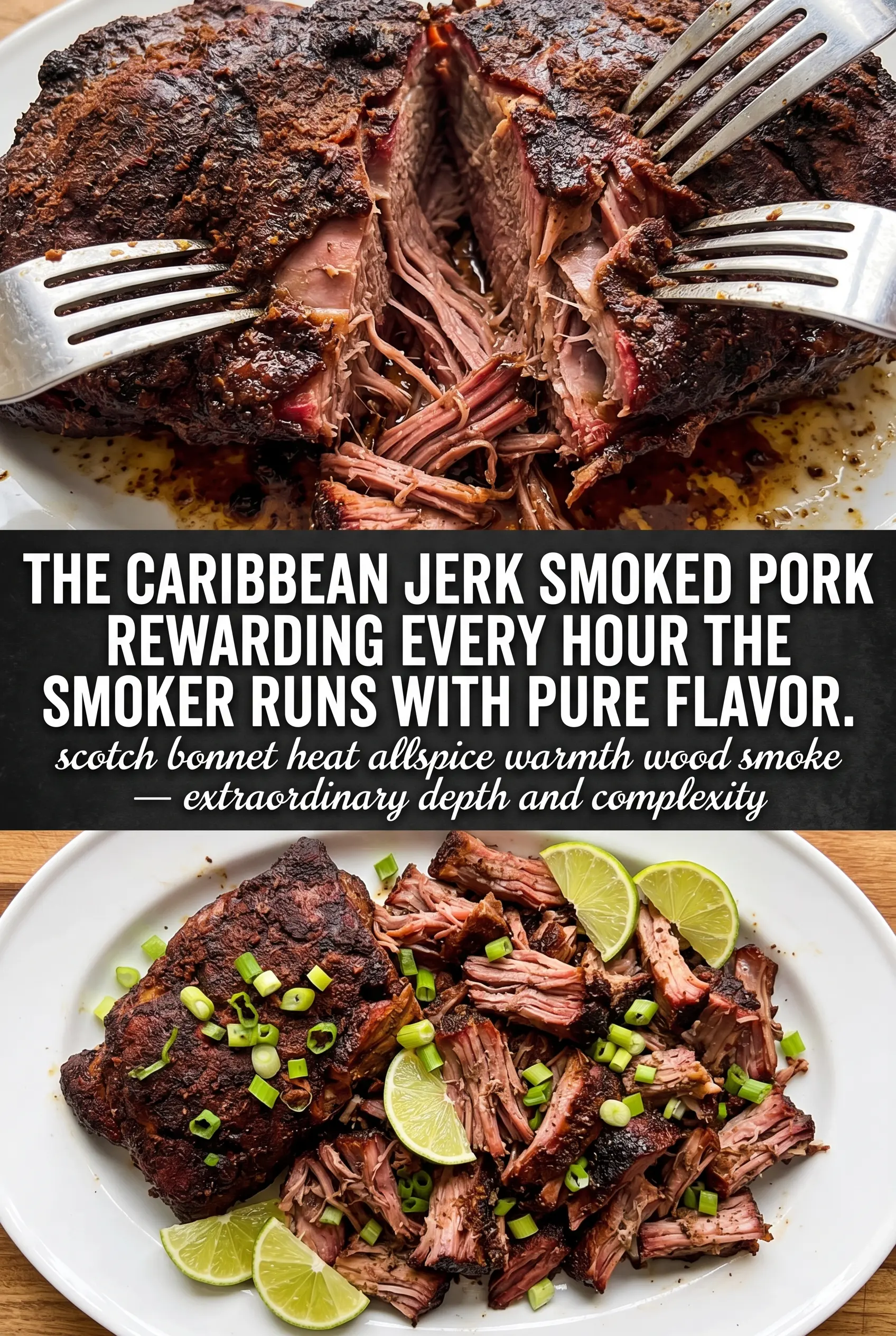
Caribbean jerk smoked pork comes off the smoker with a deep spice crust, a pink smoke ring, and meat that pulls apart in thick, juicy strands. The bark gets dark and a little sticky from the brown sugar and soy sauce, while the scotch bonnet, thyme, allspice, and lime work together in a way that tastes bold without flattening out into one-note heat.
What makes this version work is the overnight marinade and the low, steady smoke. Scoring the pork shoulder gives the jerk paste places to sink in, and blending the marinade smooth helps it coat every ridge instead of sliding off. Six to eight hours in the smoker gives the fat time to render and the connective tissue time to soften, which is what turns a tough shoulder into something spoon-tender.
Below, I’ve added the details that matter most: how to handle the heat from the peppers, why fruit wood is a good match here, and what to do if you want a little more sweetness or less fire without losing the jerk character.
The marinade coated the shoulder beautifully, and after the overnight rest the smoke ring was deep and the bark held together when I pulled it. The lime and allspice kept the pork bright even after six hours on the smoker.
Save this jerk-smoked pork shoulder for the next time you want a heavy bark, sweet smoke, and real Caribbean heat.
The Reason Jerk Pork Gets Better When You Stop Rushing the Marinade
The biggest mistake with jerk pork is treating the marinade like a coating instead of a seasoning system. The pork shoulder needs time for the salt, lime, sugar, and aromatics to work into the outer layer of the meat, and overnight is where the flavor gets beyond the surface. If you rush it, you still get heat, but you miss that deeper savory edge that makes each slice taste seasoned all the way through.
Scoring the shoulder matters for the same reason. Those cuts give the paste more contact points, and they also help the fat render more evenly as the pork smokes. The result is a better bark and less of that bland outer fat cap that can happen when the seasoning never gets below the surface.
What Each Ingredient Is Actually Doing in This Jerk Pork

- Pork shoulder — This cut has the fat and connective tissue that can survive a long smoke and come out tender. A leaner cut won’t give you the same pull-apart texture, and it dries out long before the jerk crust has time to build.
- Scotch bonnet peppers — They bring the sharp, fruity heat that reads as jerk instead of just generic spice. If you need to dial them back, seed them carefully, but don’t swap in a mild pepper unless you’re prepared for a much flatter result.
- Fresh thyme and allspice — These are non-negotiable if you want the pork to taste like jerk. Dried thyme works in a pinch, but fresh thyme gives a cleaner herbal note, and allspice is what gives the rub its warm, woodsy backbone.
- Brown sugar, soy sauce, lime juice, and oil — The sugar helps the bark darken, the soy adds salt and depth, the lime cuts through the fat, and the oil helps the marinade cling to the meat instead of sliding off. That combination is why the outside gets lacquered instead of dusty.
Getting the Smoke, Heat, and Rest Time in the Right Order
Building the jerk paste
Blend the marinade until it’s as smooth as you can get it. If the peppers, garlic, and green onions stay chunky, the rub won’t spread evenly and you’ll get patchy spots of heat. You’re looking for a thick, spoonable paste that clings to the pork instead of a loose liquid that runs straight off.
Seasoning the shoulder
Score the pork in a crosshatch pattern and work the jerk paste into every cut. The goal is coverage, not a thin smear on the outside. If the shoulder looks wet and glossy from end to end, you’ve done enough. Cover it and let it sit overnight so the surface seasons and the aromas settle into the meat.
Smoking until it pulls cleanly
Set the smoker between 225 and 250°F and use fruit wood for a gentle, sweet smoke that doesn’t fight the spices. Put the pork on the grate and leave it alone until the bark has darkened and the internal temperature climbs into the 195 to 203°F range. If you pull it early, the shoulder will slice instead of shred because the connective tissue hasn’t finished softening.
Resting before you pull
Let the pork rest for at least 30 minutes after it comes off the smoker. That pause keeps the juices in the meat instead of flooding the cutting board the second you pull on it. Once it’s rested, shred it into large strands so the bark stays in the mix and every bite carries that smoky jerk crust.
How to Adapt This Jerk Pork Without Losing the Character of the Dish
Less Heat, Same Jerk Flavor
Use fewer scotch bonnets and remove every seed and bit of white pith. The pork will still taste like jerk because the thyme, allspice, garlic, and lime are doing the structural work; you’re just lowering the fire so the spice reads as warm instead of sharp.
Gluten-Free Version
Swap the soy sauce for tamari or a gluten-free soy sauce. That keeps the salt and umami in place without changing the way the marinade clings or how the bark darkens on the smoker.
Sweet and Smoky Pulled Pork Sandwich Filling
Add an extra tablespoon of brown sugar and serve the shredded pork on toasted rolls with a crunchy slaw. The sweetness rounds out the heat and makes the finished pork easier to pile high without the spice taking over every bite.
Smoker-to-Oven Backup Plan
If you can’t smoke it all the way through, start it on the smoker for the flavor and finish it covered in a low oven until it reaches the same internal temperature. You won’t get as much bark as with a full smoke, but the jerk seasoning still carries through and the texture stays tender.
Storage and Reheating
- Refrigerator: Store the pulled pork in an airtight container for up to 4 days. The bark softens a little as it sits, but the flavor gets even deeper.
- Freezer: It freezes well for up to 3 months. Pack it with a spoonful of the juices so the meat doesn’t dry out when it thaws.
- Reheating: Warm it covered in a skillet or oven with a splash of reserved juices or water. The common mistake is blasting it dry in the microwave, which tightens the meat and dulls the spice crust.
Answers to the Questions Worth Asking
Caribbean Jerk Smoked Pork
Ingredients
Equipment
Method
- Blend green onions, scotch bonnet peppers, garlic, fresh thyme, brown sugar, allspice, black pepper, cinnamon, and nutmeg with soy sauce, lime juice, and vegetable oil until smooth, with no visible large chunks. Stop and scrape the blender as needed so the marinade looks cohesive.
- Score pork shoulder deeply in a crosshatch pattern so the marinade can reach the interior, aiming for many shallow cuts across the surface. This improves penetration and creates more charred bark after smoking.
- Rub jerk marinade all over pork shoulder, pressing into the scored cuts until the entire surface is coated. Use extra marinade in the grooves so the spice crust forms evenly.
- Marinate pork shoulder overnight in the refrigerator, covered, so flavors develop and the rub adheres. Keep it chilled for food safety and to prevent runoff.
- Prepare smoker to 225-250°F with fruit wood, then maintain steady airflow and temperature before adding the pork. Use fruit wood for a sweet smoke tone that complements the jerk spices.
- Smoke pork shoulder for 6-8 hours until internal temperature reaches 195-203°F, building a dark, charred bark as it cooks. Look for a visible smoke ring around the meat as a cue it’s absorbing smoke.
- Let pork shoulder rest for 30 minutes before pulling, loosely tented to keep it from drying out. The interior juices should redistribute so the pulled pork stays moist.
- Pull the pork and serve immediately, spooning off any excess drippings if needed. Serve with island sides and garnish, aiming for pulled jerk pork with a visible spice crust.