Ruby-pink rhubarb syrup has a clean tart edge that turns a plain stack of pancakes, a splash of soda water, or a basic cocktail into something worth stopping for. The color alone looks special in a jar, but the real win is the balance: bright rhubarb flavor softened just enough with sugar, then sharpened with a little lemon so it stays lively after canning.
This version works because the rhubarb is simmered first with water, then strained hard before the sugar goes in. That gives you a clear syrup instead of a cloudy puree, and it keeps the final texture smooth and pourable. Lemon juice isn’t there just for taste; it adds a touch of acidity that helps round out the rhubarb and supports safe water-bath canning.
Below you’ll find the part that matters most: how to get the juice yield right, when to stop simmering so the syrup doesn’t turn sticky, and a few ways to use it once the jars cool. If you’ve ever ended up with rhubarb mush instead of syrup, this process fixes that.
The syrup strained out beautifully clear, and I got almost exactly four pints. I used the first jar in gin cocktails and the rest over yogurt and pancakes.
Canning Rhubarb Simple Syrup for cocktails, pancakes, and sparkling drinks
The Step That Keeps Rhubarb Syrup Clear Instead of Cloudy
The biggest mistake with rhubarb syrup is rushing the straining. If you squeeze half-cooked fruit through a bag too aggressively, you force pulp into the liquid and end up with a syrup that looks muddy instead of jewel-toned. Let the rhubarb cook until it collapses fully, then strain through cheesecloth or a fine mesh strainer and press firmly enough to get the juice, not enough to push the solids through.
The other thing that matters is the second boil. Once the rhubarb juice goes back in the pot with sugar and lemon juice, the goal is to dissolve the sugar completely and stop there. If you keep cooking it hard for too long, the syrup gets thicker than you want and starts losing that bright fresh edge.
What the Rhubarb, Sugar, and Lemon Each Bring to the Jar
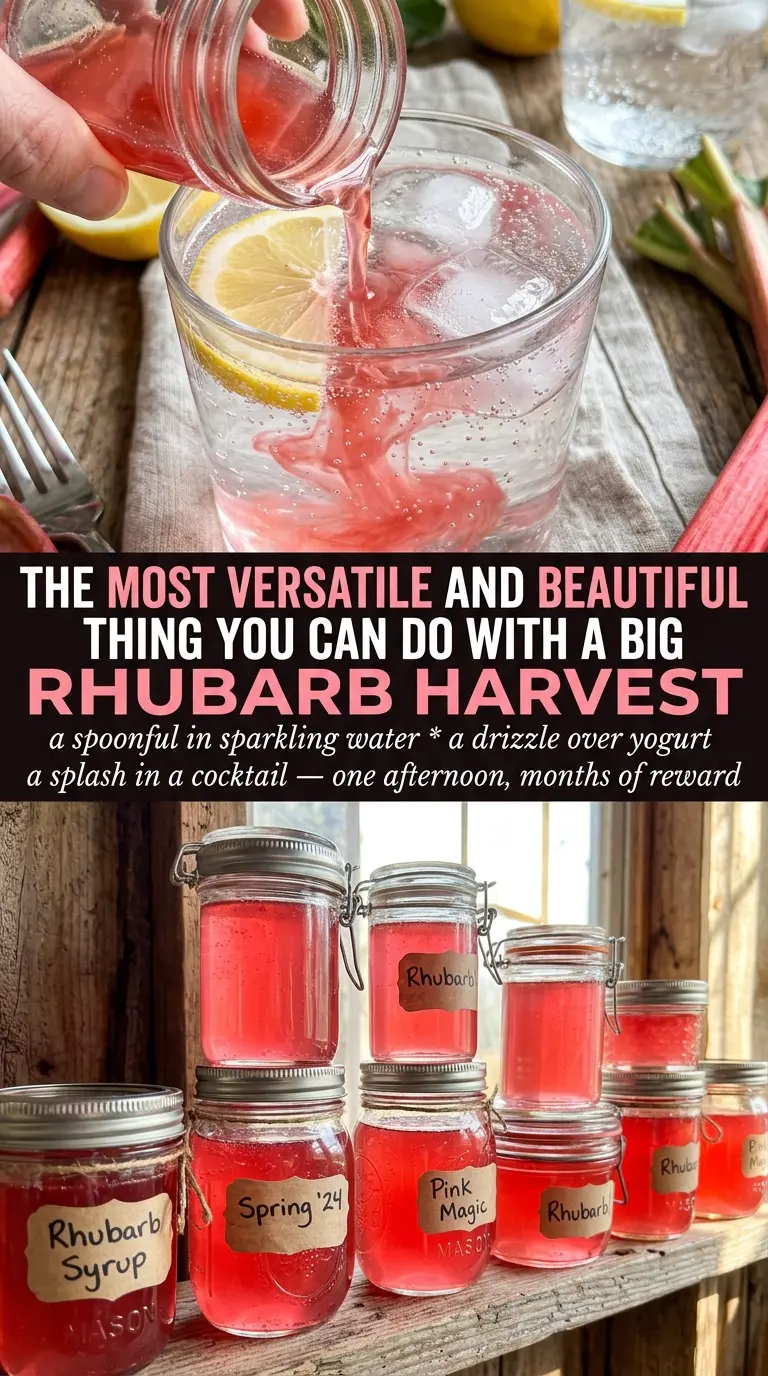
- Fresh rhubarb — This is where the color and tartness come from, and fresh stalks give a brighter syrup than frozen. Frozen rhubarb works in a pinch, but it can release more water and soften the flavor a little. Trim away any leaves completely; only the stalks belong in the pot.
- Sugar — Sugar does more than sweeten here. It gives the syrup body and helps it keep its smooth pourable texture after processing. Reducing it changes the balance fast, so if you want a less sweet syrup, adjust your serving size instead of cutting the sugar too far.
- Lemon juice — The lemon sharpens the rhubarb and adds the acid this recipe needs for a cleaner finish. Use bottled lemon juice if you want consistent canning acidity; fresh is fine for flavor, but bottled is the safer choice when you’re preserving.
- Water — Water is just the extraction medium here. It pulls the flavor out of the rhubarb during the first simmer, then gets strained off with the solids so the final syrup tastes concentrated instead of thin.
From Soft Rhubarb to Shelf-Stable Syrup
Cooking the Rhubarb Down
Start with the rhubarb and water in a large pot and bring it all the way to a boil, then lower the heat and let it simmer until the stalks collapse into a pale, soft mash. You want the fruit falling apart without sticking to the bottom of the pot. If the heat is too high, the mixture can scorch before the rhubarb fully releases its juice, and that gives the syrup a cooked flavor that never goes away.
Straining for a Clean Finish
Set up cheesecloth or a fine mesh strainer over a bowl or another pot and let the liquid drain first. Then press the solids to pull out the remaining juice. Stop once the flow turns mostly slow drips; if you work the pulp too hard, you’ll cloud the syrup and make the texture heavier than it should be.
Sweetening and Jarring
Return the strained juice to the pot with the sugar and lemon juice, then bring it back to a boil just until the sugar disappears and the syrup looks glossy. Pour it into sterilized pint jars with 1/4-inch headspace while it’s hot. Wipe the rims clean, apply the lids, and process in a boiling water bath for 10 minutes so the jars seal properly.
Make It Less Sweet and More Tart
Keep the sugar at full strength if you’re canning for the pantry, then use less of the finished syrup when you serve it. That keeps the texture stable and the flavor balanced. If you cut the sugar in the pot, the syrup turns thinner and the rhubarb edge gets harsher instead of cleaner.
Frozen Rhubarb Works, with One Catch
Frozen rhubarb can stand in for fresh, and it’s handy when the season is over. Expect a little more liquid and a slightly softer color, so don’t be surprised if the first simmer looks looser. The flavor still comes through well as long as you strain it thoroughly.
Use Bottled Lemon Juice for Canning
Fresh lemon juice tastes great, but bottled juice is more consistent for preserved recipes. That matters here because the acid level helps keep the syrup in a safe range for water-bath canning. If you’re making it only for the fridge, fresh lemon is fine.
Storage and Reheating
- Refrigerator: Once opened, keep the jars refrigerated and use within 3 to 4 weeks. The syrup may cloud slightly after chilling, but the flavor stays bright.
- Freezer: This syrup freezes well in a freezer-safe container with headspace. Leave room for expansion so the jar doesn’t crack.
- Reheating: Warm only the amount you need over low heat or in the microwave in short bursts. Don’t boil it again; that can make the texture sticky and dull the fresh rhubarb flavor.
Questions I Get Asked About This Recipe
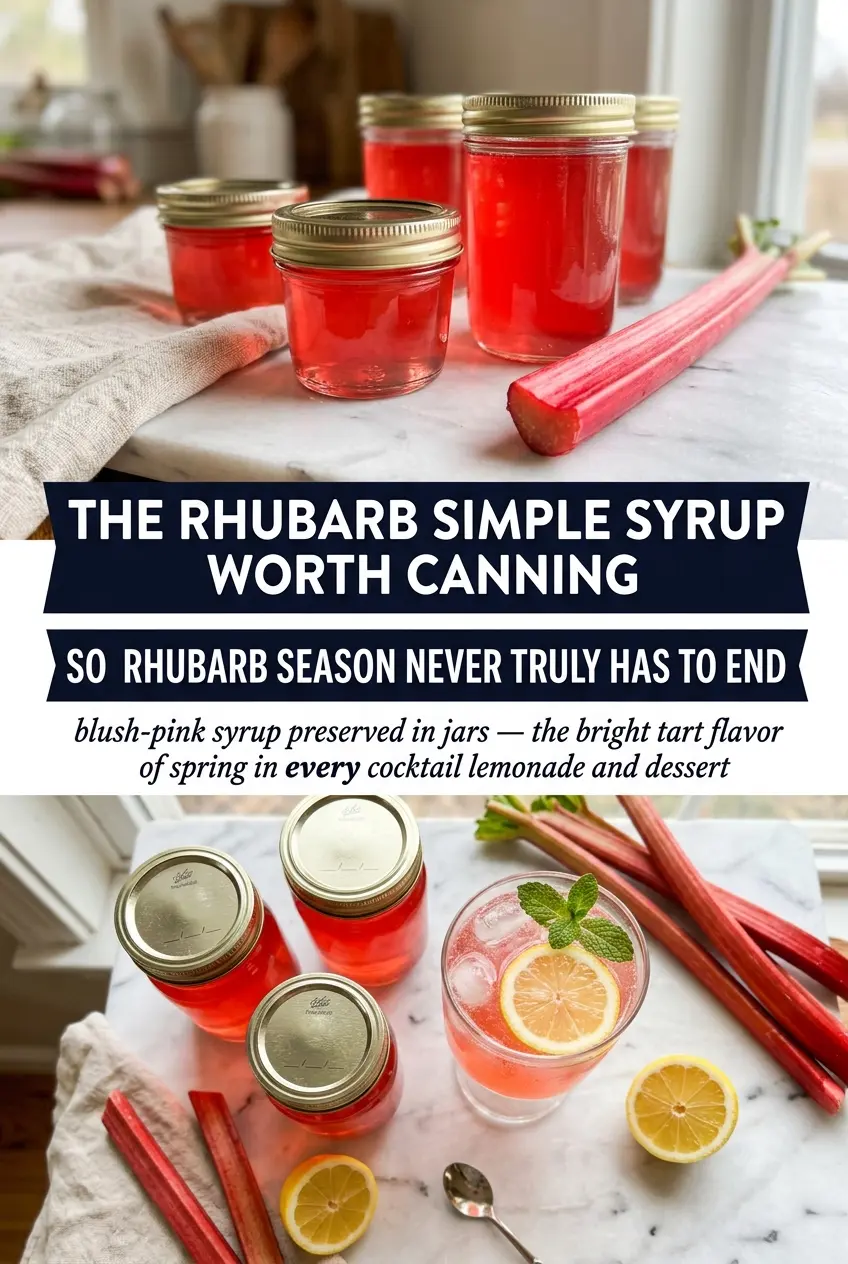
Canning Rhubarb Simple Syrup
Ingredients
Equipment
Method
- Combine chopped fresh rhubarb and water in a large pot, then bring to a boil. Once boiling, keep it at a steady boil so the rhubarb releases color and aroma.
- Reduce heat to maintain a gentle simmer and simmer for 15 minutes until the rhubarb is very soft. You should see the mixture look darker and fruit-transparent rather than firm.
- Strain the mixture through cheesecloth or a fine mesh strainer, pressing to extract all liquid (aim for about 4 cups). The strained liquid should look ruby-pink and translucent.
- Return the rhubarb juice to the pot, add sugar and lemon juice, and bring to a boil. Stir until the surface actively bubbles before timing the next step.
- Simmer for 5 minutes until the sugar is completely dissolved. The syrup should look clear-to-translucent with a consistent pink tint.
- Pour the hot syrup into sterilized pint jars, leaving 1/4-inch headspace. Wipe rims clean so the seals can form evenly.
- Process jars in a boiling water bath for 10 minutes. After processing, the liquid should be still and the jars sealed as they cool.
- Use the canned rhubarb simple syrup in cocktails, over pancakes, or mixed with sparkling water. It should drizzle in ruby-pink ribbons and sparkle with light in the jar.