Thick rhubarb pie filling packed into jars is one of those pantry projects that pays you back every time you want dessert without starting from scratch. The texture matters here: you want a filling that turns glossy and spoonable on the stove, then bakes up into a pie that holds its shape instead of leaking pink juice across the crust. When it’s done right, you get tart rhubarb, a clean set, and just enough sweetness to taste like pie filling instead of jam.
The trick is controlling the thickener. Clear Jel is the dependable choice for canning because it stays stable during processing and later baking, while cornstarch is only safe for freezing because it can break down in a pressure or water bath. Letting the rhubarb sit with sugar first pulls out enough liquid to prevent a dry, pasty filling, and then the slurry goes in slowly so it doesn’t clump or seize on the bottom of the pot.
Below, I’ve included the part that trips people up most often: how to know when the filling is thick enough before it hits the jars, plus a few smart swaps if you’re making the freezer version instead of canned jars.
The filling set up beautifully and baked into a pie that actually sliced cleanly. I followed the timing exactly, and the jars sealed without any siphoning.
Save this thick rhubarb pie filling for the day you want homemade pie flavor straight from the pantry.
The Part That Keeps Rhubarb Filling from Turning Thin and Runny
Rhubarb gives off a lot of liquid, and that’s where most homemade pie fillings go wrong. If you rush straight from chopped fruit to thickener, you’ll end up fighting a watery pot and a filling that never quite sets the way it should. The sugar rest pulls that moisture out first, which gives you a head start before the heat even goes on.
The other trap is dumping the thickener in all at once. Clear Jel needs to be mixed with cold water first so it disperses evenly; otherwise it clumps into little gelled bits that never fully smooth out. Once it goes into the hot fruit, stir constantly and keep cooking until the whole mixture reaches a full boil and looks glossy and heavy on the spoon.
What the Thickener, Lemon Juice, and Color Are Doing Here
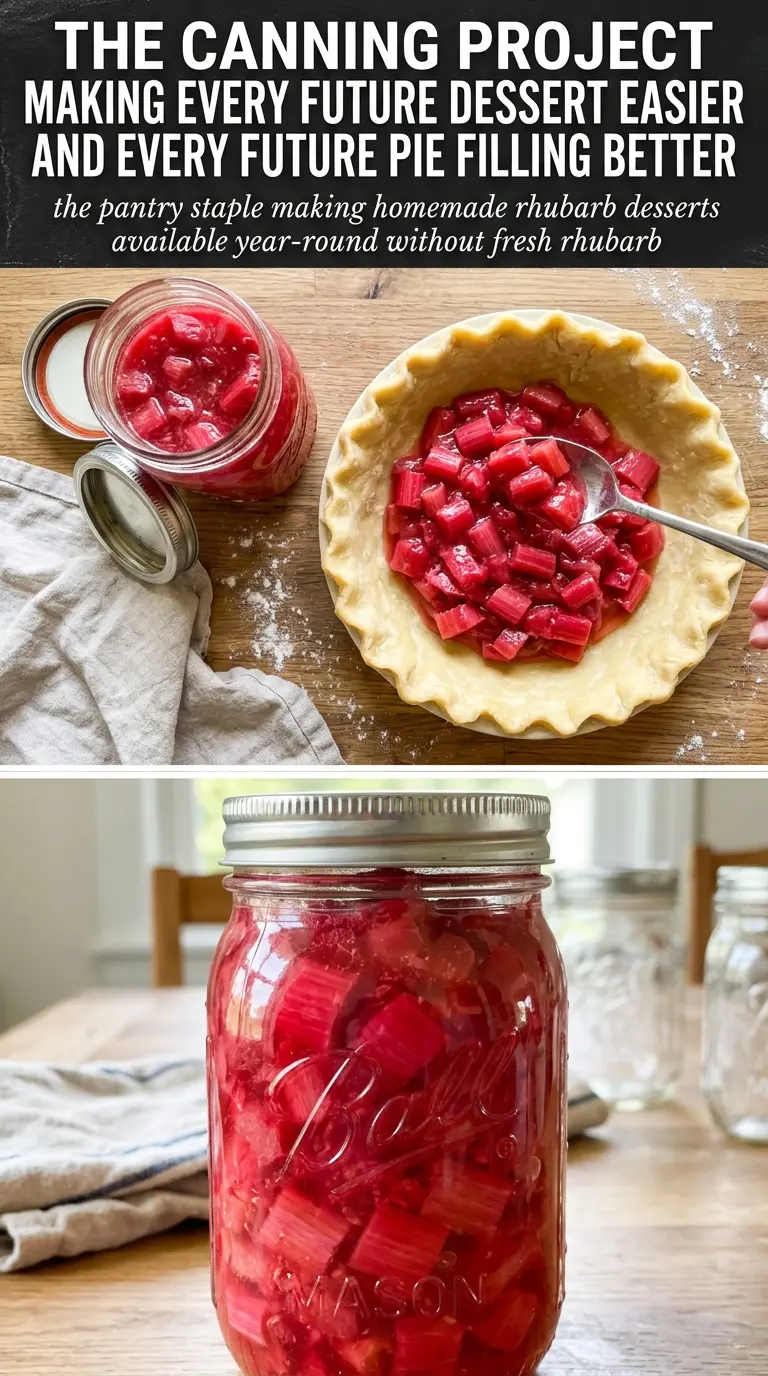
- Rhubarb — Cut it into even 1/2-inch pieces so it softens at the same rate. Bigger chunks stay stringy in the jar, while tiny pieces can break down too much and make the filling look muddy.
- Clear Jel — This is the thickener that makes canned pie filling work. It holds up through boiling water bath processing and then bakes cleanly later, which cornstarch won’t do. If you’re freezing instead of canning, cornstarch works, but don’t use it for shelf-stable jars.
- Lemon juice — It brightens the tart rhubarb and helps keep the flavor balanced against all that sugar. It also matters for canning safety, so don’t skip it or swap in bottled citrus juice with no clear acidity if you’re not sure of the strength.
- Pink food coloring — This is optional, but a few drops give the filling that classic bakery look. Rhubarb varies a lot in color, so the filling can turn a dull beige-pink without it. The taste won’t change either way.
How to Cook the Filling Until It’s Ready for Jars
Let the Sugar Pull Out the Juice
Combine the chopped rhubarb and sugar in a large pot and let it sit for 30 minutes. The sugar draws out enough liquid to start the filling off with its own syrup, which helps the fruit cook evenly instead of scorching on the bottom. You’ll see the rhubarb look glossy and wet before the heat even starts.
Build the Base Before Adding the Slurry
Bring the rhubarb and sugar to a boil over medium heat, stirring often so the mixture doesn’t catch. Add the extra water and lemon juice, then stir the Clear Jel slurry in slowly in a thin stream. If you dump it in all at once, the outside gels before the inside blends, and you’ll chase lumps for the rest of the cook.
Cook Until It Changes Texture, Not Just Time
Keep stirring until the filling thickens and comes back to a full boil. It should look glossy, heavy, and slightly translucent, not loose and cloudy. The moment it starts to resemble hot pie filling instead of fruit soup, pull it from the heat and ladle it into sterilized jars with 1 inch of headspace.
Process the Jars Without Overfilling Them
Wipe the rims clean, seal the lids, and process the jars in a boiling water bath for 30 minutes. Leave the headspace alone; overfilling is one of the fastest ways to get siphoning and weak seals. When the jars cool, the lids should pop down and stay there, which tells you the seal held.
Three Smart Ways to Use or Adapt This Filling
Freezer Version with Cornstarch
If you want a freezer filling instead of shelf-stable jars, swap the Clear Jel for cornstarch. The texture will still thicken, but it won’t survive boiling water bath canning, so keep this version in the freezer and use it within a few months for the best texture.
Less Sweet, More Tart
Rhubarb lovers who want a sharper filling can cut the sugar a little, but don’t reduce it aggressively. Sugar here isn’t just sweetness; it helps create the syrupy body that makes the pie filling taste finished instead of austere and watery.
Skip the Food Coloring for a Natural Look
If you’d rather keep the filling as close to the fruit as possible, leave out the coloring. The jars may look paler, especially if your rhubarb stalks are green, but the flavor and set stay the same.
Storage and Reheating
- Refrigerator: Once opened, keep the filling refrigerated for up to 1 week. It thickens a little more as it chills.
- Freezer: The freezer version freezes well for up to 6 months. Cool it completely before packing it into freezer-safe containers so ice crystals don’t thin it out.
- Reheating: Warm gently on the stove or bake directly from cold in a pie shell. Don’t boil it hard after it’s set, or you can loosen the texture and end up with a runnier pie.
Answers to the Questions Worth Asking
Canning Rhubarb Pie Filling
Ingredients
Equipment
Method
- Place the fresh rhubarb in a large pot and sprinkle with sugar, then let it sit for 30 minutes to release juices with frequent stirring.
- Bring the rhubarb and sugar to a boil over medium heat, stirring frequently so the mixture heats evenly.
- Mix Clear Jel with 1 cup cold water to make a smooth slurry with no lumps.
- Add the remaining 1 cup water and lemon juice to the rhubarb, then slowly stir in the Clear Jel slurry.
- Cook, stirring constantly, until the mixture thickens and comes to a boil so it will hold in the jar.
- Add pink food coloring if desired, then ladle the hot filling into sterilized quart jars, leaving 1-inch headspace.
- Process the jars in a boiling water bath for 30 minutes to seal for pantry storage.
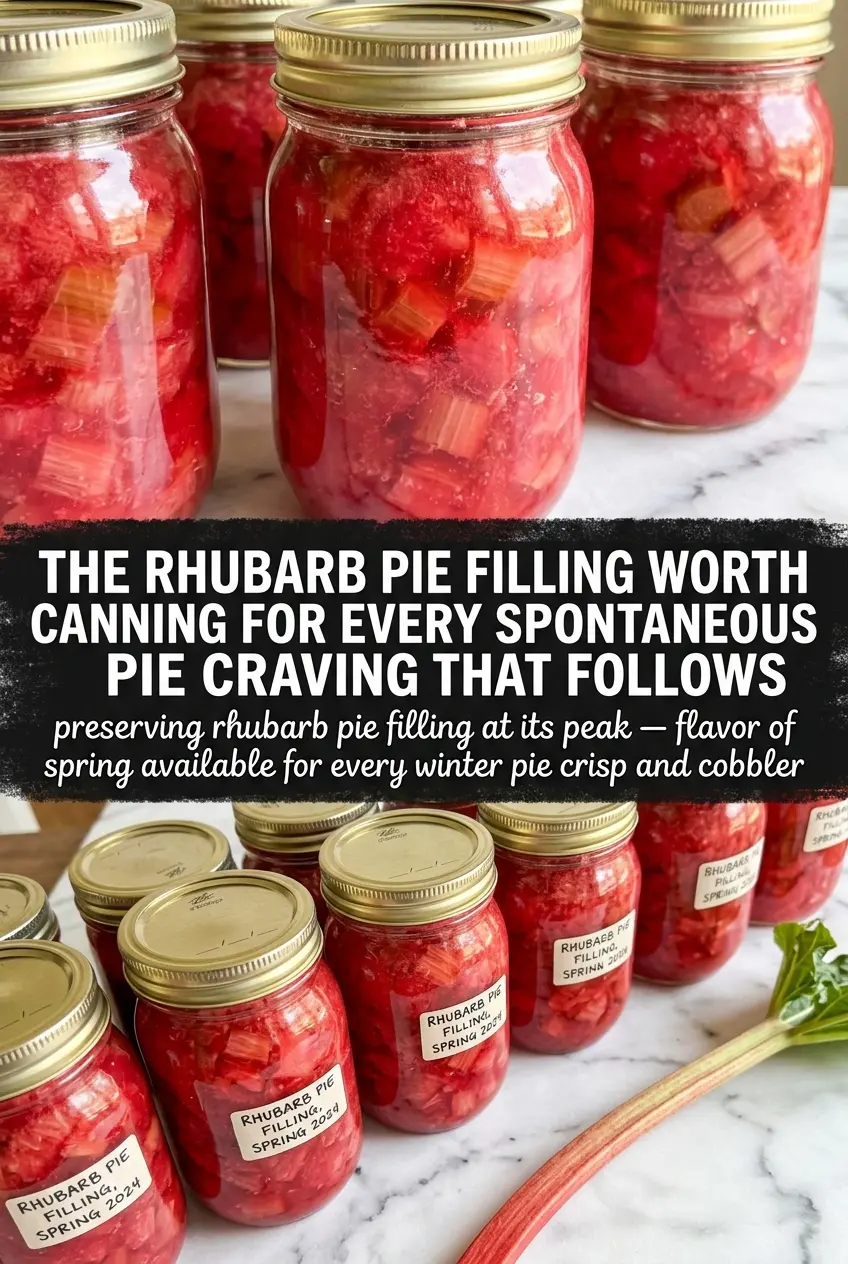
- Cool the jars fully and label them for year-round use in pies, crisps, or desserts.