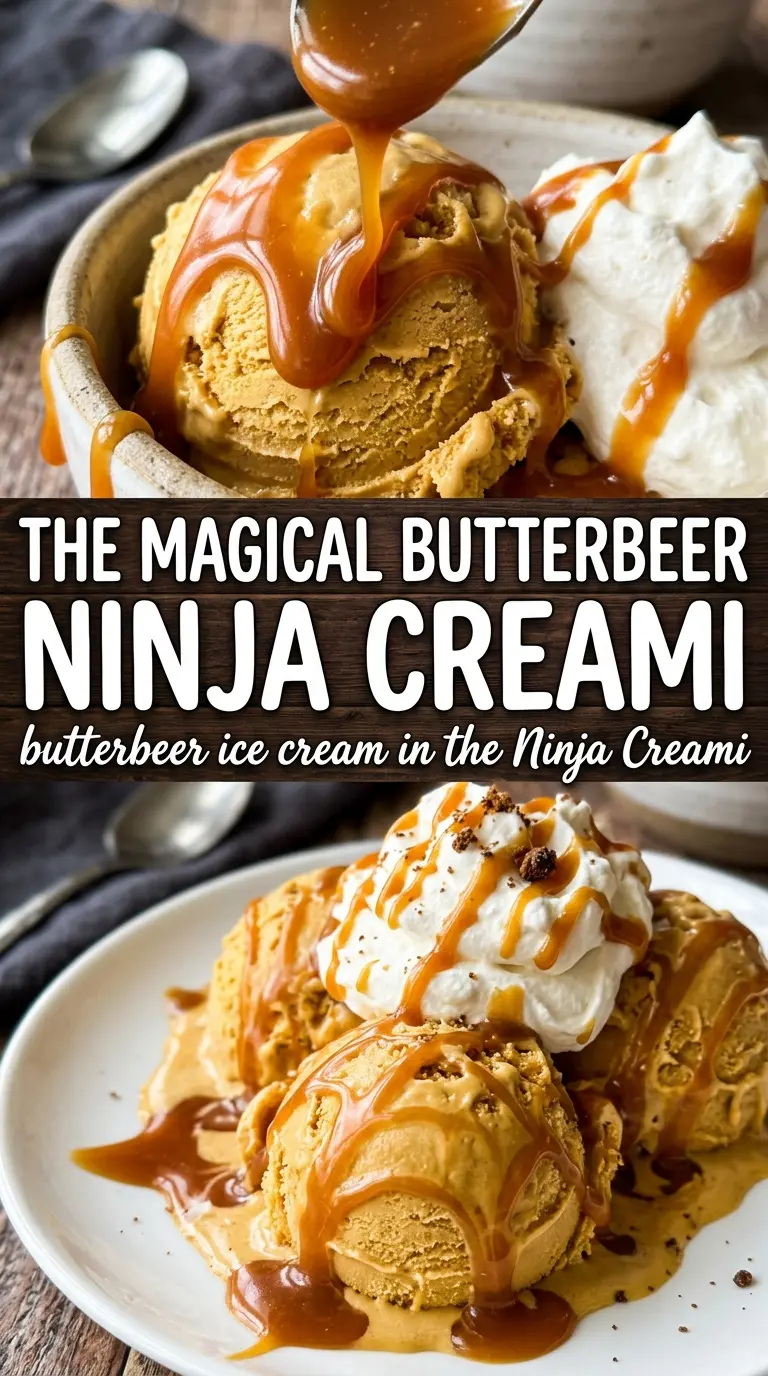
Butterbeer ice cream has that hard-to-pin-down mix of creamy butterscotch, vanilla, and a light cream soda sweetness that makes each spoonful taste like something you’d get at a themed dessert shop. The Ninja Creami turns it into an ultra-smooth frozen treat with a soft, scoopable texture instead of the icy finish that home ice creams often end up with.
The trick here is balancing the base before it ever hits the freezer. Flat cream soda keeps the mixture smooth instead of foamy, while cream cheese gives the pint a little body so the final spin tastes rich instead of thin. Butter extract matters more than you’d think; it pushes the butterscotch in a warmer direction and makes the whole pint taste closer to the drink that inspired it.
Below, you’ll find the small details that make this pint come out creamy on the first spin, plus a few easy variations if you want to lean more into caramel, make it dairy-free, or prep it ahead for a dessert night.
The base spun up creamy instead of icy, and the butterscotch flavor stayed bold even after the freeze. I added the tablespoon of cream on the first respin and it came out like soft-serve.
Pin this Butterbeer Ice Cream in the Ninja Creami for the rich butterscotch flavor and that soft, scoopable finish after a full freeze.
The Secret to a Creami Pint That Doesn’t Turn Grainy
The biggest mistake with a Butterbeer-style Creami is rushing the base or loading it with too much foam. Cream soda needs to be flat before blending, or you end up freezing bubbles into the pint, which gives you a dry, crumbly spin instead of a smooth one. If you stir the soda hard enough or let it sit while you gather the rest of the ingredients, that’s enough.
Cream cheese is doing quiet work here. It gives the mixture some structure so the fat and sugar freeze into a creamy base instead of a hard block. That matters because the Ninja Creami can only turn what you freeze into a smooth texture if the base has enough richness to break down evenly.
- Flat cream soda — This is the piece that keeps the base from turning foamy and hollow. Open it early and let it lose its carbonation before blending.
- Cream cheese — You only need a tablespoon, but it helps the pint freeze with body. If you skip it, the flavor still works, but the texture gets thinner.
- Butterscotch sauce — Use a sauce that pours smoothly. Thick candy-like topping won’t blend as evenly and can leave little dense pockets in the pint.
- Butter extract — This is what makes the ice cream taste like Butterbeer instead of just butterscotch ice cream. If you don’t have it, the recipe still works, but the finished flavor is less distinctive.
What Each Ingredient Is Actually Doing in This Pint
- Cream soda — This is the base flavor, not just a mixer. Letting it go flat first keeps the frozen texture smooth instead of bubbly and dry.
- Heavy cream — This gives the pint richness and helps it spin into a soft, scoopable texture. Half-and-half will work in a pinch, but the result won’t feel as lush.
- Butterscotch sauce — This carries the main caramelized sweetness. A good sauce adds depth, while a thin ice cream topping can taste flatter after freezing.
- Brown sugar — It reinforces the warm, molasses note that makes Butterbeer taste cozy and round. If you reduce it, the pint leans more toward vanilla cream soda.
- Vanilla extract — Vanilla softens the butterscotch edge and helps the whole pint taste balanced. It’s small, but it matters.
- Butter extract — This is the signature note. It doesn’t taste like melted butter; it gives the dessert that buttery, rounded finish people expect from Butterbeer.
- Salt — A pinch keeps the sweetness from going flat. It sharpens the butterscotch and makes the cream soda flavor read cleaner.
Freeze First, Spin Second, Then Fix the Texture
Blending the Base Until It’s Completely Smooth
Add the flat cream soda, cream, butterscotch sauce, brown sugar, cream cheese, vanilla, butter extract, and salt to a blender or use an immersion blender. Blend until the cream cheese disappears and the mixture looks smooth and unified, with no streaks of brown sugar or specks of cream cheese left behind. If you see tiny lumps now, they’ll show up later as gritty bits after freezing. Pouring a lumpy base into the pint is the fastest way to get an uneven spin.
Freezing the Pint the Right Way
Pour the mixture into the Ninja Creami container and stop about 1 inch below the top. That headspace matters because the base expands as it freezes, and overfilling can crack the lid or create a hard dome that the blade can’t process evenly. Freeze it on a level surface for a full 24 hours. If the pint isn’t solid all the way through, the texture turns slushy instead of creamy.
The First Spin and the Rescue Spin
Process the pint on the Ice Cream setting. If it comes out powdery or too firm, add 1 tablespoon of cream and re-spin. That little bit of extra liquid helps the blade pull the frozen base together without turning it soupy. The goal is a soft, scoopable texture that holds its shape but still looks smooth around the edges.
The Final Topping
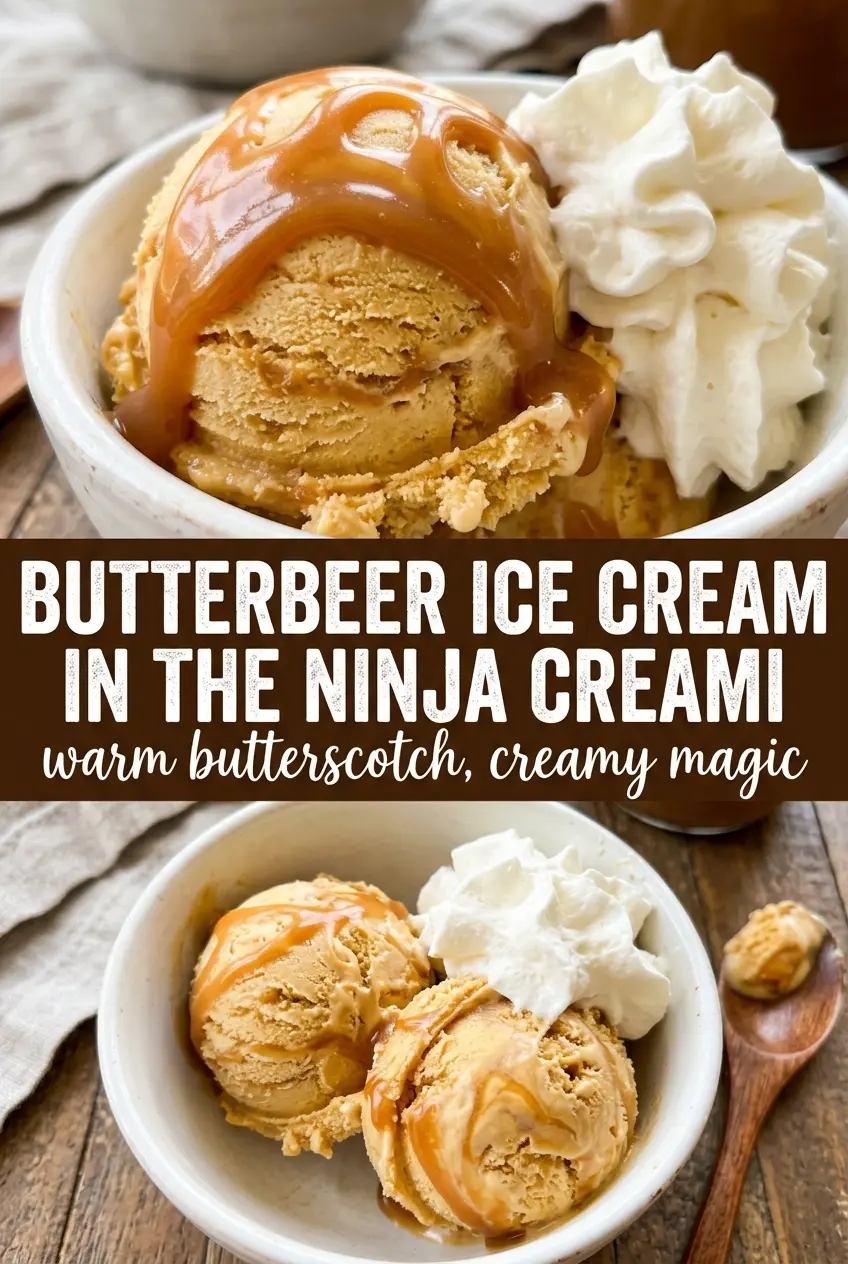
Spoon the finished ice cream into bowls or a themed cup and top it with whipped cream and an extra drizzle of butterscotch sauce. That last drizzle isn’t just decoration; it brightens the flavor on the first bite after the cold base. If the pint has been sitting out for a few minutes and starts to soften, a quick stir brings it back without ruining the texture.
Three Ways to Bend This Butterbeer Pint to Your Pantry
Extra Butterscotch Version
Swap the whipped topping for an extra ribbon of butterscotch sauce through the finished pint. This pushes the dessert toward a richer caramel note and makes the flavor feel heavier and more candy-like.
Dairy-Free Butterbeer Ice Cream
Use full-fat canned coconut cream instead of heavy cream and a dairy-free cream cheese alternative. The texture will still be creamy, but the coconut note will show up a little, so this version tastes softer and less dairy-rich.
Lower-Sugar Version
Cut the brown sugar in half and use a sugar-free butterscotch sauce if you need to lower the sweetness. The pint will still taste like Butterbeer, but it freezes a little firmer and may need the extra cream on the respin.
Storage and Reheating
- Refrigerator: Not recommended once spun; this is best eaten right away, and the texture gets soft fast.
- Freezer: The unspun base freezes well for up to 2 weeks, tightly covered in the pint container.
- Reheating: Not applicable, but if the spun ice cream hardens in the freezer, let it sit at room temperature for 5 to 10 minutes before scooping. Don’t microwave it or the edges will melt before the center softens.
Answers to the Questions Worth Asking
Butterbeer Ice Cream in the Ninja Creami
Ingredients
Equipment
Method
- If using fresh cream soda, let it go flat first (or stir vigorously), then add cream soda to a blender with heavy cream, butterscotch sauce, brown sugar, cream cheese, vanilla extract, butter extract, and salt.
- Blend until completely smooth, scraping down the sides as needed so there are no lumps.
- Pour the mixture into the Ninja Creami pint container, leaving 1 inch of headspace.
- Freeze for 24 hours.
- Process on the Ice Cream setting on the Ninja Creami until the texture looks thick and scoopable.
- If it is too firm, re-spin with 1 tablespoon cream for a softer, creamier result.
- Spoon the ice cream into cups and top with whipped cream.
- Drizzle with butterscotch sauce right before serving.