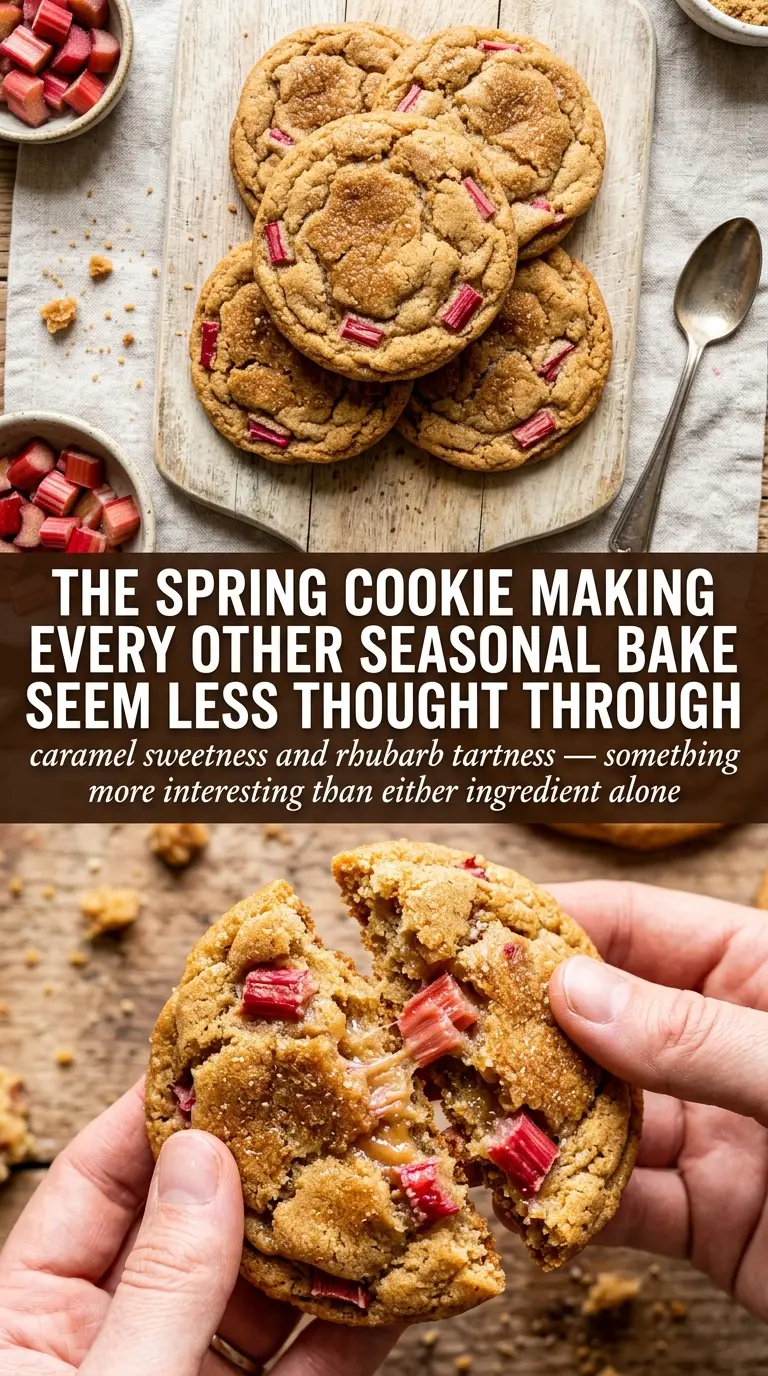
Soft, chewy brown sugar rhubarb cookies have a way of disappearing faster than you expect. The brown sugar gives them a deep caramel note and a tender bite, while the rhubarb bakes down into little pink pockets that turn bright and jammy without making the cookies cakey. The best ones hold their shape, stay soft in the middle, and give you just enough tang to keep each bite interesting.
The trick is keeping the rhubarb finely diced so it disperses evenly through the dough and doesn’t release big wet spots in the pan. Brown sugar does most of the heavy lifting for texture here, but the butter needs to be properly softened and creamed long enough to trap a little air before the flour goes in. That balance is what gives these cookies their chewy centers instead of a heavy, dense crumb.
Below you’ll find the small details that matter most: how to keep the rhubarb from throwing off the texture, when to pull the cookies so the centers stay soft, and what changes if you want to add walnuts or skip them.
The cookies came out soft in the middle with those little tart rhubarb bits baked right through, and the brown sugar made them taste almost caramel-like. I chilled the dough for 15 minutes and they held their shape perfectly.
Save these brown sugar rhubarb cookies for the day you want soft, chewy cookies with tart pink pops in every bite.
The Secret to Keeping Rhubarb Cookies Soft Instead of Wet
Rhubarb is the ingredient that can make or break these cookies. It brings the tart flavor and the pretty pink flecks, but it also carries moisture, and that moisture can turn the dough slippery if the pieces are too large. Finely dicing the rhubarb gives you even distribution and helps it bake into tender pockets instead of soggy streaks.
The other thing that matters here is timing. Once the flour goes in, stop mixing as soon as the dough comes together. Overmixing tightens the dough and makes the cookies tougher, and it doesn’t solve the extra moisture problem from the rhubarb. If the dough feels a little soft, that isn’t a failure — it’s the sign you should keep the scoops modest and give the cookies space on the sheet.
What Each Ingredient Is Actually Doing in Brown Sugar Rhubarb Cookies
- Protein (quality, proper thickness) — Good quality protein tastes better. Even thickness ensures even cooking.
- Seasoning (bold, distributed throughout) — Don’t be shy with salt and pepper. Quality seasoning elevates everything.
- Oil or fat (protective and flavorful) — The fat helps develop crust and carries flavors. Use generously.
- Heat management (appropriate temperature for the protein) — Too high and the outside burns before the inside cooks. Too low and it steams.
- Technique (sear, then finish based on thickness) — Proper technique creates flavor. Sear for crust, then cook through gently.
- Aromatics and seasonings (garlic, herbs, spices) — These add complexity and depth. Distribute them throughout the cooking process.
- Resting time (let it rest before serving) — Resting allows juices to reabsorb. This keeps the protein moist and tender.
- Optional: finishing sauce or glaze — A light sauce adds richness without overwhelming. Apply at the very end.
What the Brown Sugar, Butter, and Rhubarb Are Each Doing
- Brown sugar — This is what gives the cookies their chewy texture and deep, almost caramel flavor. Light brown sugar works fine, but dark brown sugar pushes the molasses note a little farther and makes the cookies taste richer.
- Butter — Softened butter creams with the sugar to create a light base and a tender crumb. If the butter is melted, the dough spreads too much; if it’s too cold, it won’t trap air and the cookies bake up heavy.
- Fresh rhubarb — Fresh rhubarb matters here because frozen rhubarb releases too much water as it bakes. If frozen is all you have, thaw it first, drain it well, and blot it dry before folding it in.
- Walnuts — Optional, but they add a little crunch that plays nicely with the soft cookie. Skip them if you want the rhubarb front and center, or swap in pecans for a milder, buttery finish.
- Vanilla — It smooths out the tart edges of the rhubarb and ties the brown sugar flavor together. It won’t hide the rhubarb; it just gives the cookie a rounder finish.
Mixing the Dough Without Losing the Texture
Creaming the Base
Beat the softened butter and brown sugar until the mixture looks lighter and a little fluffy, not just blended. That takes a couple of minutes and it matters because the air you build here helps the cookies bake up tender. If the mixture still looks greasy and dense, the butter was too warm, and the cookies will spread faster in the oven.
Adding the Dry Ingredients
Stir in the flour mixture just until the last streaks disappear. The dough should look thick and a little shaggy before the rhubarb goes in. If you keep mixing past that point, the cookies turn tougher and the finished texture loses that soft, bakery-style chew.
Folding in the Rhubarb
Add the diced rhubarb at the end and fold it through gently so it stays in pieces instead of breaking down. You want the dough dotted with pink, not streaked with juice. If the rhubarb seems especially wet after chopping, pat it dry with a paper towel before it goes in.
Baking to the Right Finish
Drop the dough in rounded tablespoons and bake just until the edges look lightly golden and the centers are set but still soft. They will keep cooking on the baking sheet for a few minutes after they come out, so pulling them at the right moment is what keeps them chewy. If you wait for the centers to look fully dry in the oven, the cookies will be overbaked by the time they cool.
Ways to Tweak These Cookies Without Losing What Makes Them Work
Skip the walnuts for a softer, simpler cookie
Leaving out the walnuts makes the texture more uniform and lets the rhubarb stand out more clearly. The cookies will still be chewy and flavorful; they’ll just lean softer and less crunchy.
Use dark brown sugar for a deeper caramel note
Dark brown sugar adds more molasses flavor and a slightly darker color. It makes the cookies taste a little richer, but the rhubarb still keeps them bright.
Make them gluten-free with a 1:1 baking blend
A good 1:1 gluten-free flour blend works here because the cookies don’t rely on heavy structure. The texture will be a touch more delicate, so let them cool on the baking sheet before moving them.
Add a little lemon zest for a brighter finish
A teaspoon of finely grated lemon zest sharpens the rhubarb and makes the cookies taste even fresher. It works best if you want the tart side of the recipe to show up more than the brown sugar side.
Storage and Reheating
- Refrigerator: Store in an airtight container for up to 5 days. The cookies stay soft, though the rhubarb will soften a bit more by day two.
- Freezer: These freeze well. Freeze baked cookies in a single layer, then move them to a container or freezer bag for up to 2 months.
- Reheating: Warm a cookie for 8 to 10 seconds in the microwave or a few minutes in a low oven. Too much heat dries out the edges and makes the rhubarb lose its gentle bite.
Questions I Get Asked About This Recipe
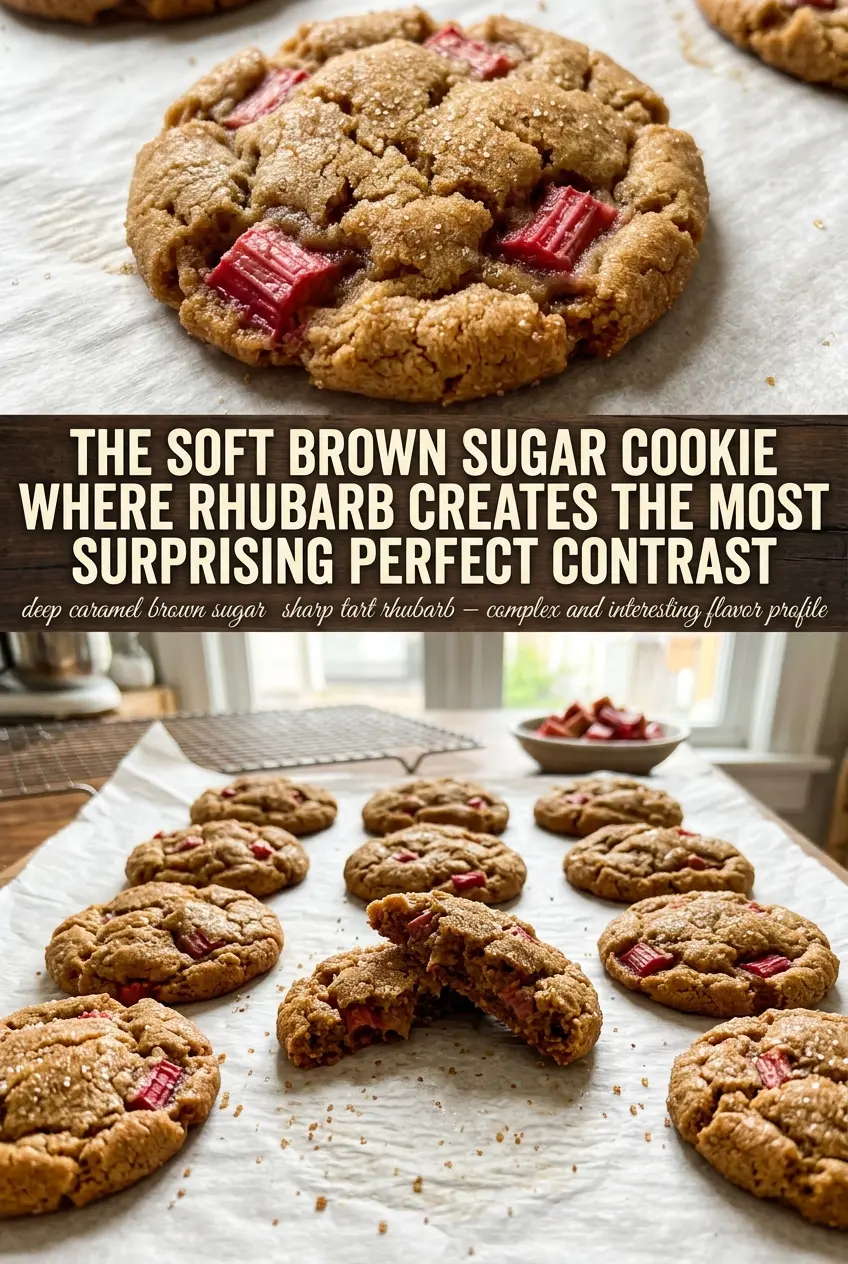
Brown Sugar Rhubarb Cookies
Ingredients
Equipment
Method
- Preheat the oven to 350°F and line baking sheets with parchment paper.
- Whisk together all-purpose flour, baking soda, and salt until evenly combined.
- Cream the butter and brown sugar until fluffy.
- Beat in the eggs and vanilla extract until smooth and combined.
- Gradually mix in the flour mixture until just combined, with no dry streaks left.
- Fold in the diced fresh rhubarb and the chopped walnuts if using.
- Drop rounded tablespoons of dough onto the prepared baking sheets, spacing them about 2 inches apart.
- Bake at 350°F for 10-12 minutes, until the edges are lightly golden and the centers are set.
- Cool on the baking sheet for 5 minutes before transferring to a wire rack.