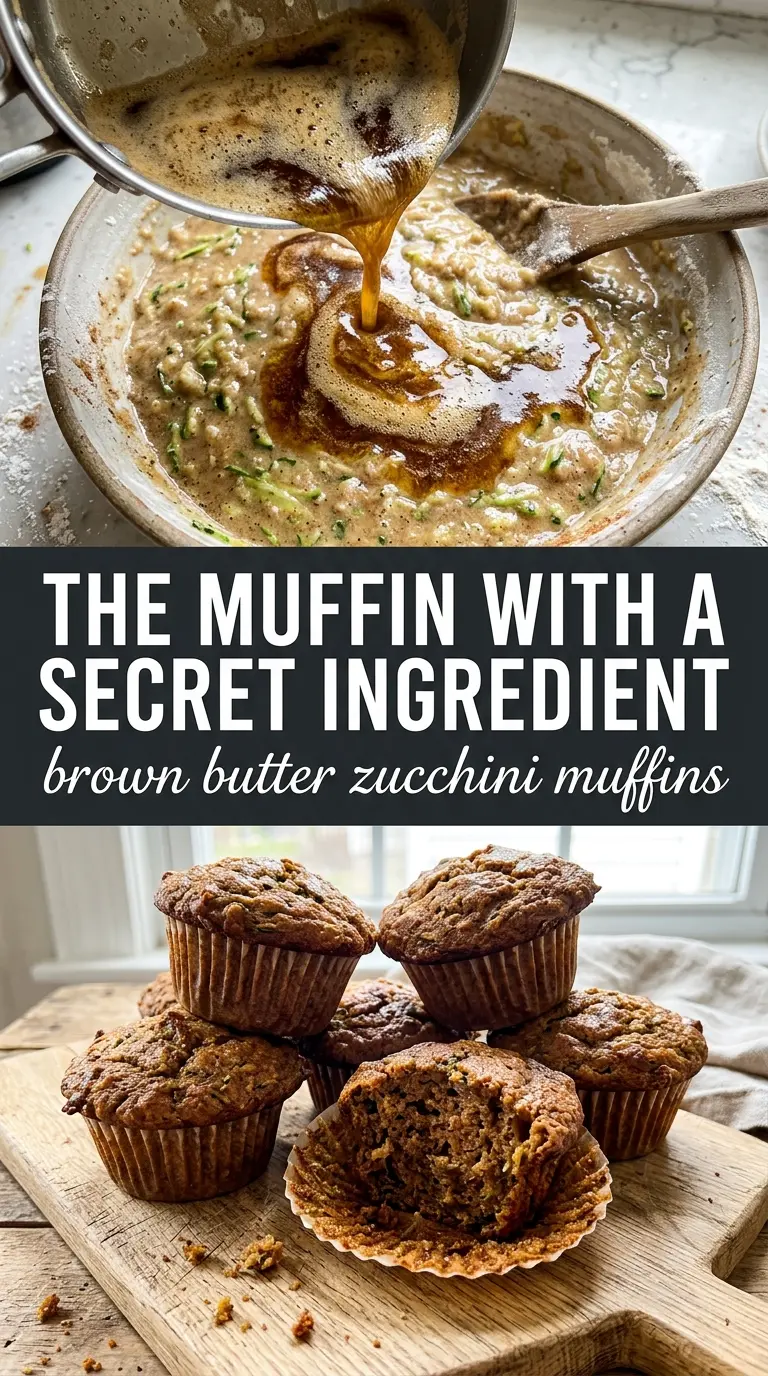
Brown butter zucchini muffins bake up with a deep, nutty aroma, a tender crumb, and a slightly crisp top that makes them feel a little more special than the usual quick breakfast muffin. The zucchini keeps them soft without making them heavy, and the brown butter brings a caramel-like richness that turns a simple batter into something worth repeating.
The key is treating the butter like an ingredient with its own job, not just melted fat. Once it turns amber and smells toasted, it needs to cool before it meets the eggs and sugar, or you’ll risk scrambling the batter and losing that smooth, bakery-style texture. Squeezing the zucchini dry matters too; too much moisture makes the muffins dense instead of fluffy.
Below, you’ll find the small details that make these muffins come out evenly domed and never gummy, plus a few smart ways to adapt them depending on what you have in the pantry.
The brown butter made these taste like something from a bakery, and the crumb stayed tender for two days. I was worried the zucchini would make them wet, but squeezing it out kept the tops beautifully domed.
Like these brown butter zucchini muffins? Save them to Pinterest for the mornings when you want a nutty, bakery-style muffin with a crisp top and a soft, tender crumb.
The Brown Butter Needs to Cool Before It Touches the Eggs
Brown butter is what gives these muffins their depth, but it also changes how the batter behaves. If you whisk it straight into the eggs while it’s still hot, the eggs can start to set and the batter turns lumpy before you’ve even added the flour. Letting it cool for those 10 minutes keeps the texture smooth and gives the sugar a chance to dissolve into the butter instead of sitting grainy in the bowl.
The other trap is overmixing once the flour goes in. Quick bread batter should look a little rough when you stop stirring. That’s what keeps the crumb soft instead of tight and bready.
- Brown butter — Use a light-colored pan so you can actually see the milk solids turn golden. Once it smells nutty and turns amber, get it out of the pan fast; it goes from perfect to burnt in a matter of seconds.
- Zucchini — Grate it finely, then squeeze it firmly in a clean towel or your hands. Damp zucchini is the difference between a muffin that bakes up tender and one that turns wet in the middle.
- Brown sugar — This adds moisture and a deeper caramel note that works with the browned butter. Packed brown sugar gives the muffins their soft, rich texture.
- Walnuts or pecans — Optional, but they add a nice toasty crunch against the soft crumb. Toast them first if you have time; it makes the nut flavor carry through the whole muffin.
What Each Ingredient Is Actually Doing in This Recipe
- Primary ingredient (the star) — Quality matters most. Choose the best you can find.
- Cooking medium (oil, butter, or broth) — This carries flavors and prevents dryness.
- Seasonings (salt, pepper, spices, herbs) — Layer flavors so nothing overpowers. Build depth gradually.
- Aromatics (garlic, onion, herbs) — Cook with fat to bloom flavors. Become the foundation.
- Supporting ingredients — Complement the main ingredient without overpowering it.
- Sauce or liquid (if applicable) — Brings flavors together. Balance richness with acid.
- Acid (lemon, vinegar, wine, or other) — Brightens and prevents flat-tasting results.
- Final finish (garnish, glaze, or sauce) — Prevents one-dimensional taste and adds visual appeal.
Building the Batter Without Losing That Bakery-Style Rise
Preheat the oven before you start mixing so the batter goes into a fully hot oven. That first burst of heat helps the muffins rise quickly and build a domed top. When you combine the wet and dry ingredients, stir only until you stop seeing dry flour. A few streaks are better than a batter that’s been worked too long.
Brown the Butter First
Melt the butter in a light-colored saucepan over medium heat and keep it moving. The foam will subside, then the milk solids will sink and begin to toast on the bottom. You’re looking for a deep golden amber color and a nutty smell; once you hit that point, pour it into a bowl right away so the residual heat doesn’t carry it too far.
Mix the Wet Ingredients While the Butter Cools
Whisk the cooled brown butter with the sugars until the mixture looks glossy, then add the eggs and vanilla. It should look smooth and slightly thick, not separated. If the butter is still too warm, the mixture may look oily or loose, and that’s your signal to wait a few more minutes before moving on.
Fold in the Zucchini at the End
Once the dry ingredients and wet ingredients are just combined, fold in the squeezed zucchini and nuts. Adding the zucchini too early can release extra moisture while you’re still stirring, which works against the structure you’ve already built. Divide the batter evenly and fill each cup about three-quarters full so the tops have room to rise without spilling over.
Bake Until the Tops Set and the Centers Clear
Bake at 350°F for 20 to 22 minutes. The muffins should be deeply golden on top, slightly springy in the center, and a toothpick should come out clean or with a few dry crumbs. Let them sit in the pan for 5 minutes before moving them to a rack; that short rest helps them finish setting without turning soggy underneath.
Three Ways to Adjust These Muffins Without Losing the Good Part
Dairy-Free Brown Butter Swap
Use a plant-based butter that browns well, but watch it carefully because some brands foam differently and don’t show color as clearly. You’ll still get a toasted, nutty edge, though it won’t be quite as deep as real dairy brown butter.
Gluten-Free Muffins That Still Hold Together
Swap in a good 1:1 gluten-free flour blend that includes xanthan gum. The muffins will be a touch more delicate, so let them cool fully before moving or slicing; that extra setting time keeps the crumb from crumbling apart.
Nut-Free Version
Leave out the walnuts or pecans and bake as written. The muffins will be a little softer and less crunchy on top, but the brown butter and cinnamon still give them plenty of character.
Extra-Loaded Zucchini Muffins
You can add a small handful of chocolate chips or raisins if that’s the direction you want, but don’t overdo it. Too many mix-ins weigh down the batter and steal the focus from the browned butter, which is the whole point here.
Storage and Reheating
- Refrigerator: Store in an airtight container for up to 4 days. The tops soften a little after the first day, but the crumb stays moist.
- Freezer: These freeze well. Wrap individually and freeze for up to 2 months, then thaw at room temperature.
- Reheating: Warm a muffin in the microwave for 10 to 15 seconds or in a 300°F oven for 5 to 7 minutes. Don’t overheat them or the crumb turns dry and the browned butter flavor gets lost.
Questions I Get Asked About This Recipe

Brown Butter Zucchini Muffins
Ingredients
Equipment
Method
- Melt butter in a light-colored saucepan over medium heat, stirring frequently, until it turns golden amber and smells nutty—about 5 minutes.
- Immediately pour the browned butter into a bowl and cool for 10 minutes.
- Preheat the oven to 350°F and line a 12-cup muffin tin with liners.
- Whisk flour, baking soda, baking powder, cinnamon, nutmeg, and salt in a large bowl until evenly combined.
- Whisk the cooled brown butter with both sugars, eggs, and vanilla until smooth.
- Stir the wet mixture into the dry ingredients until just combined.
- Fold in grated zucchini and toasted nuts if using.
- Divide batter evenly among the muffin cups, filling each ¾ full.
- Bake for 20–22 minutes at 350°F until deeply golden and a toothpick comes out clean.
- Cool in the pan for 5 minutes before transferring.