Sticky, glossy Bourbon Maple BBQ Chicken Skewers hit that sweet spot between smoky grill flavor and a lacquered glaze that clings to every bite. The bourbon doesn’t make these taste boozy; it adds warmth and depth that plays against the maple syrup and tangy BBQ sauce. Once they come off the grill, the edges caramelize into little charred pockets that taste like you worked a lot harder than you did.
The trick is keeping the marinade balanced enough to season the chicken without turning sugary on the grill. A little Dijon sharpens the sauce, apple cider vinegar keeps the sweetness from flattening out, and reserving part of the glaze for basting gives you that sticky finish without risking raw chicken drippings in the sauce. Cubed chicken breast cooks fast, so the skewers stay juicy if you stop at 165°F and pull them the moment the glaze turns tacky.
Below, I’ve included the part that matters most: how to keep the glaze from burning before the chicken is cooked through, plus a few swaps that still give you that sweet-savory finish.
The glaze thickened up on the grill and coated the chicken instead of sliding off. I marinated it for about 2 hours and the skewers came off juicy with those sticky caramelized edges everyone kept grabbing first.
Save these bourbon maple BBQ chicken skewers for the next time you want a glossy grilled main dish with sweet-savory caramelized edges.
The Trick Is Basting Without Burning the Sugar
Most grilled chicken skewers fail in one of two ways: they dry out before they’re done, or the glaze scorches into a bitter shell before the center has time to cook. This version avoids both problems by splitting the sauce in two. One portion does the marinating, and the reserved portion gets brushed on during the last few minutes, when it can reduce into a sticky coating instead of burning on contact.
The other key is medium heat, not a roaring grill. Bourbon, maple syrup, and barbecue sauce all contain sugar, and sugar needs control. If the flame is too hot, the outside darkens too fast and the chicken still needs time. Keep the skewers moving, brush lightly, and look for the glaze to turn shiny and thick enough to cling when you lift the brush away.
What the Bourbon, Maple, and Dijon Each Bring to the Skewers
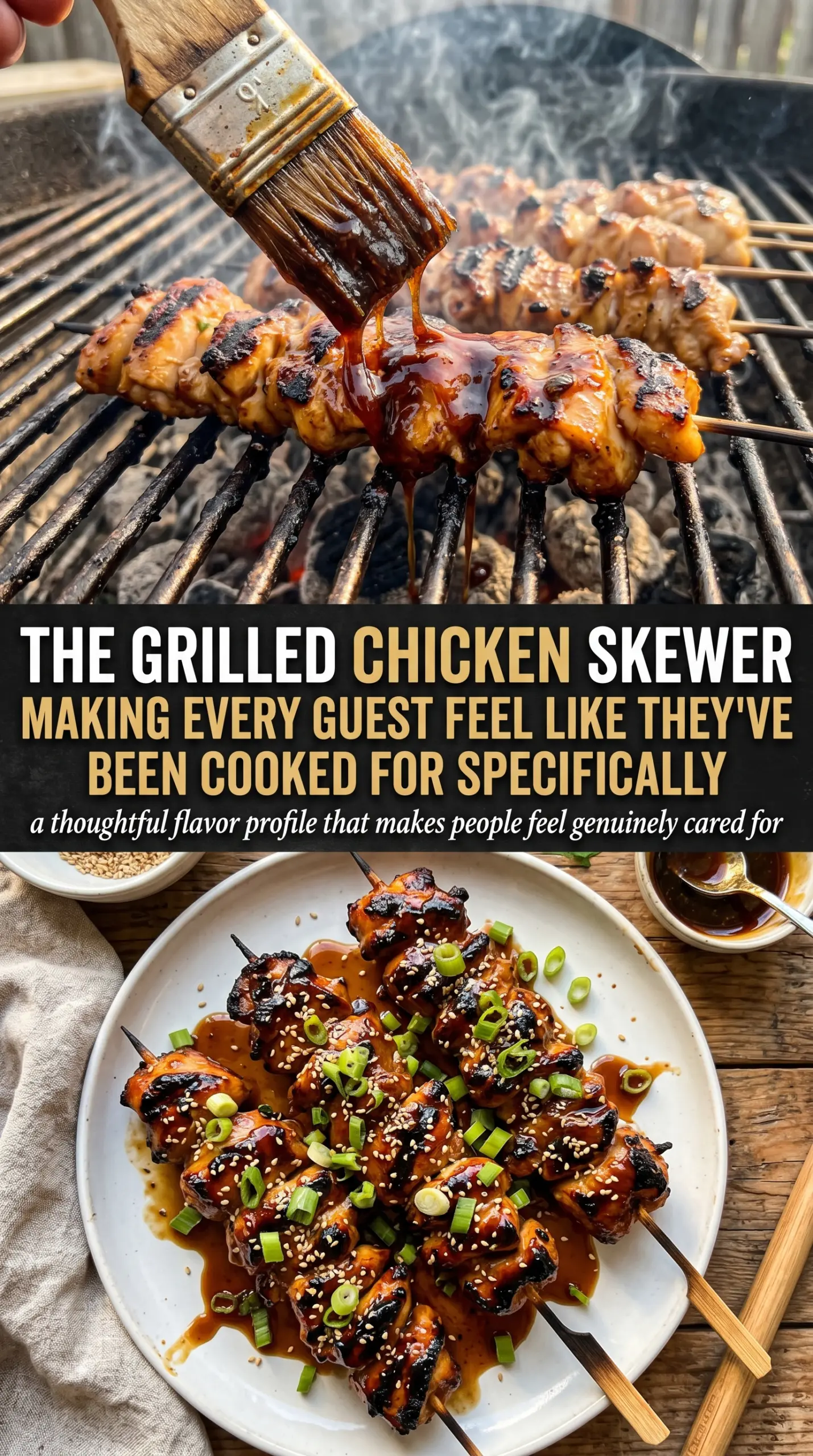
- BBQ sauce — This gives the skewers their backbone, plus the smoky-savory base that makes the maple feel grounded instead of candy-sweet. Use a sauce you’d happily eat on its own, because there’s nowhere for a weak sauce to hide here.
- Bourbon — The bourbon adds warmth and a little oakiness, and it helps loosen the sauce so it coats the chicken evenly. You don’t need an expensive bottle, but use something you’d drink, not cooking “whiskey flavoring” or an overly harsh pour.
- Maple syrup — Real maple syrup is what gives the glaze that glossy finish and deep caramel note. Pancake syrup won’t reduce the same way and tends to taste flatter after grilling.
- Apple cider vinegar — This keeps the sauce from reading too sweet and helps the glaze taste brighter once it hits the heat. If you swap it, use another mild vinegar; strong white vinegar can take over.
- Dijon mustard — Dijon helps emulsify the marinade so the bourbon and syrup don’t separate as much, and it adds a sharp note that keeps the chicken from tasting one-dimensional. Yellow mustard works in a pinch, but it’s harsher and less balanced.
- Chicken breasts — Breasts cook quickly and stay tender when cut into even cubes. If the pieces are different sizes, the smaller ones dry out before the larger ones are done, so take a minute to cut them consistently.
The Part of the Grill Time That Actually Matters
Building the Marinade
Whisk the BBQ sauce, bourbon, maple syrup, vinegar, and Dijon until the mixture looks smooth and glossy. Reserve a quarter cup before the chicken goes in so you have a clean basting sauce later. If you skip that separation, you’ll be tempted to use raw marinade on cooked chicken, and that’s not worth the risk.
Marinating the Chicken
Coat the chicken cubes in the remaining sauce and let them sit for 1 to 4 hours. Less than an hour won’t give the flavor time to move into the meat, and much longer than 4 hours can start to change the texture of the chicken breast. Stir once halfway through if you can, especially if the marinade is thick and clinging to the bottom of the bowl.
Threading and Grilling
Soak the wooden skewers first, then thread the chicken on with small gaps between pieces so heat can reach the sides. Grill over medium heat for 5 to 6 minutes per side, basting often but lightly. Watch the glaze, not just the clock: it should darken, bubble, and turn sticky, while the chicken reaches 165°F at the thickest piece.
Finishing for Shine
Pull the skewers as soon as they hit temperature and the glaze looks lacquered. Let them rest for a couple of minutes before serving so the juices settle and the coating tightens up. If you slice too soon, the juice runs out and takes some of that sticky finish with it.
How to Adapt These Skewers Without Losing the Sticky Finish
Make Them Gluten-Free with a Quick Sauce Check
Use a gluten-free BBQ sauce and confirm your Dijon and vinegar are certified or naturally gluten-free. The texture and glaze behavior stay the same, but the flavor depends on the BBQ sauce, so choose one with enough body to caramelize well.
Swap in Chicken Thighs for a Juicier Bite
Boneless thighs can stand up to a little more heat and stay juicier if your grill runs hot. They take a few minutes longer than breast meat, and the glaze will look a little darker because thighs have more fat, which is a good trade if you want a richer finish.
Skip the Bourbon for an Alcohol-Free Version
Replace the bourbon with apple juice or chicken broth plus an extra teaspoon of vinegar for balance. You’ll lose some of the deep, oaky warmth, but the skewers still get a glossy sweet-savory glaze that works well for family dinners or mixed crowds.
Turn Them into Broiler Skewers
If grilling isn’t an option, broil the skewers close to the heat source and turn them often so the sugar doesn’t scorch on one side. The glaze won’t pick up the same smoky edge, but you’ll still get good caramelization and a sticky finish in less time.
Storage and Reheating
- Refrigerator: Store leftovers in an airtight container for up to 4 days. The glaze thickens in the fridge, and the chicken stays flavorful, though the exterior won’t stay as glossy.
- Freezer: These freeze well for up to 2 months if you remove the chicken from the skewers first. Wrap tightly and thaw in the fridge overnight before reheating.
- Reheating: Warm gently in a covered skillet over low heat or in a 300°F oven until heated through. High heat dries out the chicken and can make the sugar on the glaze hard and bitter.
Questions I Get Asked About This Recipe
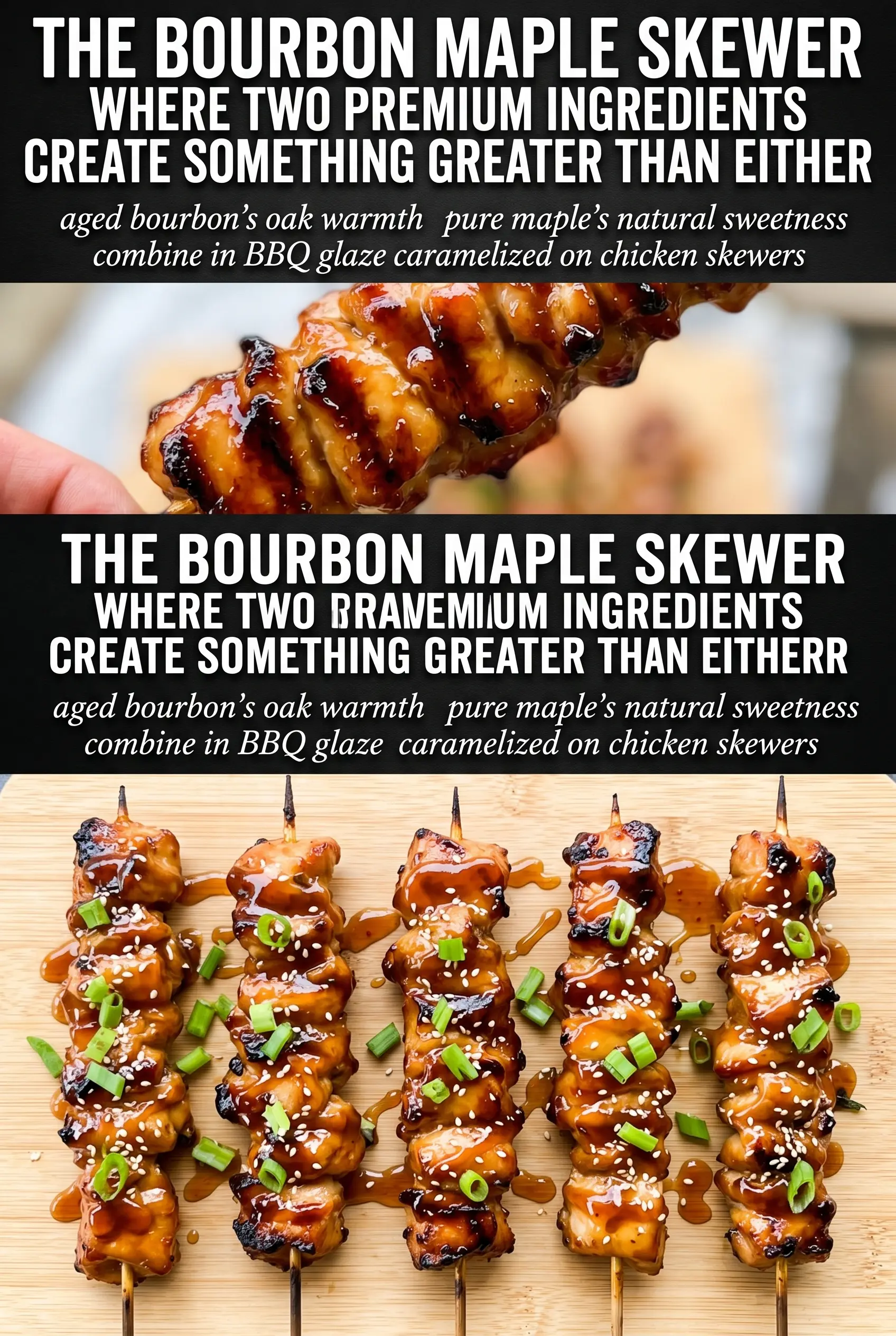
Bourbon Maple BBQ Chicken Skewers
Ingredients
Equipment
Method
- In a bowl, mix BBQ sauce, bourbon, maple syrup, apple cider vinegar, and Dijon mustard until smooth.
- Reserve 1/4 cup of the mixture for basting.
- Marinate the chicken in the remaining sauce for 1-4 hours in the refrigerator, keeping it covered.
- Thread the marinated chicken onto the soaked wooden skewers, leaving a little space between pieces.
- Grill over medium heat for 5-6 minutes per side, basting frequently with the reserved sauce for a glossy finish.
- Cook until the chicken reaches 165°F and the glaze is sticky, with visible caramelization on the edges.