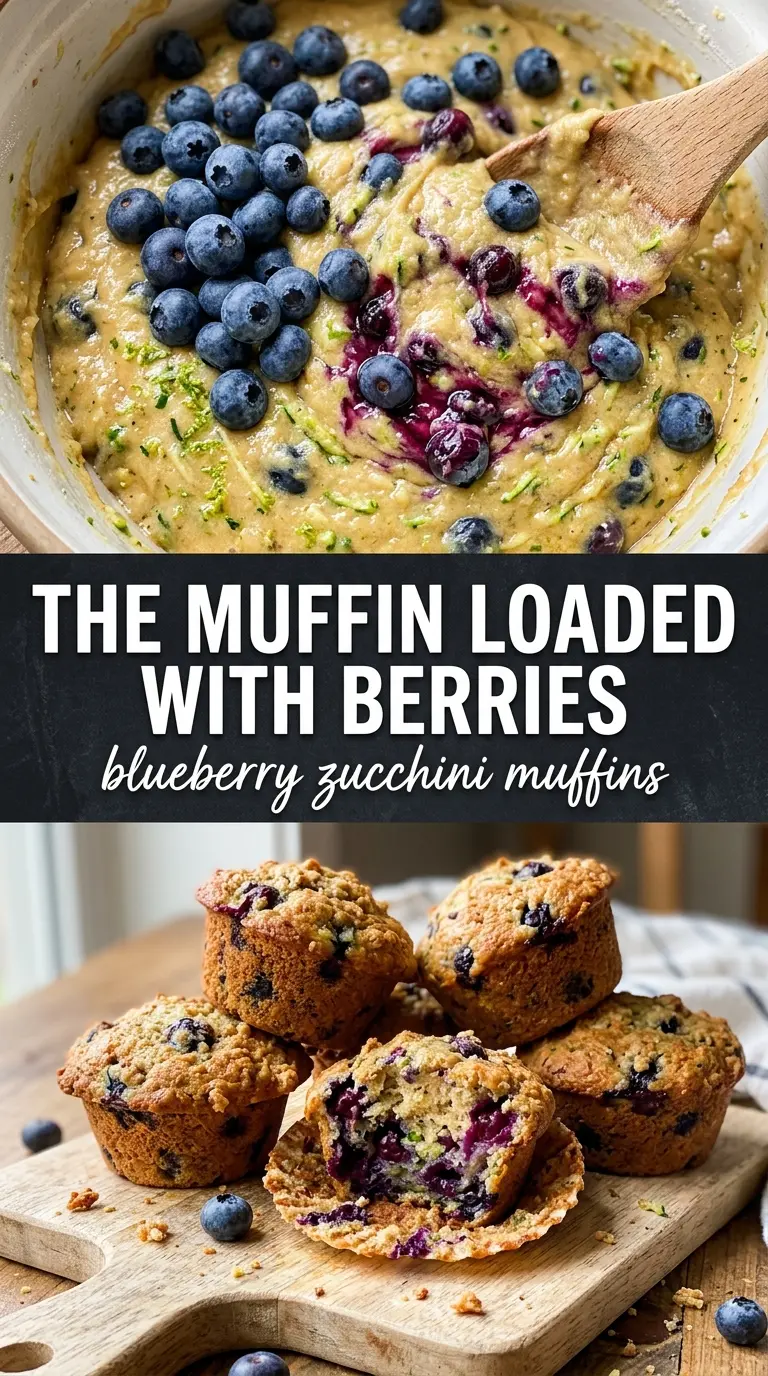
Bursting blueberries, a tender crumb, and just enough zucchini to keep every bite soft and moist without tasting like vegetables — that’s what makes these muffins worth baking on repeat. The tops bake up lightly domed and golden, while the berries melt into little pockets of jammy sweetness that streak the crumb with purple.
The trick is squeezing the zucchini dry before it goes into the bowl. That keeps the batter from turning heavy or wet. Tossing the blueberries with a little flour helps them stay suspended instead of sinking to the bottom, and the yogurt gives the muffins a soft, bakery-style texture without needing a lot of extra fat.
Below you’ll find the small details that matter most: how to keep the berries from bleeding too much, what to watch for in the last few minutes of baking, and a few smart swaps if you need to work with frozen fruit or dairy-free ingredients.
I used frozen blueberries and squeezed the zucchini really well, and the muffins still baked up fluffy instead of soggy. The little flour toss kept the berries from all sinking, and the tops came out with those pretty purple streaks.
Save these blueberry zucchini muffins for the mornings when you want a soft, berry-packed breakfast muffin with a tender crumb and no soggy center.
The Muffin Batter Problem Most People Miss
The biggest mistake with zucchini muffins is treating the zucchini like a regular dry ingredient. It isn’t. Even after grating, it carries enough moisture to loosen the batter and steal the structure if you skip the squeeze. Once the wet ingredients go in, the batter should look thick and scoopable, not loose like cake batter. That thicker batter is what helps the blueberries stay where you want them and gives the muffins their domed tops.
The other place people run into trouble is overmixing after the flour goes in. Stir until the last streaks disappear, then stop. A few lumps are fine. Overworking the batter makes the muffins tough and can flatten the rise, which is the opposite of what you want with a breakfast muffin this soft.
What the Zucchini, Yogurt, and Blueberries Each Do Here
- Zucchini — Grate it finely and squeeze it dry in a clean towel or your hands. It adds moisture and softness without a noticeable vegetable flavor, but only if you remove the excess water first. Skipping that step can make the centers gummy.
- Plain yogurt — This is what gives the muffins their tender, bakery-style crumb. Sour cream works one-for-one if that’s what you have, and the result will be just as moist with a slightly richer finish.
- Blueberries — Fresh or frozen both work. If you’re using frozen, don’t thaw them first or they’ll bleed too much into the batter; toss them in flour straight from the freezer and fold them in gently at the end.
- Vegetable oil — Oil keeps the crumb soft even after the muffins cool. Melted butter can be used, but the texture will be a little firmer and less plush the next day.
Building the Batter Without Crushing the Berries
Mix the dry ingredients first
Whisk the flour, baking powder, baking soda, cinnamon, and salt together until the mixture looks even from edge to edge. That quick step keeps the leaveners from clumping, which matters in muffins because you don’t get a long mix later to correct it. If you see little pockets of baking soda in the baked muffins, the dry ingredients were not mixed well enough.
Bring the wet ingredients together
Beat the eggs, sugar, oil, yogurt, and vanilla until the mixture looks smooth and glossy. The sugar should start to dissolve into the wet ingredients, and the oil should look fully incorporated instead of sitting in a slick on top. This is where the muffin gets its fine, even crumb.
Fold in the zucchini and blueberries last
Stir the wet mixture into the dry just until no dry flour remains, then fold in the zucchini. Toss the blueberries with the flour and fold them in gently with a spatula using only a few strokes. If you stir too much at this stage, the berries break and the batter turns purple instead of staying dotted with whole berries.
Bake until the tops spring back
Fill the muffin cups about three-quarters full and bake at 375°F until the tops are lightly golden and a toothpick comes out clean or with a few moist crumbs. The centers should feel set when you touch the top lightly, but they shouldn’t look dry. Let them sit in the pan for five minutes before moving them, because hot muffins fall apart if you try to lift them out too soon.
How to Adapt These Muffins Without Losing the Good Texture
Use frozen blueberries without thawing them
Frozen berries work well here, and they’re often the easiest option. Keep them frozen, toss them in flour, and fold them in at the very end. Thawing first makes them weep juice into the batter and can leave you with purple streaks throughout instead of distinct berries.
Make them dairy-free
Swap the yogurt for an unsweetened dairy-free yogurt with a thick texture, not a thin drinkable style. The batter should still look thick enough to scoop. If the yogurt is watery, the muffins can bake up dense and a little wet in the center.
Add lemon zest for a brighter muffin
A teaspoon of finely grated lemon zest lifts the blueberries and makes the muffins taste fresher without changing the texture. Add it to the wet ingredients so the oils in the zest disperse evenly. This is a good move if your berries are very sweet or the zucchini tastes mild.
Swap in whole wheat flour with care
You can replace up to half the all-purpose flour with whole wheat flour for a nuttier muffin, but don’t swap all of it unless you want a denser crumb. Whole wheat absorbs more liquid, so the muffins will be a little less tender and may need a splash more yogurt if the batter looks stiff.
Storage and Reheating
- Refrigerator: Store in an airtight container for up to 4 days. The crumb stays soft, though the tops lose a little of their fresh-baked lift.
- Freezer: These freeze well for up to 2 months. Wrap individually or freeze in a single layer, then move to a bag or container once solid.
- Reheating: Warm from frozen or refrigerated in the microwave for 15–25 seconds, or in a 300°F oven for about 8 minutes. Don’t overheat them or the blueberries can burst and make the crumb rubbery.
Answers to the Questions Worth Asking

Blueberry Zucchini Muffins
Ingredients
Equipment
Method
- Preheat your oven to 375°F and line a 12-cup muffin tin with liners, keeping the tins ready for filling. This ensures even baking from the first batch.
- Whisk all-purpose flour, baking powder, baking soda, cinnamon, and salt in a large bowl until evenly combined. The mixture should look uniform in color with no visible baking powder clumps.
- In a separate bowl, beat eggs, granulated sugar, vegetable oil, plain yogurt, and vanilla extract until smooth. The batter base should be glossy and thoroughly blended.
- Stir the wet mixture into the dry ingredients until just combined, stopping as soon as no dry streaks remain. Overmixing will make the crumb tough.
- Fold in the grated and squeezed-dry zucchini so it distributes as green flecks through the batter. The batter should remain thick and scoopable.
- Toss the blueberries with the 1 tablespoon of flour to prevent sinking, then gently fold them into the batter. You should see berries suspended throughout with some ready to burst.
- Divide batter among the muffin cups, filling each about ¾ full for bakery-style domes. Tap the pan lightly if the tops need to settle evenly.
- Bake at 375°F for 20–22 minutes, until golden and a toothpick comes out clean. Look for a pale gold crown with a few blueberries splitting and leaving purple streaks.
- Cool the muffins in the pan for 5 minutes before transferring them to a rack. This sets the crumb while keeping the tops tender.