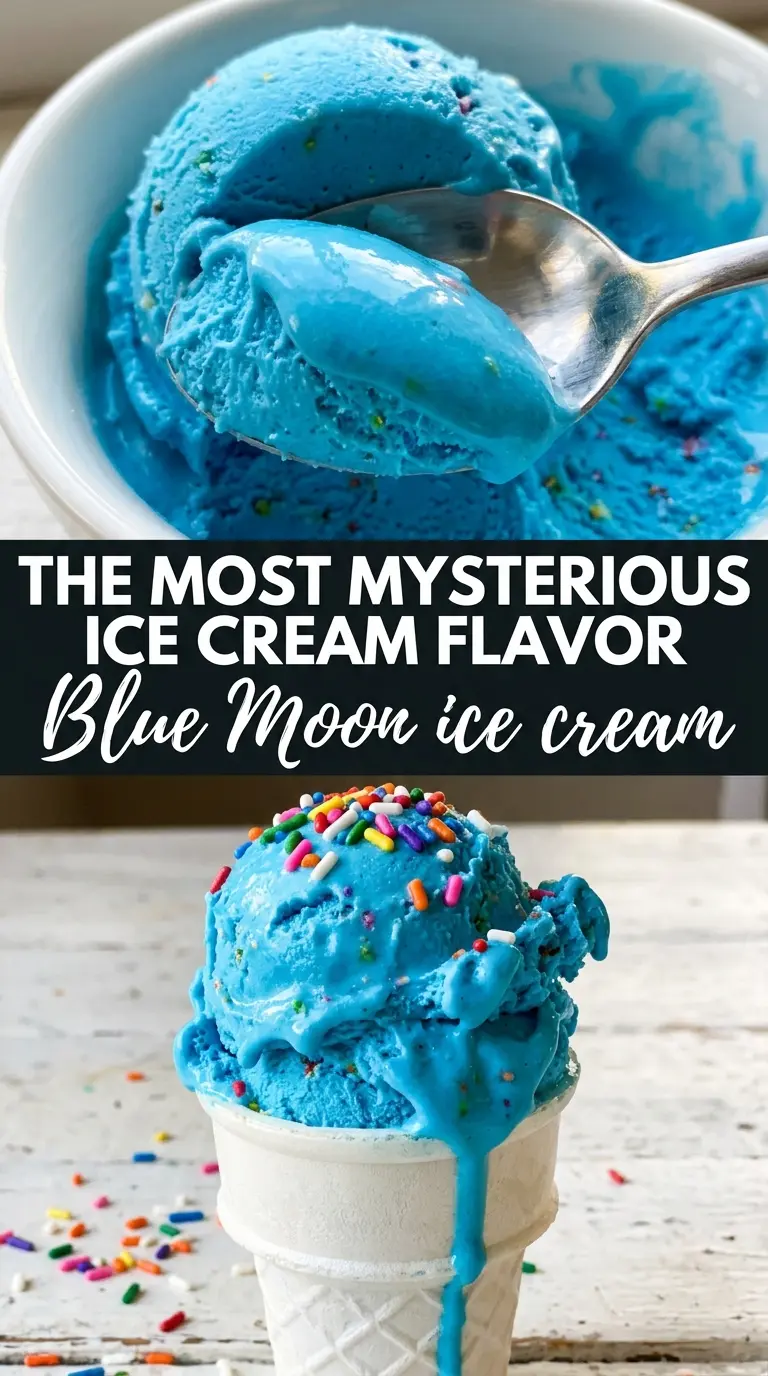
Blue Moon ice cream is the kind of scoop that gets people talking before they’ve even tasted it. The color does half the work, but the flavor is what keeps it in the freezer: creamy, lightly almondy, a little citrusy, and just fruity enough to feel nostalgic without turning into candy. Churned properly, it sets up with that smooth, dense scoop-shop texture that holds its shape in a cone and melts into a soft, silky edge.
The trick is in the base. Egg yolks give it body, but they need gentle heat and steady whisking so they don’t turn grainy. The extracts go in after cooking so their flavor stays bright, and the blue food coloring gets added gradually, because once the color is dark enough, it reads electric even before it freezes. That balance of cream, almond, vanilla, raspberry, and lemon is what gives Blue Moon its signature taste instead of just making it taste like blue dye.
Below, I’ll walk through the step that keeps the custard smooth, how to layer the extracts without muddying the flavor, and a few smart swaps if you want to lean more fruity or more classic.
The custard came out unbelievably smooth, and the blueberry-blue color was spot on. I chilled it overnight and it churned into the creamiest scoopable texture, just like the old ice cream shop version I remember.
Love the electric blue color and nostalgic almond-citrus flavor of this Blue Moon ice cream? Save it to Pinterest for the next time you want a scoop that looks wild and churns up silky.
The Secret to Keeping Blue Moon Ice Cream Smooth, Not Eggy
Blue Moon ice cream has a flavor that’s delicate enough to get lost if the base is overcooked. That’s why the custard needs to reach 175°F and then come off the heat immediately. Push it much farther and the yolks start tasting heavy instead of creamy, which covers up the almond and citrus notes that make this ice cream recognizable.
Straining matters here too. Even if the custard looks smooth in the pan, a fine sieve catches any tiny bits of cooked egg before they turn into a gritty frozen finish. Once that base is cold, the churn gives it the dense, airy texture you want, but only if the mixture has been thoroughly chilled first. Warm custard in the machine leads to a loose, icy texture that never firms up quite right.
What Each Extract Is Actually Doing in the Bowl
- Heavy cream — This is what gives the ice cream its lush body. A lower-fat substitute will freeze harder and taste flatter, so keep the cream if you want that classic scoop-shop finish.
- Whole milk — It loosens the custard just enough so the finished ice cream doesn’t feel heavy. Half-and-half can work in a pinch, but the texture will be richer and a little denser.
- Egg yolks — They thicken the base and help it stay smooth after freezing. Don’t swap them out if you want the old-fashioned custard texture; this is the ingredient that gives the ice cream its real body.
- Almond extract — This is the backbone of Blue Moon flavor. It reads unmistakably nostalgic, and even a small amount matters.
- Raspberry extract or blue raspberry flavoring — This adds that fuzzy fruity note people remember, even when they can’t name it. Use a light hand; too much makes the flavor candy-like instead of balanced.
- Lemon extract — A tiny amount sharpens the whole bowl and keeps the flavor from going dull. It doesn’t make the ice cream taste lemony; it just lifts the almond and berry notes.
- Blue food coloring — The flavor comes from the extracts, but the color is part of the experience. Add it drop by drop until you hit that bright electric shade, because the frozen color will look slightly softer than the base does in the bowl.
Cooking the Custard, Then Freezing It at the Right Moment
Warming the Dairy Base
Heat the cream and milk until they’re steaming and just beginning to look foamy around the edges. You don’t want a full boil, because that makes the dairy cling to the pan and cook unevenly. While that heats, whisk the yolks and sugar until the mixture looks pale and slightly thicker, which helps it accept the hot dairy without scrambling.
Tempering the Yolks
Slowly whisk the hot cream mixture into the yolks in a thin stream. If you dump it in all at once, the eggs seize and you’ll end up with little cooked bits instead of custard. Once everything is combined, pour it back into the saucepan and keep the heat low and steady.
Cooking to Custard Texture
Stir constantly and watch for the mixture to thicken enough to coat the back of a spoon. At 175°F, it should look glossy and slightly velvety. If you overshoot and let it boil, the texture turns grainy, so pull it off the heat the moment it reaches temperature and strain it right away.
Flavoring, Coloring, and Chilling
Stir in the extracts after the custard is off the heat so their flavor stays bright. Add the blue coloring a few drops at a time until the color looks boldly electric; it usually takes more than you think, but stop before it gets navy. Chill the base completely before churning, because ice cream machines work best when the mixture is cold enough to thicken fast instead of sloshing around.
Make It More Fruity
Increase the raspberry extract by a few drops and cut the lemon slightly back. You’ll get a brighter, more sherbet-like Blue Moon that leans toward berry candy without losing the creamy base.
Classic Almond-Forward Version
Leave the raspberry at the listed amount and let the almond extract stay dominant. This tastes closest to the old-school Midwest version, with a softer fruity finish instead of a candy-blue punch.
Dairy-Free Swap
Use full-fat coconut milk in place of the cream and milk, but expect a faint coconut note and a slightly softer freeze. The custard won’t taste identical, yet the extracts still carry the signature Blue Moon profile well.
Storage and Reheating
- Refrigerator: The churned base should be eaten after freezing, not stored in the fridge. Before churning, the custard can chill up to 24 hours and actually improves in flavor.
- Freezer: Keeps well for about 2 weeks with a tight lid pressed against the surface of the ice cream. After that, it can pick up ice crystals and lose some of its creamy texture.
- Reheating: This recipe doesn’t need reheating. For the best scoop, let it sit at room temperature for 5 to 10 minutes so it softens just enough to glide from the scoop instead of cracking.
Answers to the Questions Worth Asking
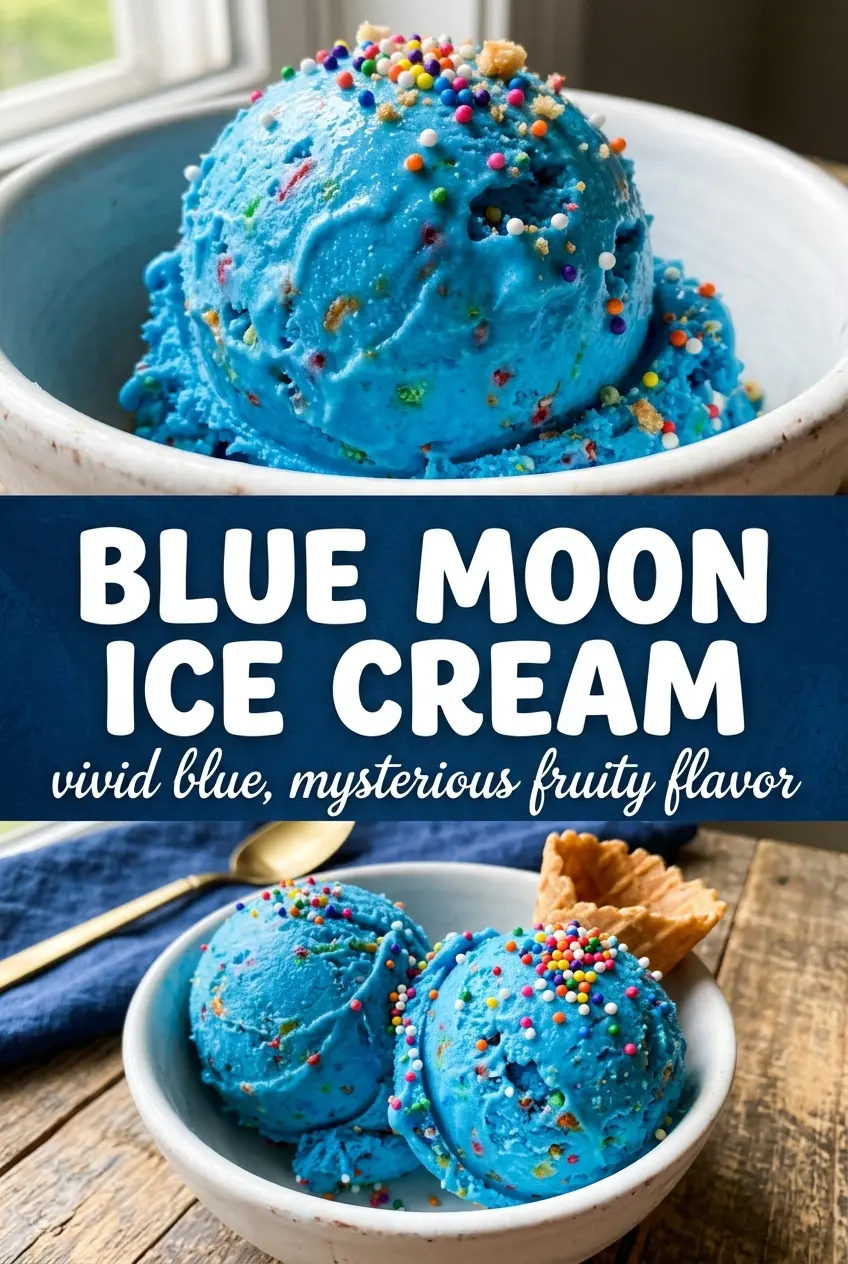
Blue Moon Ice Cream
Ingredients
Equipment
Method
- Heat the heavy cream and whole milk in a saucepan until steaming. Keep the heat at a steady simmer and watch for steam rather than a rolling boil.
- Whisk the egg yolks with the granulated sugar until smooth and slightly thickened. Pour in the steaming cream mixture slowly while whisking continuously.
- Return the mixture to the saucepan and cook, stirring, until it reaches 175°F. Aim for a thickened custard consistency and stop at 175°F to avoid scrambling.
- Strain the custard and cool it slightly. Let it become warm rather than hot before adding extracts.
- Stir in the almond extract, vanilla extract, raspberry extract or blue raspberry flavoring, and lemon extract. Mix until fully combined and evenly perfumed.
- Add blue food coloring a few drops at a time until the desired electric blue is achieved. Pause between drops so the color builds to the vivid shade.
- Cool the custard completely. Refrigerate for 4 hours until thoroughly chilled.
- Churn the chilled custard in an ice cream maker. Churn until it becomes thick like soft-serve.
- Freeze the churned ice cream until firm. Transfer to a container and freeze long enough to scoop cleanly.