Melty, crisp-edged quesadilla wedges arranged into a ring turn a familiar weeknight meal into a party centerpiece that gets attention the second it hits the table. The edges stay crunchy, the cheese binds everything together, and the colorful filling peeking out from each triangle makes the whole platter look more complicated than it is.
What makes this version work is the layering. Cheese goes against the tortilla first, which helps glue the filling in place and keeps the wedges from falling apart in the skillet. The beef is already cooked and seasoned, so the only job left is to heat everything through and get that deep golden color on the outside without scorching the tortillas before the cheese melts.
Below, you’ll find the small details that keep the ring sturdy, the triangles easy to serve, and the center sauce balanced instead of watery. It’s the kind of appetizer that disappears fast, but it also holds up well if you need to work in batches and assemble it right before serving.
The tortillas got beautifully crisp and the cheese held the filling together, so the wedges didn’t fall apart when I stood them up on the platter. The sour cream and salsa in the middle was the perfect cool dip with the warm, cheesy triangles.
Save this blooming quesadilla ring for game day, potlucks, and any time you want a cheesy appetizer that slices cleanly and looks stunning on the platter.
The Part Most Quesadilla Platters Get Wrong: Moist Filling in a Closed Tortilla
The biggest failure point here is stuffing the tortillas like tacos and expecting them to crisp up evenly. Too much filling, or filling that’s still wet, turns the tortilla soggy before the cheese has a chance to melt and seal everything together. The result is a wedge that splits when you try to stand it up for the ring.
Cheese on both sides of the filling helps solve that. It creates a little glue layer and protects the tortilla from direct moisture. Keeping the vegetables diced small matters too, because large pieces poke through the tortilla and make the triangles awkward to cut and harder to arrange.
- Flour tortillas — Large tortillas give you enough surface area to pack in the filling and still cut neat triangles. Smaller tortillas won’t stand as easily in the ring.
- Shredded cheddar — Cheddar melts into the seams and gives the quesadillas structure. A pre-shredded bag works, but freshly shredded cheese melts smoother and binds better.
- Cooked seasoned beef — The beef should be fully cooked and not greasy. If it looks wet, drain it first or the tortillas will soften too fast.
- Diced peppers, onion, and corn — Cut them small so the filling sits flat and the wedges stack cleanly. This is where the color comes from, but it also keeps the ring from feeling heavy.
What Each Layer Is Doing When You Build the Filling
The cheese isn’t just there for flavor. It holds the filling in place, helps the tortilla crisp, and gives you that pull when you bite in. The sour cream and salsa center works because it’s cool and tangy against the hot, salty wedges, while queso dip adds a second creamy option for anyone who wants extra richness.
- Sour cream — Use full-fat if you can. It stays thicker in the center and doesn’t loosen as quickly once the warm quesadillas hit the platter.
- Salsa — A thicker salsa is better here than a thin one. If yours is watery, drain off a little liquid before mixing it with the sour cream.
- Queso dip — Warm queso is optional in name only once you taste it with the ring. Thin, pourable queso is easier for dipping than a very thick version.
- Cilantro — Add it with the filling, not at the end, so the flavor gets distributed instead of sitting on top of the platter.
Getting Crisp Triangles That Hold Their Shape in the Skillet
Building the Quesadilla Layers
Lay the cheese directly against the tortilla, then add the beef and vegetables in a thin, even layer. Fold the tortilla over and press lightly so the filling settles before you cut it. If you overfill, the edges won’t seal and the triangles will burst open in the pan.
Cutting for Clean Edges
Use a sharp knife or pizza cutter and slice the folded quesadilla into even wedges before cooking. This makes the pieces easier to flip and helps them crisp on the cut sides. If the filling starts spilling out, the pieces were packed too full and need a lighter hand next time.
Frying Until the Cheese Binds
Heat a thin layer of oil over medium-high, then cook in batches until the tortillas are deep golden and the cheese has melted enough to hold the wedges together. Don’t crowd the pan or the quesadillas will steam instead of crisp. If the tortillas brown too fast, lower the heat and give the filling a little more time to soften inside.
Assembling the Blooming Ring
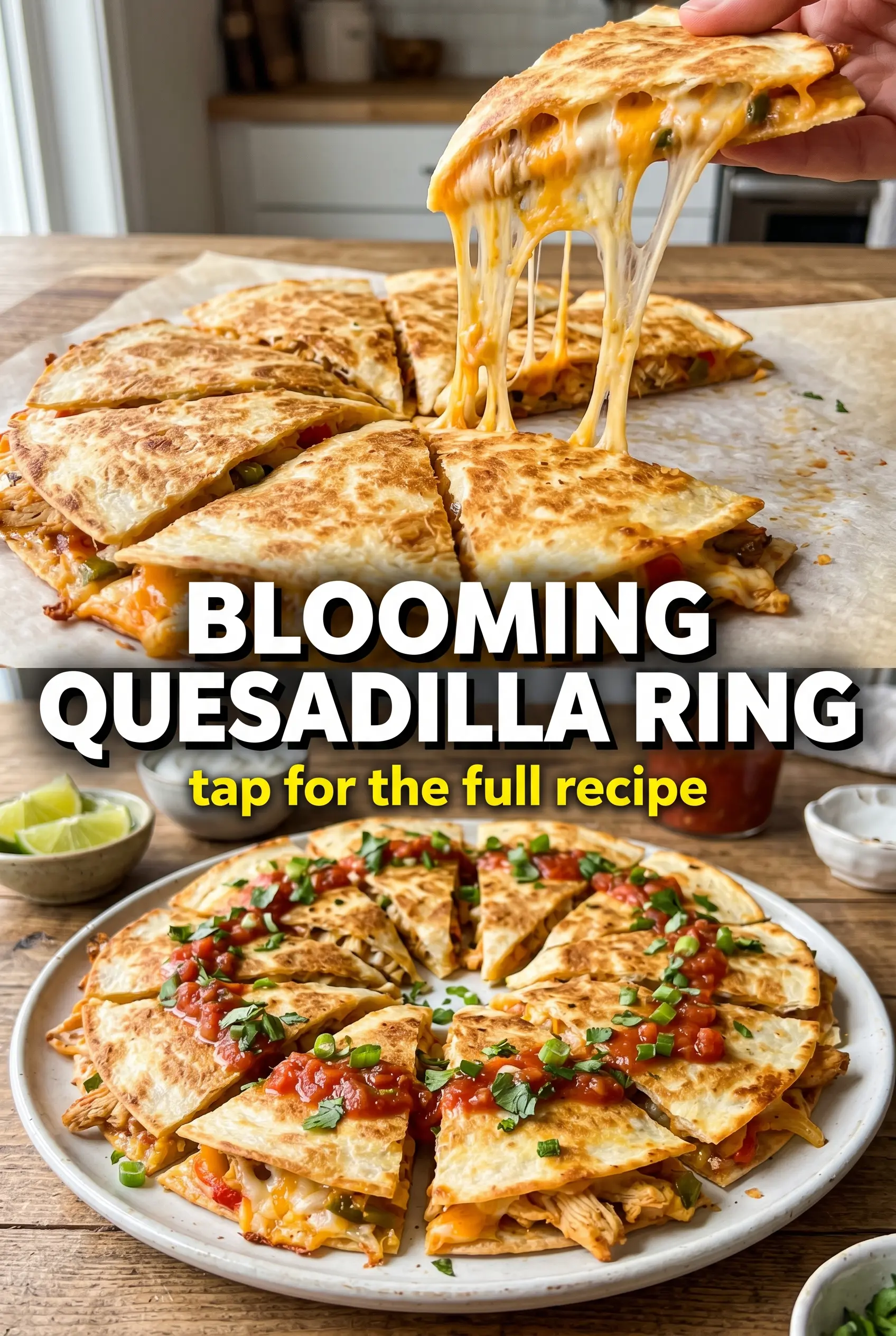
Stand the cooked triangles around a platter with the pointed ends facing out and the cut edges slightly overlapped. That overlap matters because it gives the ring its shape and hides any rough edges from cutting. Spoon the sour cream salsa mixture into the center, then set the warm queso nearby so people can dip straight from the platter.
Three Smart Ways to Adapt the Ring Without Losing the Crunch
Make it vegetarian with black beans
Swap the beef for rinsed black beans that have been patted dry and lightly seasoned. You’ll keep the hearty center, but the filling will be softer, so use a little less than you would with meat and lean harder on the cheese for structure.
Make it gluten-free with sturdy corn tortillas
Corn tortillas can work, but they don’t fold and stand up the same way flour tortillas do. If you use them, warm them first so they bend without cracking, and expect a smaller, more delicate ring rather than a tall showpiece.
Swap in chicken for a milder filling
Shredded cooked chicken works well here if you want something lighter than beef. Season it generously, because chicken gives you less built-in savory depth, and keep the pieces small so the triangles still cut cleanly.
Storage and Reheating
- Refrigerator: Store leftovers in an airtight container for up to 3 days. The tortillas soften a bit, but the filling stays good.
- Freezer: Freeze the cooked triangles in a single layer, then transfer to a bag for up to 2 months. They won’t stay as crisp after thawing, but they’re still usable.
- Reheating: Reheat in a 375°F oven or air fryer until the edges crisp again and the center is hot. The microwave will make the tortillas chewy, which is the main mistake people make with quesadillas.
Answers to the Questions Worth Asking
Blooming Quesadilla Ring
Ingredients
Equipment
Method
- Layer each large flour tortilla with shredded cheddar cheese, cooked seasoned ground beef, diced red bell pepper, diced green bell pepper, diced small onion, corn, and chopped cilantro.
- Fold each filled tortilla in half, then cut into triangles so the cheese and filling are enclosed.
- Heat oil in a large skillet over medium-high heat until shimmering.
- Working in batches, cook the quesadilla triangles for 2-3 minutes per side, flipping once, until golden and the cheese is fully melted.
- Arrange the cooked quesadilla pieces in a circular ring on a platter, standing them up slightly overlapped to show the melted layers.
- Mix sour cream with salsa and spoon the mixture into the center of the ring.
- Serve immediately with warm queso dip on the side for dipping.