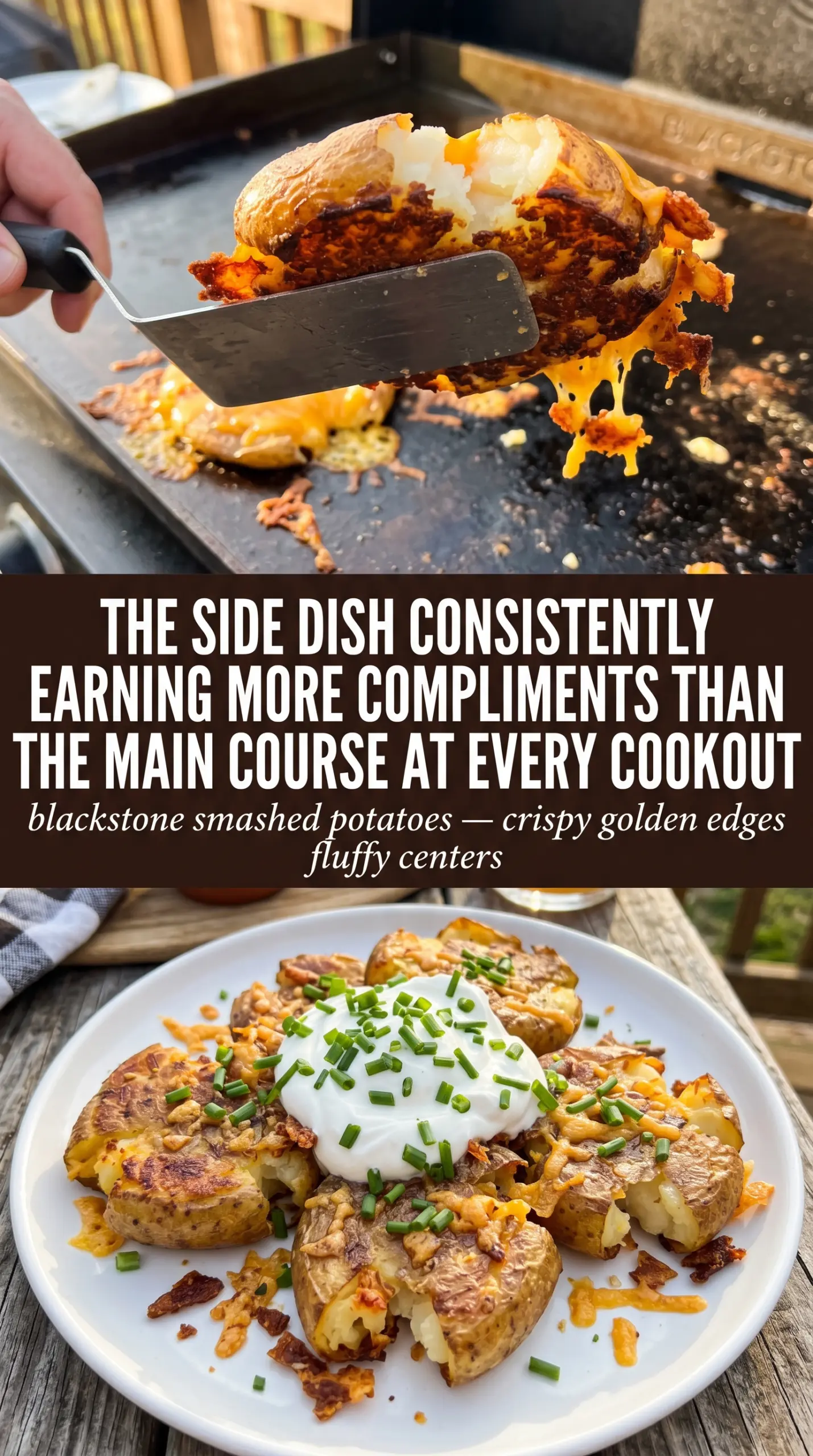
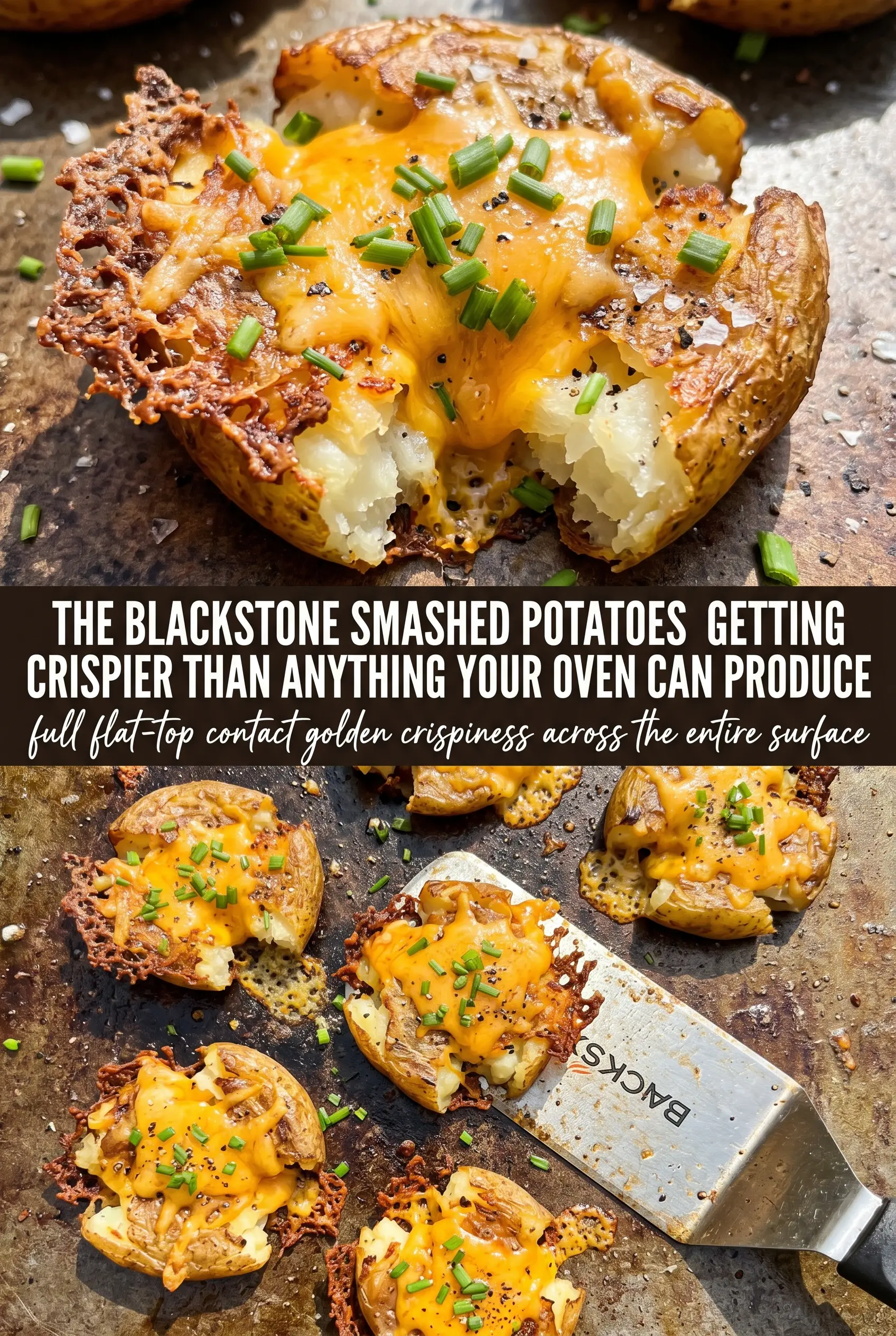
Blackstone smashed potatoes earn their spot fast: creamy in the middle, lace-edged and deeply crisp on the outside, with the kind of garlicky, buttery finish that makes people reach for a second helping before they’ve finished the first. The griddle does what an oven can’t here. It gives you broad, even contact, so every smashed potato gets a shattering crust instead of a soft bottom.
The trick is simple, but it matters. Boil the potatoes until they’re fully tender, then let them steam off for a few minutes so the surfaces aren’t wet when they hit the hot griddle. That dryness is what helps the oil and butter fry the edges instead of letting the potatoes sit there and steam. Smash them just enough to crack and flatten; if you press them too thin, they fall apart before they crisp.
Below, you’ll find the small details that make these better than average — from how hot the griddle should be to when the garlic goes in so it turns fragrant instead of bitter. I’ve also included a few easy variations if you want to lean them loaded, keep them dairy-free, or make them work with what’s already in the fridge.
I loved how the potatoes got crisp on both sides without falling apart. The garlic in the butter added so much flavor, and the sour cream and chives on top made them taste like a loaded baked potato in crispy little bites.
Save these Blackstone smashed potatoes for the nights when you want crispy edges, creamy centers, and loaded potato toppings in one skillet.
The Step That Keeps Smashed Potatoes Crispy Instead of Mushy
The biggest mistake with smashed potatoes is rushing the boiling stage or smashing them while they’re still too wet. If the potatoes aren’t fully tender, they won’t flatten cleanly. If they’re steaming hot and damp when they hit the griddle, the surface softens before it has a chance to fry. A few minutes of draining and cooling makes a bigger difference than most people expect.
The other part that matters is pressure. You want each potato flattened into a rough disk, not pancaked into a thin layer. Thick enough to hold together, thin enough to expose more surface area. That balance is what gives you those crisp, craggy edges and the soft center that makes this side dish worth repeating.
- Baby potatoes — Small potatoes hold their shape better after boiling and give you the right ratio of crispy edge to creamy middle. Yukon Golds work beautifully, and red potatoes are a solid backup. Russets are too fluffy and tend to fall apart.
- Olive oil and butter — The oil keeps the butter from burning while the butter gives you better browning and a richer finish. If you only use butter, the griddle can darken it too fast. If you only use oil, you lose some of that loaded-potato flavor.
- Garlic — Fresh minced garlic is best here, but it needs to cook alongside the potatoes, not ahead of them. Put it too early and it burns before the potatoes are done. If you want a milder flavor, use sliced garlic or garlic powder instead.
- Sour cream, cheddar, chives, and bacon bits — These turn the potatoes into loaded griddle potatoes. Use sharp cheddar if you want the topping to stand out, and add the dairy after cooking so it stays cool and creamy instead of melting into a greasy puddle.
What Each Ingredient Is Actually Doing in Blackstone Smashed Potatoes
- Protein (quality, proper thickness) — Good quality protein tastes better. Even thickness ensures even cooking.
- Seasoning (bold, distributed throughout) — Don’t be shy with salt and pepper. Quality seasoning elevates everything.
- Oil or fat (protective and flavorful) — The fat helps develop crust and carries flavors. Use generously.
- Heat management (appropriate temperature for the protein) — Too high and the outside burns before the inside cooks. Too low and it steams.
- Technique (sear, then finish based on thickness) — Proper technique creates flavor. Sear for crust, then cook through gently.
- Aromatics and seasonings (garlic, herbs, spices) — These add complexity and depth. Distribute them throughout the cooking process.
- Resting time (let it rest before serving) — Resting allows juices to reabsorb. This keeps the protein moist and tender.
- Optional: finishing sauce or glaze — A light sauce adds richness without overwhelming. Apply at the very end.
How to Build the Crust on the Griddle
Boiling Until Tender, Not Falling Apart
Start the potatoes in salted water and cook until a fork slides in with almost no resistance. They should be tender enough to smash but not so soft that the skins split and the centers turn mealy. Drain them well and let them sit for a few minutes so the steam escapes. Wet potatoes hit the griddle like they’re trying to boil again, and that’s the fastest route to a pale, soft bottom.
Smashing on the Hot Surface
Preheat the Blackstone to medium-high before the potatoes go down. Add the oil and butter first, then place the potatoes in the fat and press each one down with a heavy spatula or masher. Use firm pressure, but stop as soon as the potato opens into a thick round. If you press too aggressively, the center squeezes out and the edges never get a chance to crisp.
Letting the First Side Brown Deeply
Once the potatoes are smashed, leave them alone until the bottoms turn a deep golden color and release easily from the griddle. That first side carries most of the texture, so don’t start flipping early just because the edges look set. Add the garlic around the potatoes during this stage so it has time to turn fragrant in the butter without scorching. If the garlic darkens too fast, move it to a cooler spot on the griddle.
Finishing and Topping While They’re Hot
Flip the potatoes carefully and cook the second side until it picks up color and gets crisp at the edges. Season them right after they come off the griddle so the salt sticks to the hot surface. Then pile on the sour cream, cheddar, chives, and bacon bits while the potatoes are still warm enough to soften the cheese just a little. That contrast between hot potato and cool topping is what makes the bite work.
Three Ways to Make These Smashed Potatoes Work for Your Table
Loaded Blackstone Smashed Potatoes
Keep the base recipe the same, then lean into the toppings. Add extra cheddar, more bacon, and a little extra sour cream right before serving. This version is richer and more meal-like, but it’s best eaten right away because the toppings soften the crisp edges faster.
Dairy-Free Version
Use all olive oil instead of butter and finish with dairy-free sour cream or skip the creamy topping entirely. You’ll lose a little richness, but the potatoes will still get crisp edges and plenty of flavor from the garlic, salt, and chives.
Gluten-Free by Default
This recipe is naturally gluten-free as written, but the bacon and shredded cheese you buy can still vary by brand. Check labels if you’re cooking for someone sensitive, especially on pre-shredded cheese blends and bacon bits with added seasonings.
Make It with Herbs Instead of Bacon
If you want a lighter finish, leave off the bacon and add extra chives or chopped parsley. The potatoes stay crisp and buttery, but the flavor shifts from loaded and smoky to fresher and brighter.
Storage and Reheating
- Refrigerator: Store leftovers for up to 4 days in an airtight container. The potatoes will soften a bit, but they’ll still reheat well.
- Freezer: Freeze the cooked potatoes without toppings for up to 2 months. Lay them flat on a tray first so they freeze separately, then pack them into a bag. The toppings don’t freeze well, so add those fresh.
- Reheating: Reheat on a skillet, griddle, or in a hot oven until the edges crisp back up. The common mistake is microwaving them straight through, which makes the crust soggy and the centers gummy.
Questions I Get Asked About This Recipe
Blackstone Smashed Potatoes
Ingredients
Equipment
Method
- Boil baby potatoes until fork-tender, about 15-20 minutes, then drain and let cool slightly.
- Heat the Blackstone griddle to medium-high and add olive oil and butter.
- Place the potatoes on the griddle and smash flat with a heavy spatula or masher.
- Add minced garlic around the potatoes and cook for 6-7 minutes, until the bottoms are crispy and golden.
- Flip the potatoes and cook another 5-6 minutes until both sides are crispy.
- Season with salt and pepper to taste.
- Top the smashed potatoes with sour cream for topping, shredded cheddar cheese, chopped chives, and bacon bits.