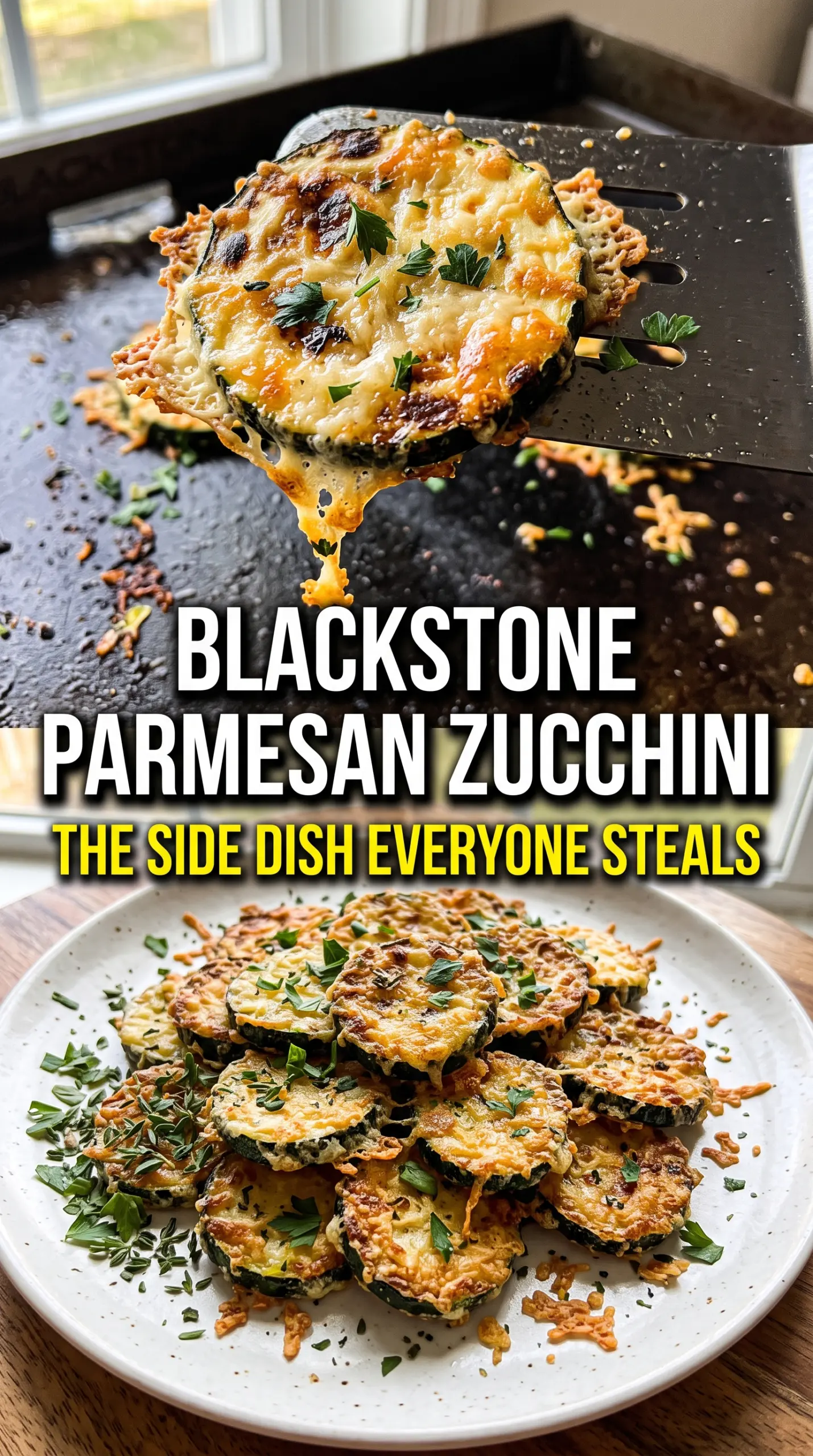
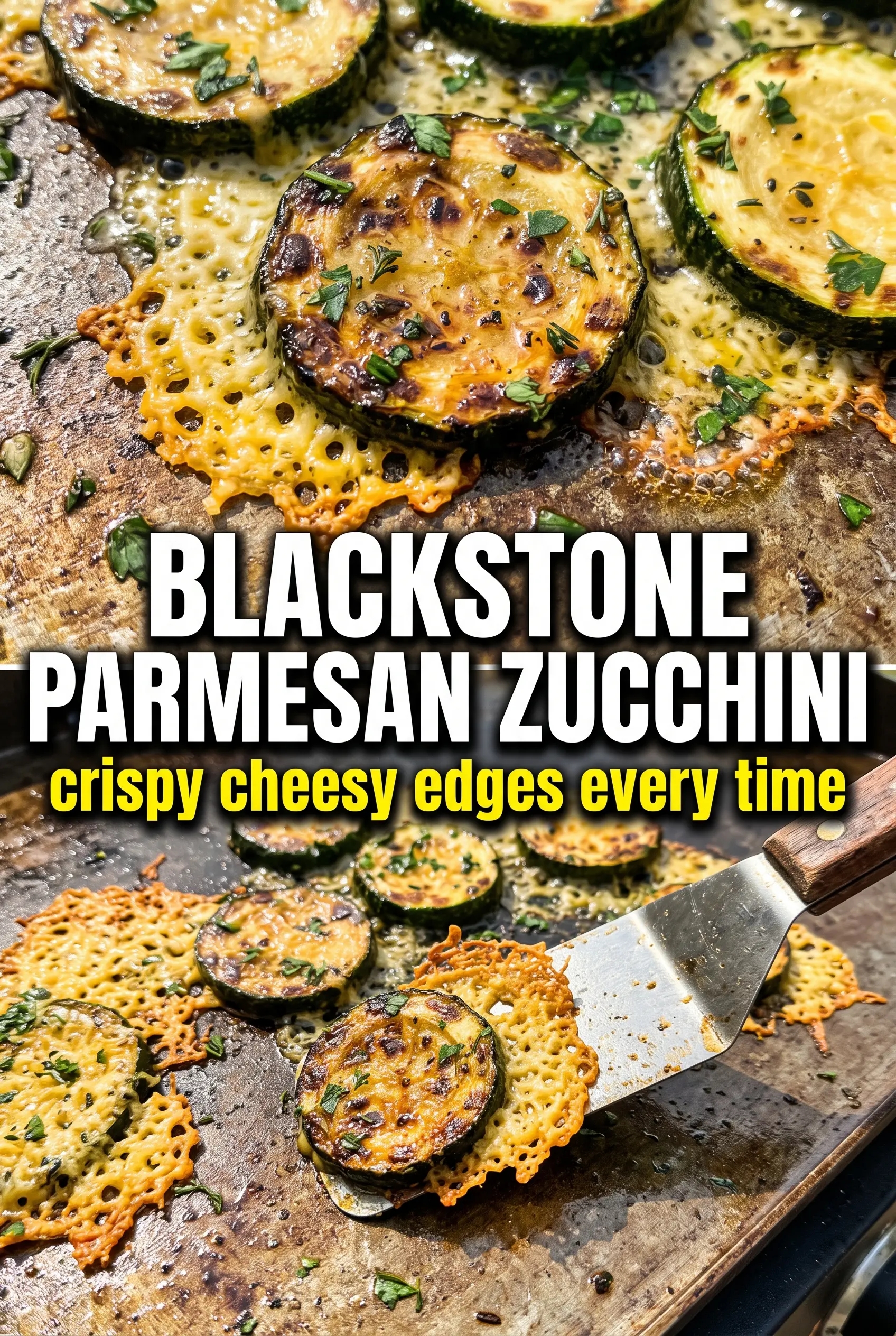
Blackstone parmesan zucchini comes off the griddle with the kind of contrast that keeps people sneaking bites before it ever reaches the table. The edges get deeply caramelized, the centers stay tender, and the parmesan melts into a salty little crust that clings to each coin instead of disappearing into the pan. That combination is what makes this side dish worth repeating.
The key is heat and restraint. A hot Blackstone gives zucchini the surface contact it needs to brown fast, but crowding the rounds turns that good sear into steam. Garlic goes in late, butter goes in briefly, and the parmesan gets pressed onto the zucchini at the end so it softens and sets without burning. It’s a small sequence, but it changes everything.
Below, I’ve laid out the part that matters most: how to keep zucchini from going soggy, how to get that parmesan to stick, and what to change if you’re cooking for a bigger group or working with what’s already in the fridge.
The zucchini actually browned instead of steaming, and the parmesan formed those crispy little edges my kids kept picking off the platter.
Like this Blackstone parmesan zucchini? Save it for the nights when you want a fast griddle side with caramelized edges and a real parmesan crust.
The Griddle Trick That Keeps Zucchini From Turning Soft
Zucchini gives up water fast, and once that moisture hits the hot griddle, the surface temp drops and browning slows down. That’s why this recipe depends on a wide, hot cooking area and a single layer. If the rounds overlap or sit in a puddle of oil, they soften before they ever have a chance to caramelize.
The other mistake is moving them too soon. Zucchini releases cleanly when the underside has browned enough; if it sticks, it needs another minute. Once the first side has a deep golden color, the flip is easy and the texture stays intact instead of collapsing into a mushy middle.
- Oil — Olive oil gives good flavor, but avocado oil handles the griddle heat with a little more insurance. Either one works because the real job is to coat the zucchini lightly, not fry it.
- Butter — This goes in at the end for flavor, not for the sear. Adding it too early can make the zucchini taste greasy and can brown the butter before the garlic has a chance to bloom.
- Parmesan — Grated parmesan melts and clings better than shredded here. The fine texture helps it press onto the hot zucchini instead of sliding off the sides.
- Lemon wedges — The finish matters. A squeeze of lemon wakes up the parmesan and cuts the richness of the butter without making the dish taste sour.
Building the Garlic Butter and Parmesan Crust in the Right Order
Use fresh garlic here. Pre-minced garlic tends to steam and taste dull, and this dish depends on that fast, fragrant hit when the butter hits the hot surface. Italian seasoning and garlic powder go on the zucchini before it cooks so the flavor bakes into the exterior instead of sitting on top.
The parmesan belongs at the very end, after the zucchini has already browned and after the garlic butter has coated the rounds. If you add cheese too soon, it scorches before the zucchini is done. Pressing it on top right at the finish gives you those melted, lacy edges that turn crisp as the coins cool for a minute or two.
- Garlic — Fresh minced garlic is worth using here because it perfumes the butter in seconds. If you use jarred garlic, it can taste muddy and it may pick up bitterness faster on the hot griddle.
- Italian seasoning — This gives the zucchini a little herb backbone so the parmesan doesn’t carry the whole dish. If your blend is salt-heavy, ease up on the extra salt in the seasoning toss.
- Garlic powder — The powder sticks to the zucchini better than fresh garlic in the first stage. It helps build a more even savory layer while the rounds are searing.
- Parmesan cheese — Use the grater side of a box grater or finely grated parmesan from the refrigerated dairy section. Coarse shreds won’t melt as evenly and tend to fall off the zucchini when you move them.
The 12 Minutes That Matter on the Blackstone
Heating the Griddle
Preheat the Blackstone to medium-high and let the surface come fully up to temperature before the zucchini goes on. You want a light sizzle the second the rounds hit the griddle. If the pan is only warm, the zucchini will leak moisture before it browns and you’ll lose the caramelized edges this recipe is built around.
Seasoning and Spreading the Rounds
Toss the zucchini quickly with oil, herbs, garlic powder, salt, and pepper, then lay the rounds out in a single layer. Don’t pile them into a mound. Every coin needs direct contact with the hot metal so it can sear instead of steam.
Getting the First Side Deeply Golden
Leave the zucchini alone for about 4 minutes, or until the bottoms have a deep golden color. A little char at the edge is a good sign here. If you try to flip too early, the rounds tear and leave half their surface behind on the griddle.
Finishing With Butter, Garlic, and Cheese
Flip the zucchini, cook the second side for a few minutes, then add the butter and garlic off to one side so the garlic can bloom without burning. Toss the zucchini through the butter, then press parmesan onto the tops while everything is still hot. The cheese should soften and set almost immediately; if it melts into a puddle, the griddle is too hot and the butter needs a moment to cool before the cheese goes on.
Make it dairy-free
Skip the butter and finish the zucchini with a little extra olive oil plus a squeeze of lemon. You’ll lose the buttery richness, but the griddle browning and garlic still carry the dish.
Turn it into a lower-carb side with extra browning
This recipe is already naturally low in carbs, so the main adjustment is keeping the slices thicker and the heat steady. Thicker rounds hold their shape better and give you more of that crisp-tender center.
Use yellow squash instead of half the zucchini
Yellow squash cooks at the same pace and picks up the garlic butter beautifully. It’s a good way to stretch the batch, though the flavor is a little milder and the color turns softer on the plate.
Storage and Reheating
- Refrigerator: Store leftovers for up to 3 days. The zucchini softens a little, but the flavor stays good.
- Freezer: I don’t recommend freezing this dish. Zucchini turns watery after thawing and the parmesan crust loses its texture.
- Reheating: Reheat in a hot skillet or on the griddle for a few minutes until the edges wake back up. The microwave will soften the zucchini too much and flatten the parmesan.
Questions I Get Asked About This Recipe
Blackstone Parmesan Zucchini
Ingredients
Equipment
Method
- Preheat the Blackstone griddle to medium-high, then add the oil and spread it evenly across the surface.
- Toss the zucchini rounds with olive oil, Italian seasoning, garlic powder, salt, and black pepper until evenly coated.
- Place the zucchini in a single layer on the hot griddle without crowding and cook undisturbed for 4 minutes until deeply golden on the bottom.
- Flip each zucchini round and cook for 3 minutes on the other side.
- Add the butter and minced garlic to one side of the griddle and cook for 30 seconds until fragrant, then toss the zucchini in the garlic butter.
- Press a pinch of parmesan onto the top of each zucchini round and let it melt for 1 minute.
- Transfer to a plate, garnish with parsley, and serve immediately with lemon wedges.