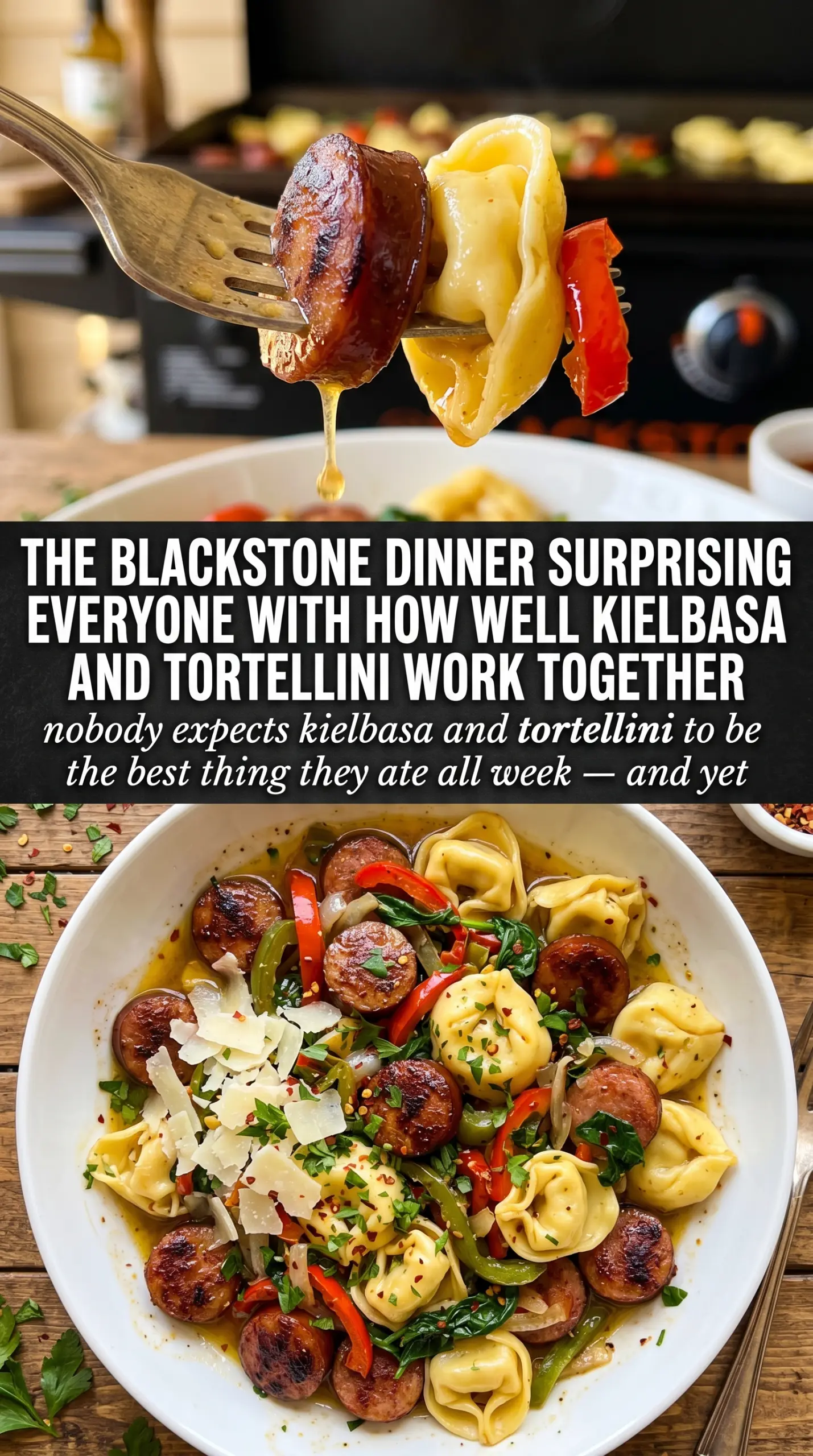
Sliced kielbasa, golden cheese tortellini, and charred peppers are the kind of griddle dinner that disappears fast because every bite hits a different texture. The sausage turns crisp at the edges, the tortellini picks up a little crunch where it touches the hot surface, and the tomatoes soften just enough to turn glossy without collapsing into sauce. It eats like a full meal, not a side dish pretending to be dinner.
What makes this version work is the order. The kielbasa goes on first so it can render and brown before anything else crowds the pan, and the vegetables cook long enough to sweeten without losing their shape. Adding the cooked tortellini near the end keeps it from tearing apart and lets the pasta pick up those browned bits from the griddle instead of turning mushy.
Below, I’ve included the small details that matter most on a flat-top: how to keep the tortellini from sticking, when the peppers are actually ready, and what to swap if you want to make it a little lighter or stretch it for a bigger crowd.
The tortellini held its shape on the griddle and got those crisp little edges I never get in a skillet. My husband went back for seconds before I even sat down.
Save this Blackstone Grilled Kielbasa and Tortellini for the nights when you want crispy sausage, golden pasta, and one hot griddle meal in 15 minutes.
Why the Tortellini Stays Tender Instead of Turning Heavy
The biggest mistake with griddle pasta is treating it like dry noodles. Tortellini already has filling, so it needs just enough heat to warm through and pick up color, not enough time to split or turn dense. That’s why it gets added after the sausage and vegetables have already built flavor on the surface.
The other key is moisture control. Cooked tortellini should be drained well before it hits the griddle, and the tomatoes go in with it to release just enough juice to gloss everything without turning the whole pan watery. If the pasta seems to stick at first, it usually means the griddle wasn’t hot enough or the oil hadn’t spread into a thin even layer.
- Kielbasa — This brings the salty, smoky backbone and holds up to direct griddle heat better than most sausages. Pre-cooked kielbasa is the right choice here because it browns fast without needing a long cook.
- Cheese tortellini — Fresh or refrigerated tortellini works best because it stays tender and finishes quickly. Frozen tortellini can work too, but cook it first according to the package and drain it very well so it doesn’t steam on the griddle.
- Cherry tomatoes — They soften fast and give you the juiciness that keeps the dish from feeling dry. Halving them matters; whole tomatoes take too long and won’t mingle with the pasta the same way.
- Olive oil — Use enough to keep the griddle slick, not pooled. That thin layer is what gives the tortellini those browned edges instead of a gummy surface.
- Parmesan and basil — Add them at the end, after the heat is off or very low. Parmesan melts into the hot pasta, and basil stays fresh instead of blackening.
What Each Ingredient Is Actually Doing in Blackstone Grilled Kielbasa and Tortellini
- High heat (essential for browning) — High heat creates crust and caramelization. Medium heat just cooks without developing flavor.
- Oil or fat (for browning and flavor) — The fat helps transfer heat and create crust. It also carries seasonings.
- Salt and seasoning (bold, applied before) — Season confidently. The high heat cooking mellows flavors slightly.
- No moving it around (let it sit) — The food needs time to develop crust. Constant flipping and moving prevents browning.
- Timing (watch carefully) — High heat cooks fast. Check doneness frequently to avoid overcooking.
- Optional: finishing sauce or glaze — Apply in the last minute for flavor without burning. Heavy sauces applied early can char.
- Resting time (5-10 minutes before serving) — Resting allows juices to reabsorb. Cutting right away lets them run out.
- Optional: smoke or char flavor (if available) — Wood smoke or char adds depth. Build the fire strategically for the flavor you want.
Getting the Griddle Hot Enough for Real Browning
Start with the Sausage
Heat the Blackstone to medium-high before anything hits the surface. Kielbasa needs direct contact with a hot griddle to brown, and if the pan is only warm, it will just dry out and never pick up those crisp edges. Let the slices sit undisturbed long enough to color before flipping. If you move them too early, they’ll smear and pale instead of searing.
Softening the Vegetables Without Losing Their Bite
Add the peppers and onions after the sausage has done its work. They should hit the griddle with a little oil and enough room to actually touch the metal, not steam in a crowded heap. Cook until the onions turn translucent and the peppers lose their raw crunch but still hold shape. If they go limp too soon, the heat is too low or the pan is overloaded.
Finishing the Tortellini
Stir in the cooked tortellini, tomatoes, garlic, and Italian seasoning near the end. The goal is to warm everything through and let the pasta collect a little color, not to keep it on the griddle long enough to break apart. Garlic burns quickly on a hot surface, so keep it moving once it goes in. When the tortellini looks glossy and a few edges are starting to crisp, it’s ready to come off.
Make It Spicier with Hot Kielbasa
Swap in a hot or peppered kielbasa if you want more bite. It keeps the same fast cooking method, but the final dish leans sharper and less mellow, which works well with the sweet tomatoes and basil.
Make It Gluten-Free
Use gluten-free tortellini if you can find it, and check the kielbasa label because some brands use fillers that contain gluten. The cooking method stays the same, but gluten-free pasta can soften faster, so pull it as soon as it’s hot and lightly crisped.
Make It Lighter with Chicken Sausage
Chicken sausage works if you want a leaner version, but it won’t give you the same rich, smoky drippings on the griddle. Add an extra teaspoon of oil and don’t expect quite as much browning, though the dish still comes together cleanly.
Storage and Reheating
- Refrigerator: Store leftovers in an airtight container for up to 4 days. The tortellini will soften a little as it sits, but the flavor holds up well.
- Freezer: It freezes, but the tortellini texture changes after thawing, so I only freeze it if I’m saving a large batch for later. Cool it completely first and freeze in a shallow container.
- Reheating: Reheat in a skillet over medium heat with a splash of water or olive oil, stirring often until hot. The biggest mistake is blasting it in the microwave, which makes the pasta rubbery and dries out the sausage.
Answers to the Questions Worth Asking
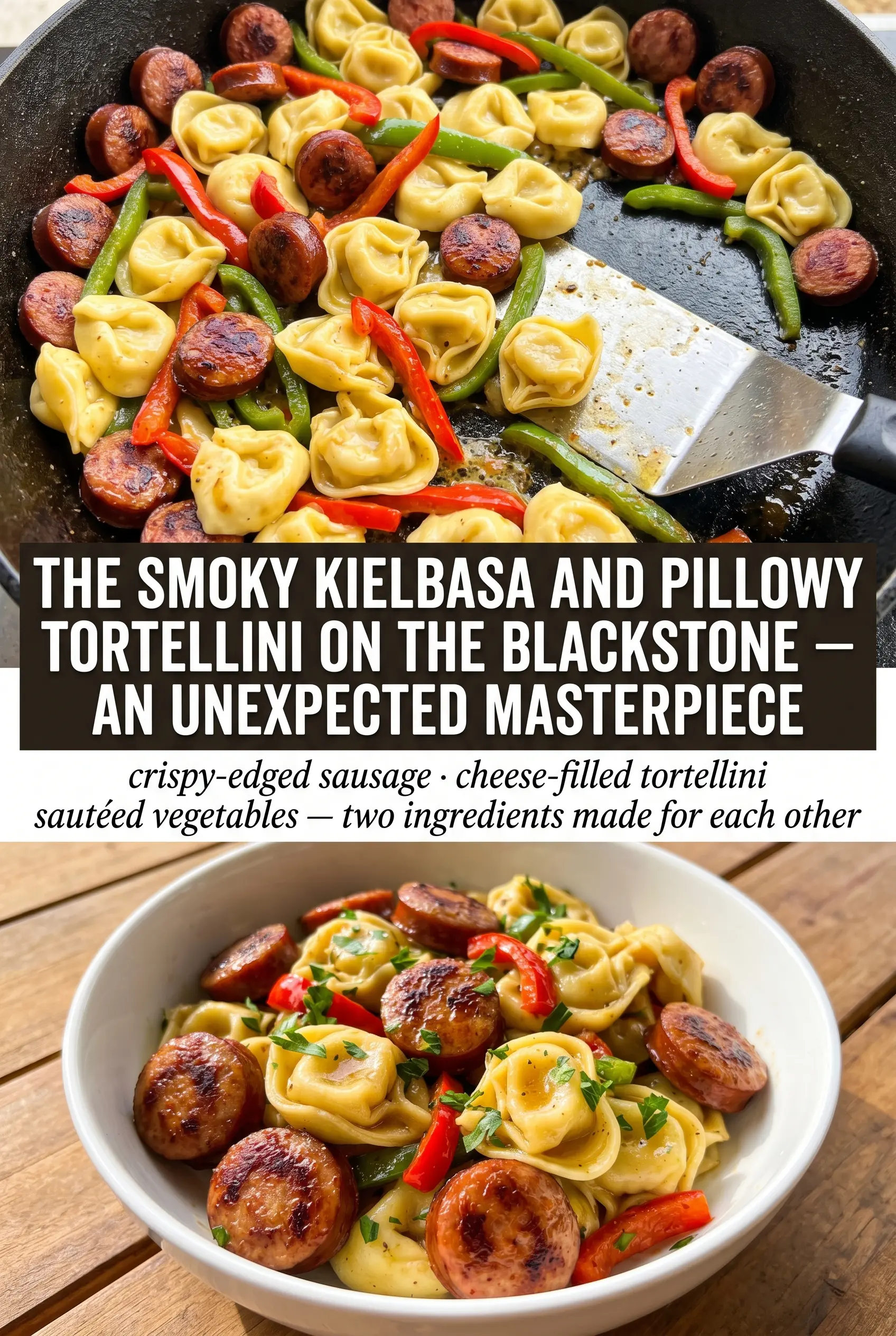
Blackstone Grilled Kielbasa and Tortellini
Ingredients
Equipment
Method
- Heat the Blackstone griddle to medium-high and add the olive oil. You should see the oil shimmer in small waves before adding the kielbasa.
- Cook the kielbasa slices for 4-5 minutes per side until browned and crispy. Press lightly as needed so the surfaces show clear char marks.
- Add the diced bell peppers and onion, cooking for 5-6 minutes until softened. Stir occasionally until the peppers look tender and slightly caramelized.
- Add the cooked tortellini, cherry tomatoes, minced garlic, and Italian seasoning, then toss everything together. Keep stirring until the pasta is coated and the tomatoes begin to release juices.
- Cook for 3-4 minutes until heated through and slightly crispy. You should notice toasted spots on the tortellini and a glossy sauce from the griddle juices.
- Season with salt and pepper to taste. Taste quickly and adjust so the sausage and vegetables are well-balanced.
- Top with grated Parmesan cheese and fresh basil. Finish with basil right before serving for a bright, fresh green cue.