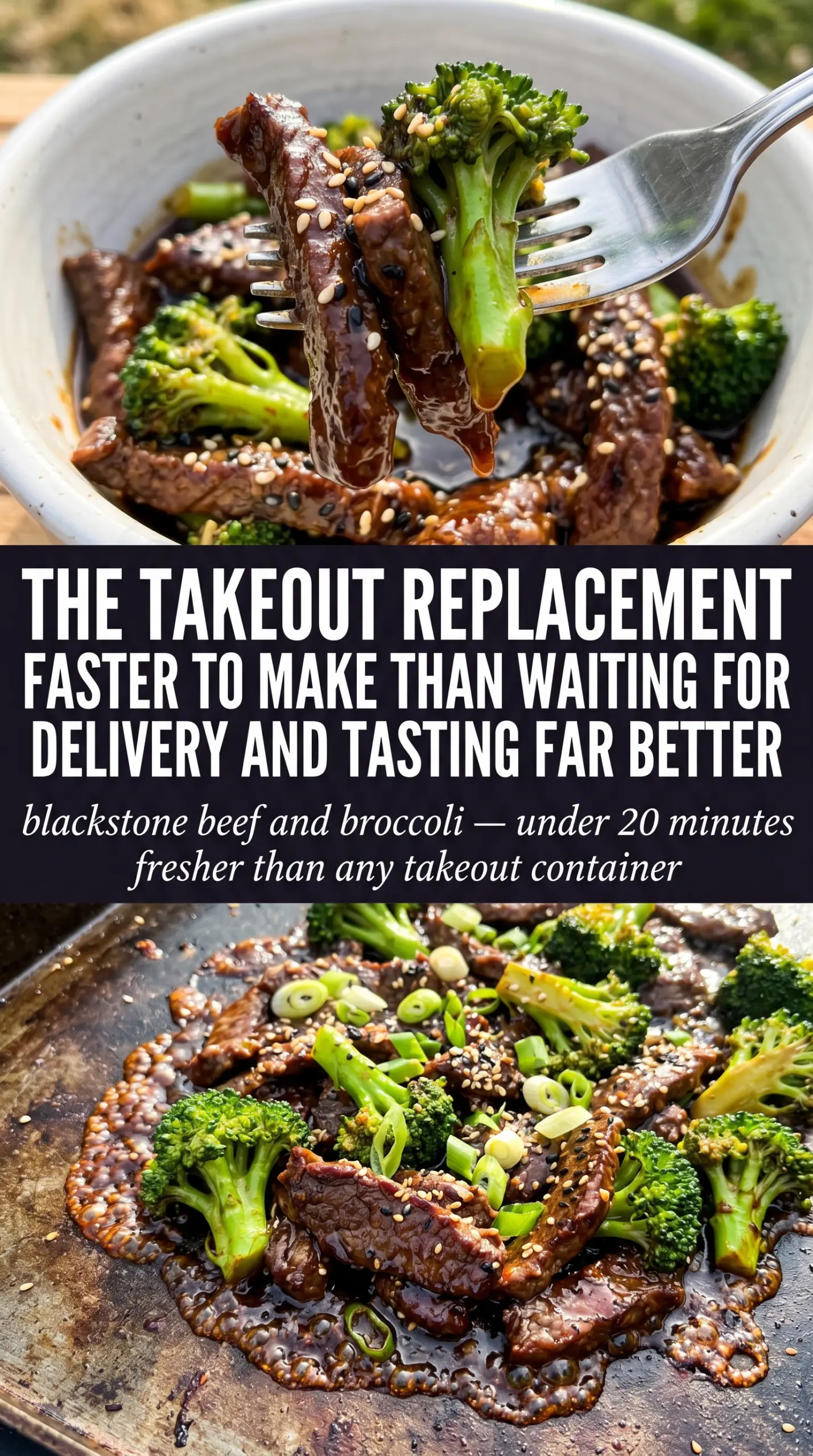
Tender beef strips, crisp broccoli, and a glossy brown sauce are what make Blackstone beef and broccoli worth firing up the griddle for. The high heat gives the beef a proper sear before it finishes in the sauce, and the broccoli stays bright instead of turning soft and drab. You end up with that takeout-style balance of salty, savory, and just enough sweetness, but with better texture because everything cooks fast and separately before coming together.
The trick here is the marinade. A little cornstarch with soy sauce and sugar does more than season the beef; it helps the sauce cling later and keeps the meat from drying out on the griddle. I also like using flank steak sliced thin against the grain because it stays tender even with quick, aggressive heat. If you’ve ever had beef and broccoli go watery or overcooked, the fix is all in the order of operations, and that’s exactly what this method protects.
Below, I’m walking through the part that matters most: how to get the beef seared, the broccoli crisp, and the sauce glossy instead of thin.
The beef stayed tender and the sauce thickened up right on the griddle. I was worried the broccoli would get mushy, but it stayed crisp-tender and soaked up the sauce beautifully.
Save this Blackstone Beef and Broccoli for the nights when you want tender seared beef, crisp broccoli, and that glossy takeout-style sauce in one fast griddle cook.
The Marinade Does More Than Season the Beef
The biggest mistake with beef and broccoli is treating the marinade like a quick soak instead of part of the sauce-building process. The cornstarch and soy sauce coat the beef, which helps it brown instead of steaming when it hits the hot griddle. If you skip that short rest, the sauce still tastes fine, but it won’t cling the same way and the beef can feel a little dry on the edges.
Thin slicing matters more than most people think. Flank steak has a strong grain, and if you slice with it instead of across it, no marinade will save the texture. Cut the strips thin, at a slight angle, and keep them as even as you can so they finish at the same time on the griddle.
- Flank steak — This is the right cut for quick, high-heat cooking. It has enough structure to sear well, but it needs to be sliced thin against the grain or it turns chewy fast.
- Cornstarch — It thickens the sauce later and gives the beef a light coating that helps it brown. Arrowroot can stand in, but use a little less because it thickens faster.
- Broccoli florets — Fresh florets hold their shape better than pre-cut bagged pieces that are already soft around the edges. If you use frozen broccoli, cook off the water first or the sauce will thin out.
- Oyster sauce — This is what gives the dish that deep, savory takeout character. There isn’t a perfect substitute, but hoisin will work in a pinch; the result will be a little sweeter and less briny.
What Each Ingredient Is Actually Doing in Blackstone Beef and Broccoli
- Protein (quality, proper thickness) — Good quality protein tastes better. Even thickness ensures even cooking.
- Seasoning (bold, distributed throughout) — Don’t be shy with salt and pepper. Quality seasoning elevates everything.
- Oil or fat (protective and flavorful) — The fat helps develop crust and carries flavors. Use generously.
- Heat management (appropriate temperature for the protein) — Too high and the outside burns before the inside cooks. Too low and it steams.
- Technique (sear, then finish based on thickness) — Proper technique creates flavor. Sear for crust, then cook through gently.
- Aromatics and seasonings (garlic, herbs, spices) — These add complexity and depth. Distribute them throughout the cooking process.
- Resting time (let it rest before serving) — Resting allows juices to reabsorb. This keeps the protein moist and tender.
- Optional: finishing sauce or glaze — A light sauce adds richness without overwhelming. Apply at the very end.
How to Keep the Sauce Glossy on a Hot Griddle
Marinating the Beef
Stir together part of the soy sauce, brown sugar, and cornstarch until smooth, then coat the sliced beef and let it sit for 30 minutes. You want every piece lightly coated, not swimming in liquid. If the marinade pools at the bottom, the beef will steam instead of sear when it hits the griddle.
Hard Sear, Fast Cook
Get the Blackstone hot before the beef goes on. You should hear an immediate sizzle and see the edges turn brown within minutes. Cook in batches so the pan stays hot; if you crowd the meat, the temperature drops and the beef gives off juice instead of browning.
Broccoli First, Sauce Second
Cook the broccoli after the beef comes off, using the remaining oil and enough heat to blister the edges while keeping the center crisp-tender. The garlic and ginger only need about 30 seconds, just until fragrant. If they sit too long, they burn fast on a griddle and the whole sauce turns bitter.
Finishing Everything Together
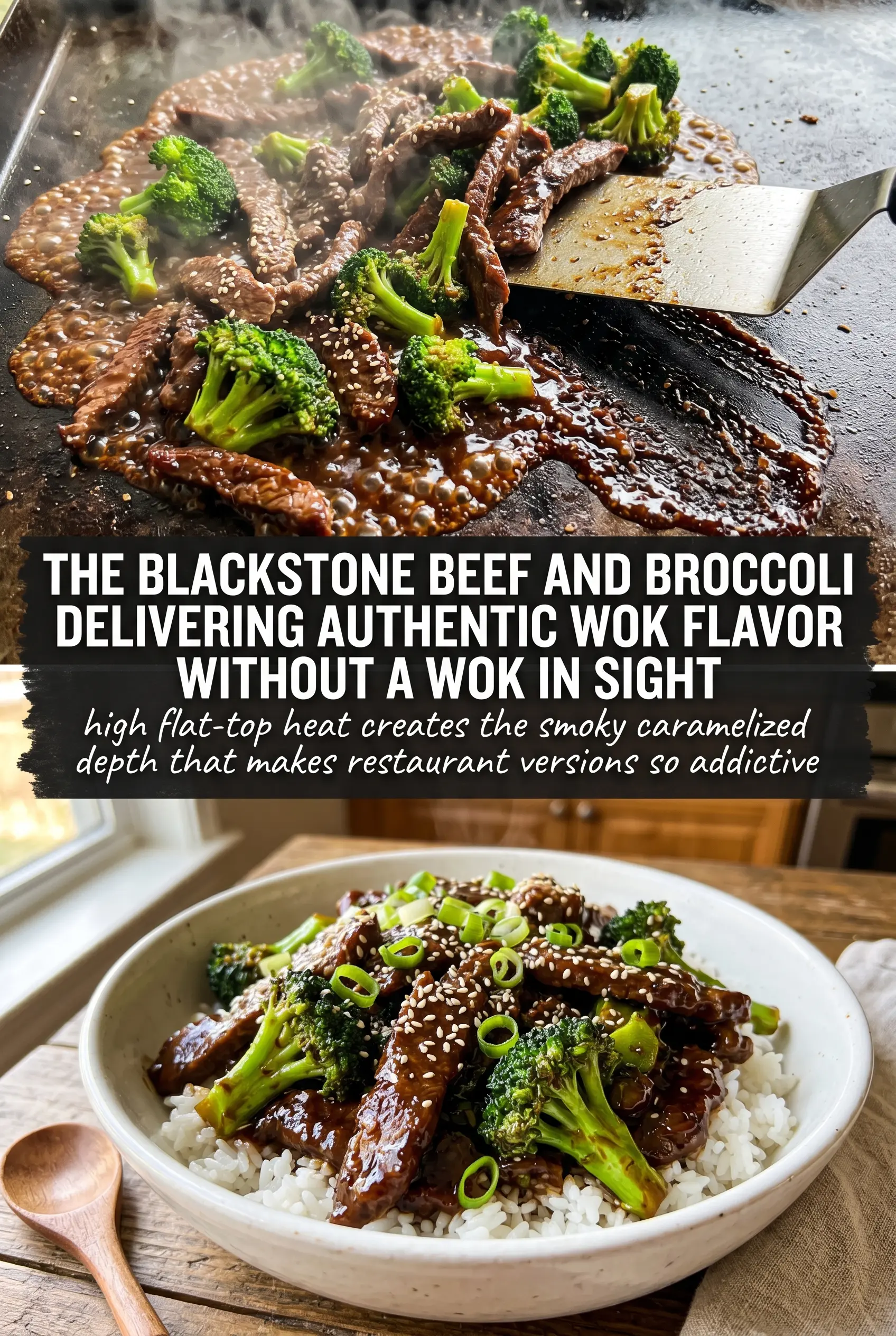
Add the remaining soy sauce, oyster sauce, brown sugar, and beef broth, then return the beef and toss until the sauce turns glossy and coats the broccoli. This last minute is where the cornstarch in the marinade and the sugar in the sauce do their work. If the sauce looks thin, give it another minute over the hot surface instead of adding more cornstarch right away.
How to Adapt This for Different Pans and Diets
Dairy-Free and Naturally Gluten-Free
This recipe already leans dairy-free, and it can be gluten-free if you use a certified gluten-free soy sauce or tamari. The texture stays the same, but tamari tastes a little rounder and less sharp than standard soy sauce.
Swap the Steak for Chicken Thighs
Thin-sliced chicken thighs hold up well on a griddle and stay juicy, though they won’t have the same beefy depth. Cook them just until they’re opaque and lightly browned before adding the sauce, since overcooking them makes the final toss dry.
Make It Lower in Sugar
Cut the brown sugar back by half and rely more on the oyster sauce and beef broth for body. The sauce will be less sticky and less sweet, but still savory and balanced. Don’t cut the sugar completely unless you’re okay with a thinner, sharper sauce.
Storage and Reheating
- Refrigerator: Store leftovers in an airtight container for up to 4 days. The broccoli softens a bit, but the flavor holds up well.
- Freezer: Freeze for up to 2 months, though the broccoli will lose some texture after thawing. It still works well for a quick lunch over rice.
- Reheating: Reheat in a skillet over medium heat with a splash of water or broth. The biggest mistake is blasting it in the microwave until the beef tightens and the broccoli turns limp.
Questions I Get Asked About This Recipe
Blackstone Beef and Broccoli
Ingredients
Equipment
Method
- Combine 2 tablespoons soy sauce, 1 tablespoon brown sugar, and the cornstarch, then marinate the beef for 30 minutes. The mixture should look thick and cling to the slices before resting.
- Heat the griddle to high heat and add 2 tablespoons oil. You should see a quick shimmer and light haze across the surface.
- Cook the beef in batches for 2-3 minutes per side until seared, then set aside. Look for deep brown edges and a fast caramelized crust.
- Add the remaining oil and cook the broccoli for 4-5 minutes until tender-crisp. The florets should turn bright green with slight char spots.
- Add the garlic and ginger and cook for 30 seconds. They should smell fragrant while staying light-colored.
- Add the remaining soy sauce, oyster sauce, brown sugar, and beef broth. Stir until the sauce looks glossy and cohesive.
- Return the beef to the griddle, toss everything in the sauce for 2 minutes, then garnish with sesame seeds. The sauce should cling to the beef and broccoli and look glistening.