Beef kafta kebabs hit the grill with deep spice, juicy centers, and those charred edges that make people reach for a second skewer before they finish the first. The mixture stays tender because the beef is shaped cold, packed just enough to hold, and grilled hot enough to brown quickly without drying out. When it’s done right, the outside gets a savory crust while the inside stays moist and deeply seasoned.
The small details matter here. Grated onion adds moisture and body, but it has to be squeezed dry or the mixture turns loose and hard to shape. The parsley should be chopped fine enough to disappear into the meat, and the 30-minute chill gives the fat time to firm up so the kebabs cling to the skewers instead of slumping on the grate. The spice blend is warm rather than sharp, which is what gives kafta its familiar, earthy flavor without tasting overloaded.
Below you’ll find the exact shaping method that keeps the meat from falling apart, plus a few smart swaps if you need to work with what’s in the kitchen. The tahini, pita, and fresh vegetables on the side are classic for a reason, and they turn a simple grilled kebab into a full meal without much extra effort.
The kebabs held together beautifully after chilling, and the grated onion gave them that juicy texture without making the mixture wet. I grilled them for five minutes per side and the char was perfect.
These beef kafta kebabs with warm spices and charred edges are worth saving for your next grill night.
The Part Most Kafta Gets Wrong: Too Much Handling Before the Grill
Kafta fails when the meat gets mixed like meatloaf and shaped like a paste. That makes the texture dense and can push the fat out of the mixture before it ever hits the grill. The goal is a blended but still loose mixture that holds together once chilled, then gets formed around the skewer with enough pressure to stay put without being compacted into a brick.
Another common problem is moisture. Onion is essential for flavor and juiciness, but grated onion carries a lot of liquid. Squeeze it dry and the mixture will shape cleanly; skip that step and the kebabs can slide off the skewers or steam instead of browning.
- Chilling matters: The 30-minute rest firms up the beef fat and makes the mixture much easier to shape.
- Skewers are part of the structure: Metal skewers hold heat and help the kebabs cook evenly. If you use wooden skewers, soak them long enough that the exposed ends don’t scorch immediately.
- High heat is your friend: Medium-high heat gives you char before the meat dries out. Low heat leaves the kebabs pale and soft.
What the Spices and Onion Are Really Doing Here
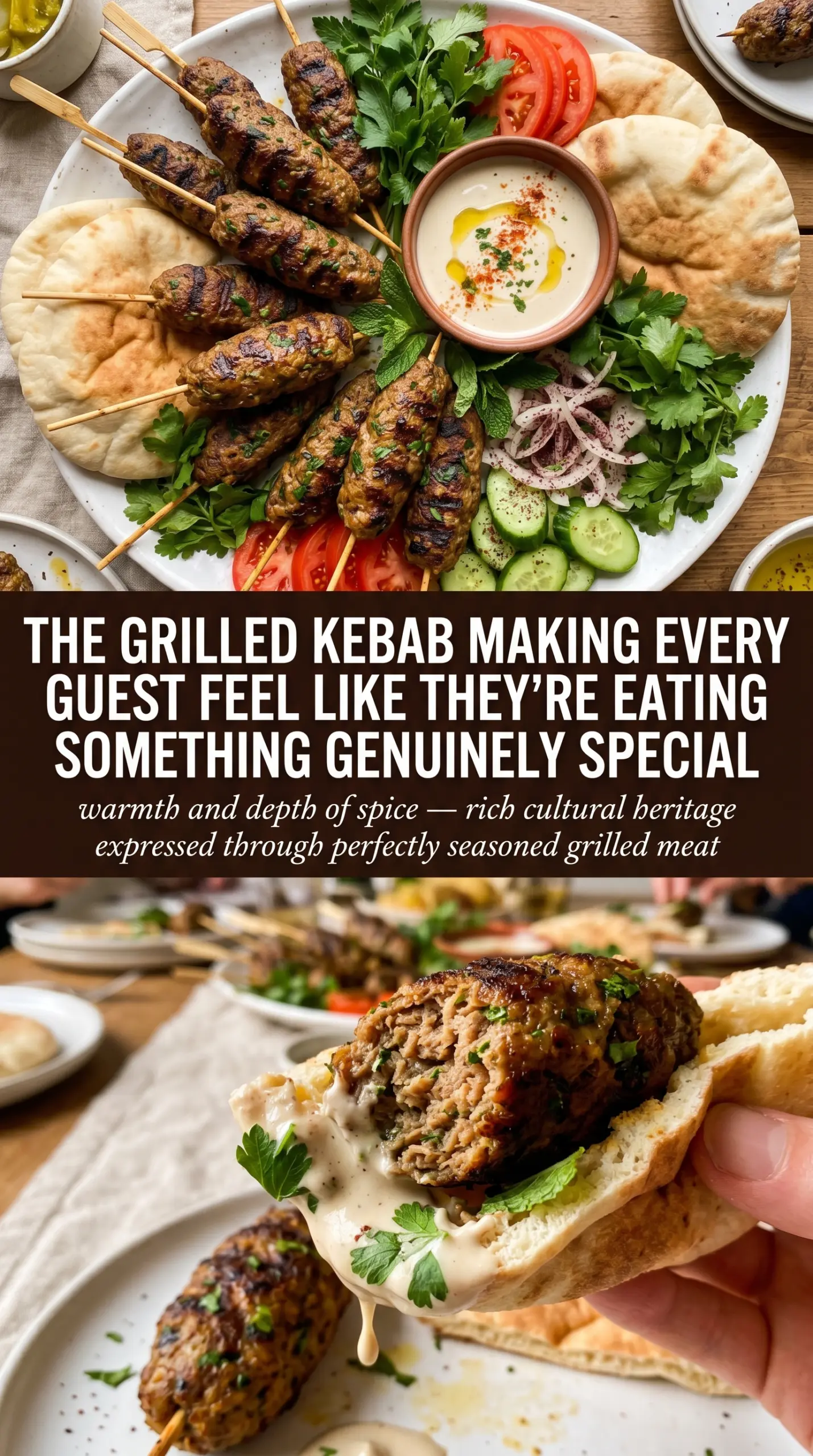
- 80/20 ground beef: The fat keeps the kebabs juicy on the grill. Leaner beef can work, but the finished texture will be drier and a little tighter.
- Grated onion: This does more than season the meat. It adds moisture and a soft sweetness, and once squeezed dry it blends in without leaving watery pockets.
- Parsley: Fresh parsley brightens the meat and keeps the spice blend from tasting heavy. Chop it finely so it disappears into the mixture instead of pulling apart the shape.
- Cumin, paprika, allspice, and cinnamon: These build the warm, familiar kafta flavor. Don’t skip the allspice or cinnamon; they’re subtle, but they give the kebabs their signature depth.
- Tahini sauce for serving: The nutty, creamy sauce balances the char and spice. A quick lemony tahini works better than something sweet or heavily garlicky here.
Shaping and Grilling the Kebabs Without Losing the Meat
Mixing Just Until the Meat Holds
Combine the beef, onion, parsley, garlic, and spices until everything is evenly distributed, but stop as soon as the mixture looks cohesive. Overmixing turns the texture springy and dense, which is the opposite of what you want in kafta. The mixture should feel tacky and pliable, not pasty. If it feels wet, the onion probably wasn’t squeezed dry enough.
Forming the Logs on the Skewers
Divide the meat into 6 to 8 portions and press each one around a skewer into a long oval log. Work with damp hands if the mixture starts sticking, and keep the pressure even so the kebab has the same thickness from end to end. Thin spots cook too fast, and bulky spots stay underdone in the center. Leave the ends a little thinner than the middle so they cook through at the same pace.
Grilling to the Right Amount of Char
Grill over medium-high heat for 4 to 5 minutes per side, turning once the first side releases cleanly and shows deep browning. If the kebabs stick, they’re not ready to turn yet. You want charred edges and a cooked-through center, but not a hard crust that dries out the meat. Pull them as soon as they feel firm and spring back lightly when pressed.
Serving While the Juices Are Still Moving
Let the kebabs rest for a couple of minutes after grilling, then serve them with warm pita, tahini sauce, and crisp vegetables. That short rest keeps the juices inside the meat instead of running out onto the cutting board. Kafta is at its best when the outside is still hot and the center stays tender enough to bite cleanly.
How to Adapt These Kafta Kebabs for Different Kitchens
Dairy-Free and Naturally Gluten-Free
These kebabs are already dairy-free and gluten-free as written, which makes them easy to serve with almost anything. Pair them with gluten-free pita or rice if needed, and keep the tahini sauce simple with lemon, garlic, and salt. The meat mixture itself doesn’t need any flour or binder.
Using Ground Lamb Instead of Beef
Ground lamb brings a deeper, richer flavor and fits beautifully with the same spice blend. It can taste a little more assertive than beef, so keep the seasoning balanced and don’t overwork the mixture. The texture will be slightly softer, so chilling before shaping matters even more.
Oven or Broiler When the Grill Isn’t an Option
Arrange the skewers on a foil-lined sheet pan and broil them close to the heat source, turning once. You won’t get the same smoke flavor as the grill, but you will still get good browning and a firm exterior. Watch them closely; the line between charred and dry is narrow under the broiler.
Making the Mixture Ahead
You can mix the kafta a day ahead and keep it covered in the fridge. That extra time doesn’t hurt the texture as long as the onion was squeezed dry, and it actually makes the seasoning taste more settled by the time you grill. Shape the skewers right before cooking so the meat stays cold and firm.
Storage and Reheating
- Refrigerator: Store cooked kebabs in an airtight container for up to 4 days. They’ll lose a little of the grill crust, but the flavor holds up well.
- Freezer: Freeze cooked or uncooked shaped kebabs for up to 2 months. Wrap them well so the surface doesn’t get freezer burn, and thaw in the refrigerator before cooking or reheating.
- Reheating: Warm in a 325°F oven until heated through, or use a covered skillet over low heat with a splash of water. High heat dries the meat fast, so don’t blast them in the microwave unless you want the edges to turn tough.
Answers to the Questions Worth Asking
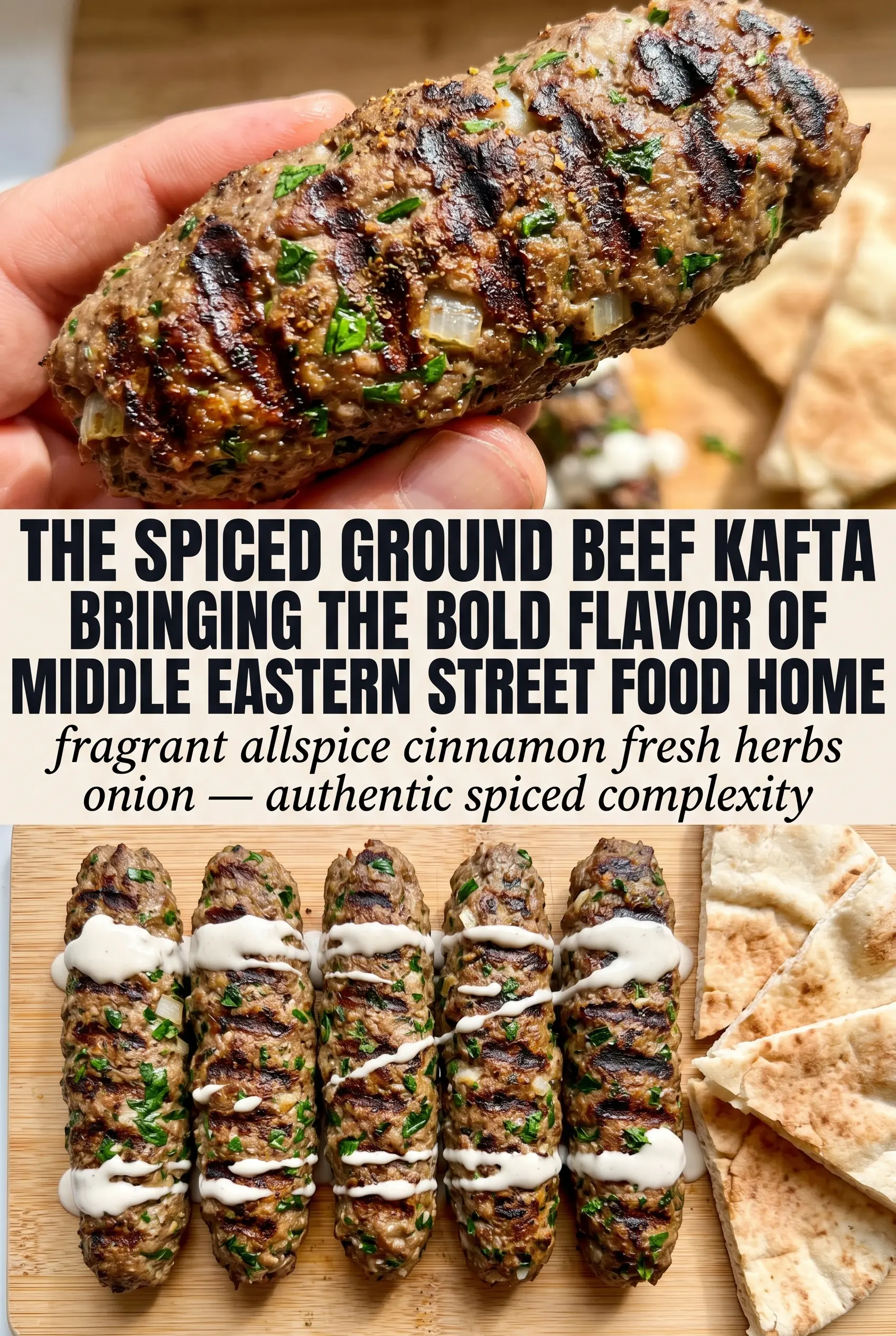
Beef Kafta Kebabs
Ingredients
Equipment
Method
- In a bowl, mix ground beef, grated onion (squeezed dry), parsley, garlic, cumin, paprika, allspice, cinnamon, salt, and pepper until evenly combined.
- Refrigerate the mixture for 30 minutes to firm up before shaping.
- Divide the chilled mixture into 6-8 portions and shape each portion around a skewer in a log shape, leaving a tight, even thickness.
- Preheat a grill to medium-high heat, then grill the kebabs for 4-5 minutes per side until charred and cooked through.
- Serve the kebabs hot with tahini sauce, pita bread, and fresh vegetables.