Beef carbonnade stew lands somewhere between a braise and a deeply savory onion gravy, with beef that turns fork-tender and a broth that tastes dark, malty, and just a little sweet at the edges. The onions cook down until they nearly melt into the pot, which is what gives this Belgian classic its signature body without needing a heavy roux or cream.
The trick is patience at two points: first when you brown the beef hard enough to build a real fond, then when you let the onions cook all the way to golden softness before anything acidic goes in. That slow onion step matters more than it looks on paper. It rounds out the beer, keeps the vinegar from tasting sharp, and turns the whole pot into something that eats like it simmered all day for a reason.
Below you’ll find the little details that keep the stew balanced, plus the best way to serve it so the bread catches every bit of the sauce.
The onions cooked down into this sweet, jammy base and the beer braising gave the sauce such a deep color. My husband kept going back for more bread to soak up the broth.
Save this Belgian beef carbonnade for the nights when you want deeply braised beef, caramelized onions, and a malty beer sauce that begs for crusty bread.
The Step That Keeps the Beer Sauce Rich Instead of Thin
Carbonnade can turn watery fast if the onions are rushed or the flour never gets a minute to cook before the beer goes in. The flour needs that brief toast in the pan to lose its raw edge and help the stew thicken naturally as it braises. If you dump in the liquid too quickly, you’ll get a pale broth that never quite wraps itself around the beef.
The other thing people miss is how much flavor comes from the browned bits on the bottom of the Dutch oven. When the beer hits the pan, it should hiss and loosen every caramelized spot into the sauce. That is where the depth comes from, not from extra seasoning at the end.
What Each Ingredient Is Actually Doing in This Stew
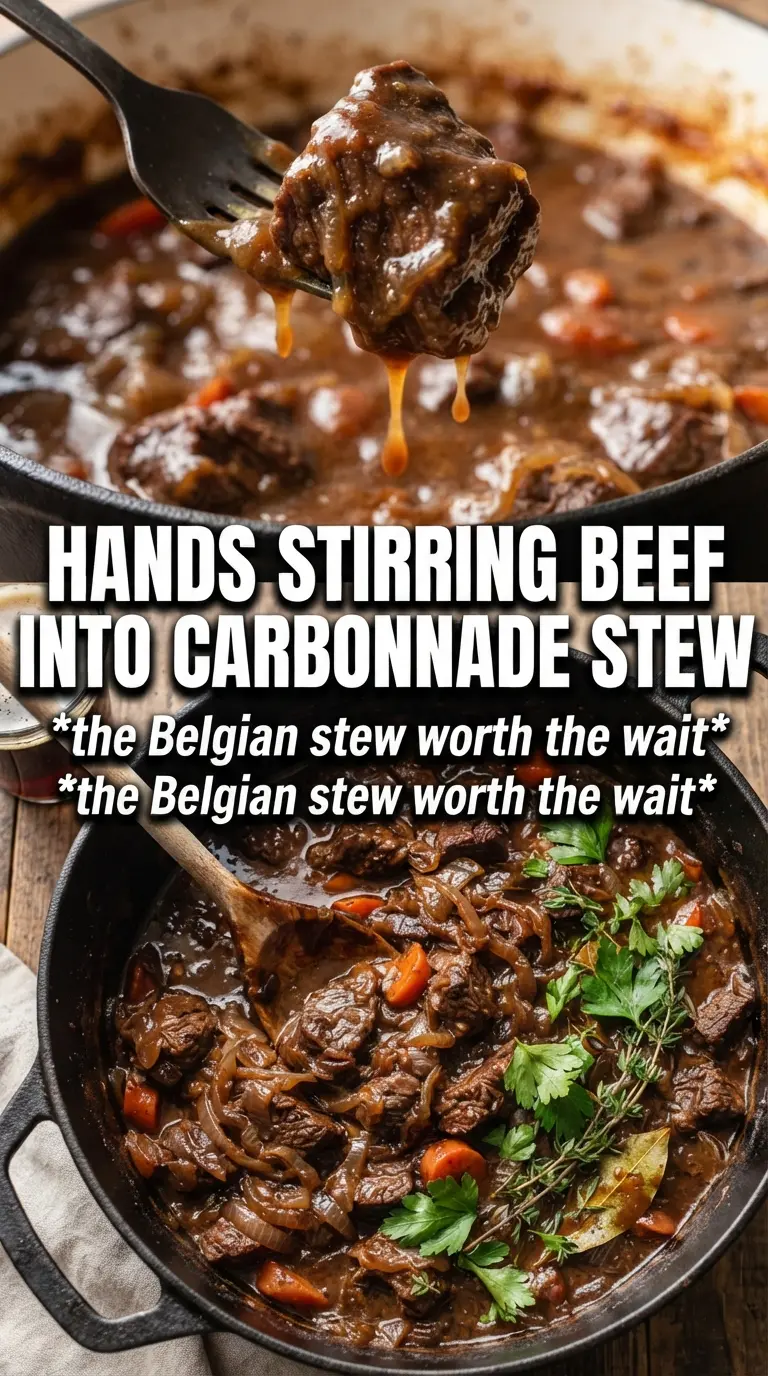
- Beef chuck — This cut has the collagen you want for a long braise. It turns silky and tender instead of dry. If you swap in a leaner cut, the stew won’t get the same luxurious texture.
- Dark Belgian ale or stout — This is the backbone of the dish. A malty beer gives the sauce its deep color and rounded bitterness, while a stout pushes it slightly darker and roastier. Use a beer you’d actually drink; cheap, overly bitter beer can dominate the pot.
- Onions — They aren’t a background ingredient here. Cooked slowly, they dissolve into the broth and create body, sweetness, and that classic carbonnade flavor. Slicing them thin and giving them the full 20 to 25 minutes is what makes the difference.
- Dijon mustard, vinegar, and brown sugar — These three keep the stew from tasting flat. Dijon adds sharpness and emulsifies the sauce a little, vinegar brightens the richness, and brown sugar smooths the edges of the beer.
- Tomato paste — It doesn’t make the stew taste like tomato. It deepens the color and adds a quiet umami note that helps the braise taste finished.
How to Build the Braise So the Sauce Turns Glossy, Not Bland
Getting the Beef Deeply Browned
Season the beef well, then sear it in batches in hot oil until you get a dark brown crust on more than one side. If the pieces crowd the pan, they’ll steam and turn gray before they ever brown. That crust is your first layer of flavor, and it should stick a little before releasing cleanly.
Cooking the Onions Until They Collapse
Once the beef comes out, the onions go in and stay there over medium heat until they’re soft, sweet, and golden. They should shrink dramatically and pick up the brown residue in the pan as they cook. If they start to scorch, lower the heat; burnt onion will make the whole stew taste bitter.
Building the Base Before the Beer
Add the garlic, then the flour, and let that flour cook for a minute before anything liquid touches the pan. You want it to lose its raw taste and coat the onions evenly. When you pour in the ale, scrape the bottom well so the sauce starts with all that browned flavor instead of leaving it behind.
Letting the Braise Finish Its Work
Once the broth, vinegar, mustard, sugar, thyme, bay leaves, and beef are in the pot, bring everything up to a boil and then drop it to a low simmer with the lid on. The stew is done when the beef yields easily to a fork and the sauce has thickened enough to cling to the meat. If the liquid looks a little loose near the end, uncover the pot for the last 15 minutes so it can tighten without overcooking the beef.
How to Adapt This Carbonnade Without Losing Its Character
Gluten-Free Version
Skip the all-purpose flour and dust the beef with a small amount of cornstarch or gluten-free flour blend before searing. The sauce will still thicken during the braise, but you may want to uncover the pot near the end to help it reduce a little more.
Stout Instead of Belgian Ale
A stout gives the stew a darker, roasty edge and makes the broth taste a little more assertive. It works best if you like the beer note to stand out; if you want a gentler sauce, use a Belgian dark ale instead.
Make-Ahead for Better Flavor
This stew tastes even better the next day because the beef reabsorbs some of the sauce and the onion base settles into the broth. Cool it fully before refrigerating, then reheat it gently so the meat stays tender instead of tightening up.
Storage and Reheating
- Refrigerator: Store in an airtight container for up to 4 days. The sauce thickens as it chills, so expect it to look even richer the next day.
- Freezer: It freezes well for up to 3 months. Cool it completely first, then portion it into freezer-safe containers so the beef reheats evenly.
- Reheating: Warm it slowly on the stovetop over low heat, covered, with a splash of broth if needed. Don’t let it boil hard or the beef can turn stringy and the sauce can separate.
Questions I Get Asked About This Recipe
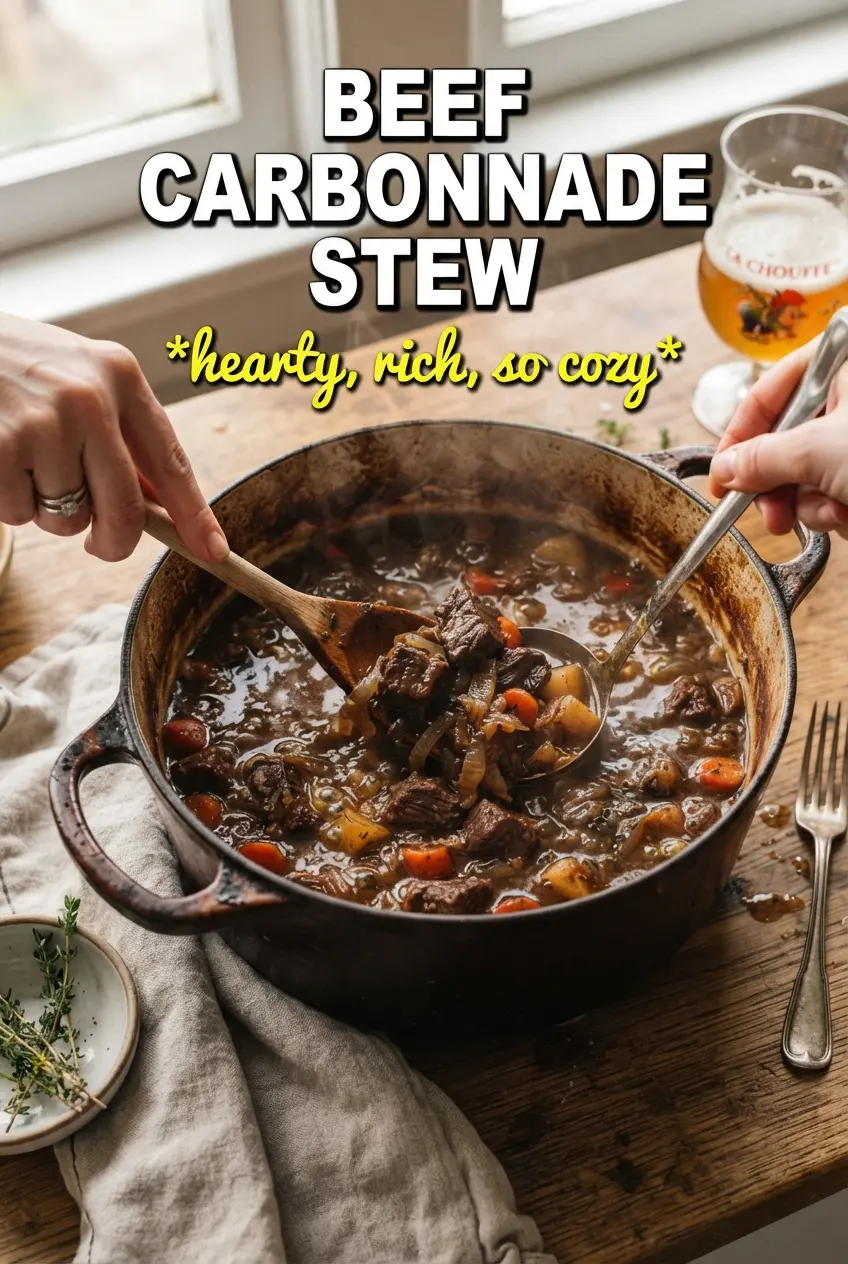
Beef Carbonnade Stew
Ingredients
Equipment
Method
- Season beef chuck cubes with salt and pepper. Heat vegetable oil in a Dutch oven over high heat and sear until deeply browned, about 6-8 minutes; remove beef to a plate.
- Cook thinly sliced onions in the Dutch oven over medium heat until very soft and golden, 20-25 minutes, stirring occasionally so they color but don’t scorch.
- Stir in minced garlic and cook 1 minute, then whisk in all-purpose flour and cook 1 minute to remove the raw flour taste.
- Pour in the dark Belgian ale or stout beer and deglaze, scraping up browned bits from the bottom of the Dutch oven until the mixture looks smooth.
- Whisk in beef broth, tomato paste, red wine vinegar, brown sugar, Dijon mustard, fresh thyme, bay leaves, and return the seared beef to the pot.
- Bring the stew to a boil, then reduce heat to a gentle simmer, cover, and braise for 2 hours until the beef is very tender.
- Remove bay leaves and thyme, then season the stew with salt and pepper to taste.
- Serve hot with crusty bread for scooping the rich, malty broth.