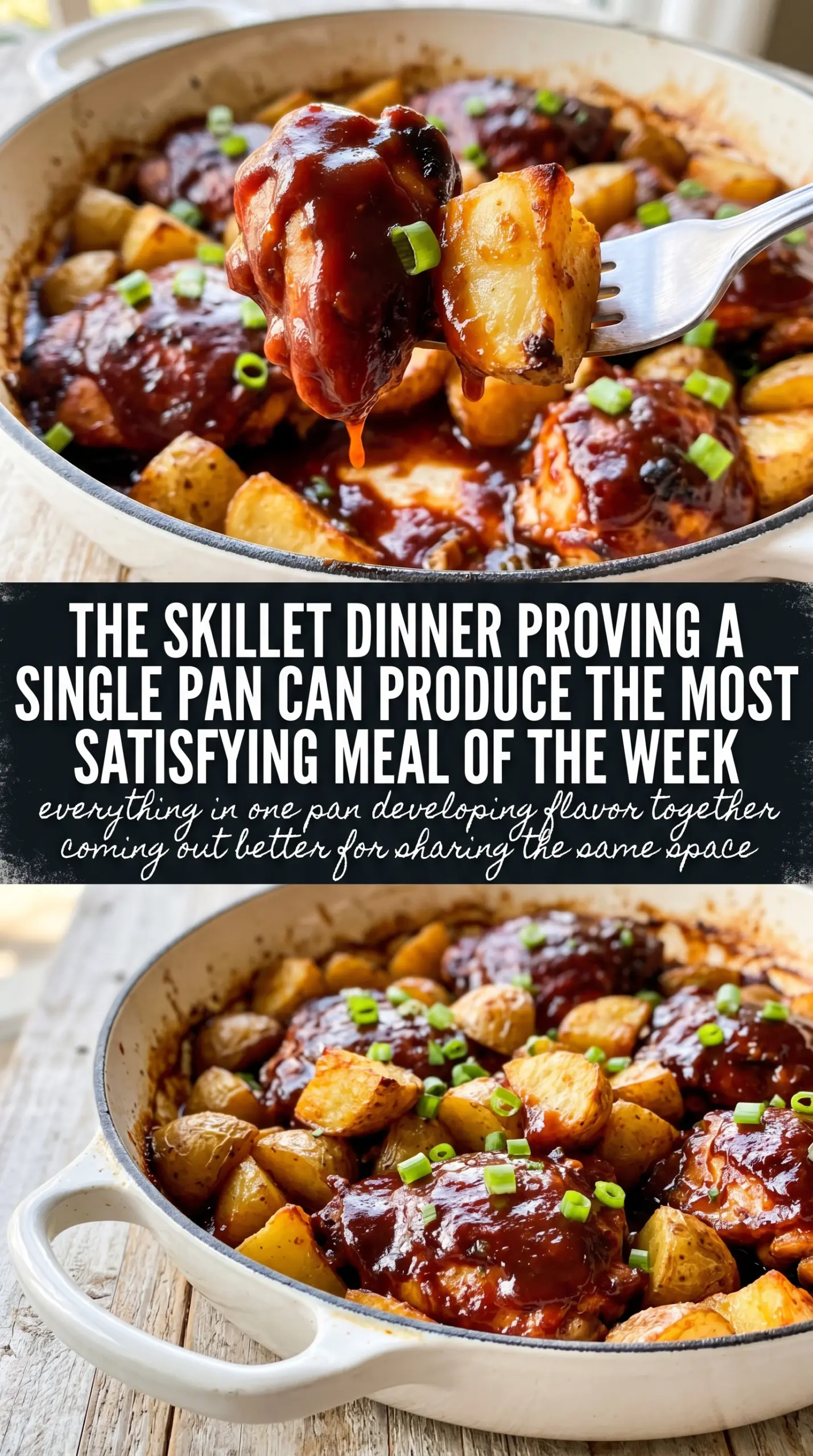
BBQ chicken and potatoes hit that sweet spot between smoky, saucy, and satisfying without asking much from you at the stove. The potatoes get a head start in the skillet so they turn tender with crisped edges before the chicken and vegetables join in, which keeps the whole pan from tasting flat or steamed. By the time the BBQ sauce goes in, everything in the pan already has some color and texture to stand up to it.
Chicken thighs work especially well here because they stay juicy even after they’re cut into cubes and cooked in a hot skillet. The BBQ sauce goes in near the end on purpose; if it cooks too long, it can tighten up and scorch before the potatoes are done. A little smoked paprika rounds out the grill flavor, and the cheese on top gives you that melty finish people expect from a good skillet dinner.
Below you’ll find the timing that keeps the potatoes from staying hard, the small technique choices that keep the sauce from burning, and a few easy swaps if you want to change up the vegetables or make it work with what’s already in your kitchen.
The potatoes got those crispy edges I was hoping for, and the BBQ sauce coated everything without turning sticky or burnt. My husband went back for seconds before I even sat down.
Save this BBQ Chicken Potato Skillet for the night you want one-pan dinner, smoky BBQ sauce, and tender potatoes all in the same cast iron pan.
The reason the potatoes go in first, not last
The biggest mistake in a skillet like this is piling everything in at once and hoping the potatoes catch up. They won’t. Potatoes need direct time against the hot pan to soften and pick up color, and if the chicken and BBQ sauce go in too early, the pan turns crowded and the vegetables steam instead of browning.
Starting with the potatoes gives you texture in the final dish. That first 10 minutes is doing the heavy lifting. Once the potatoes have started to tenderize, the chicken can finish at the same pace as the onion and bell pepper, and the sauce can come in last as a glaze instead of a simmering liquid.
- Cast iron skillet — It holds heat well enough to brown the potatoes and keep the chicken cooking evenly. A thin skillet will lose too much heat when the ingredients go in.
- Chicken thighs — Thighs stay juicy in a hot skillet and handle the longer cook time better than breast meat. If you swap in breasts, cut them a little larger and pull the pan sooner so they don’t dry out.
- BBQ sauce — Use one you actually like on its own, because it becomes the main seasoning at the end. A thicker sauce clings better, while a thinner sauce may need an extra minute over the heat to coat well.
- Smoked paprika — This deepens the grill flavor even if you’re cooking indoors. Regular paprika works in a pinch, but you’ll lose some of that smoky backbone.
What Each Ingredient Is Actually Doing in BBQ Chicken Potato Skillet
- High heat (essential for browning) — High heat creates crust and caramelization. Medium heat just cooks without developing flavor.
- Oil or fat (for browning and flavor) — The fat helps transfer heat and create crust. It also carries seasonings.
- Salt and seasoning (bold, applied before) — Season confidently. The high heat cooking mellows flavors slightly.
- No moving it around (let it sit) — The food needs time to develop crust. Constant flipping and moving prevents browning.
- Timing (watch carefully) — High heat cooks fast. Check doneness frequently to avoid overcooking.
- Optional: finishing sauce or glaze — Apply in the last minute for flavor without burning. Heavy sauces applied early can char.
- Resting time (5-10 minutes before serving) — Resting allows juices to reabsorb. Cutting right away lets them run out.
- Optional: smoke or char flavor (if available) — Wood smoke or char adds depth. Build the fire strategically for the flavor you want.
Building the skillet so the sauce coats instead of burns
Brown the potatoes first
Heat the oil in the skillet until it shimmers, then add the diced potatoes and let them sit long enough to pick up a little color before stirring. If you stir constantly, they’ll soften, but they won’t caramelize. The goal is tender edges and a light crust on the outside, because those pieces hold up once the sauce goes in.
Cook the chicken in the same pan
Add the cubed chicken, bell pepper, onion, smoked paprika, salt, and pepper once the potatoes have started to soften. The chicken should hit the hot surface and sizzle right away. If the pan looks crowded or wet, the heat is too low, and the chicken will stew instead of sear; keep the burner at medium and let moisture cook off as you stir.
Finish with the BBQ sauce and cheese
Stir in the BBQ sauce only after the chicken is cooked through and the vegetables are tender. That keeps the sugars in the sauce from scorching. Once everything is coated, add the cheese, close the grill lid for a couple of minutes, and pull the skillet as soon as the cheese melts into glossy pockets over the top.
How to adapt this skillet when you’re missing an ingredient
Make it dairy-free
Skip the cheese or finish with a dairy-free shredded alternative that melts well. You’ll lose the creamy top layer, but the skillet still works because the sauce and browned potatoes carry the dish.
Use chicken breast instead of thighs
Chicken breast works if that’s what you have, but cut it into larger pieces and check it early. Breasts dry out faster than thighs, especially once the BBQ sauce goes in, so pull the skillet the moment the centers are no longer pink.
Swap in sweet potatoes
Sweet potatoes bring a softer texture and a little extra sweetness that plays well with BBQ sauce. Cut them a bit smaller than regular potatoes so they cook through in the same window.
Storage and Reheating
- Refrigerator: Store leftovers in an airtight container for up to 4 days. The potatoes soften a little, but the flavor holds up well.
- Freezer: It freezes acceptably, though the potatoes will be softer after thawing. Freeze in portions once cooled, then thaw overnight before reheating.
- Reheating: Warm it in a skillet over medium-low heat with a splash of water if the sauce has tightened up. Microwaving works, but the cheese and potatoes won’t have the same texture, and high heat can dry out the chicken.
Questions I Get Asked About This Recipe
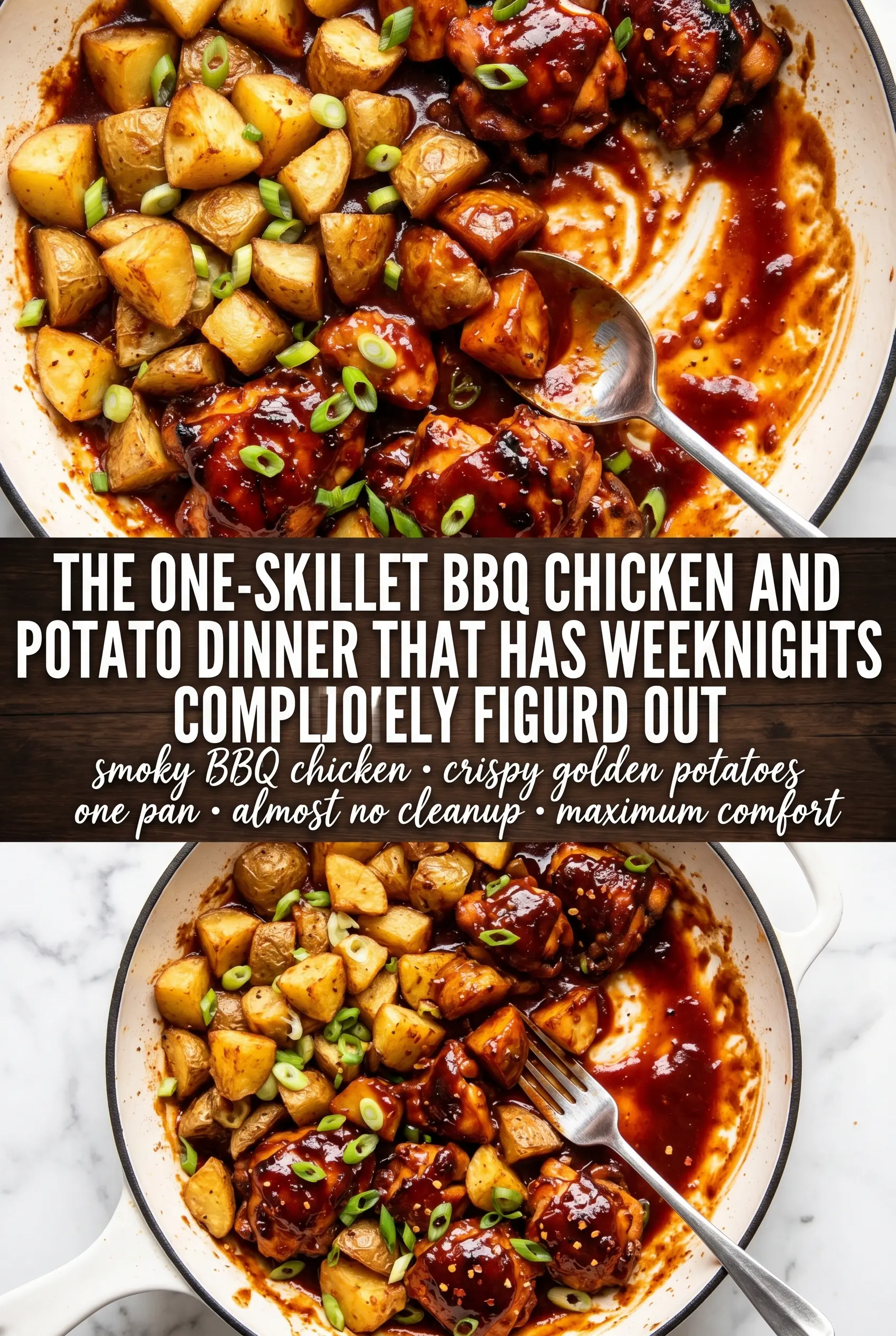
BBQ Chicken Potato Skillet
Ingredients
Equipment
Method
- Heat the olive oil in a cast iron skillet on the grill over medium heat until shimmering.
- Add the diced potatoes and cook for 10 minutes, stirring occasionally, until they start to soften and lightly brown.
- Add the cubed chicken thighs, diced bell pepper, diced onion, smoked paprika, salt, and pepper to the skillet.
- Cook for 12-15 minutes, stirring occasionally, until the chicken is cooked through and the vegetables are tender.
- Add the BBQ sauce and stir to coat everything evenly.
- Top with shredded cheese, close the grill lid, and melt for 2 minutes until the cheese is gooey.
- Serve hot from the skillet.