Fresh fish cured in lime and orange juice gets a clean, bright finish in this authentic Mexican ceviche, with just enough heat from jalapeño and bite from red onion to keep every spoonful interesting. The fish turns opaque and tender instead of flaky or dry, and the citrus brings out its sweetness without overpowering it.
The part that matters most is balance. Lime does the curing, but a little orange juice softens the sharp edges so the ceviche tastes fresh instead of harsh. The fish also needs to be cut small and kept fully submerged, because uneven pieces cure unevenly and leave you with a mix of silky and raw bites. Once the fish is ready, the herbs and vegetables go in at the end so they stay crisp and the avocado keeps its clean, buttery texture.
Below, I’m walking through the details that make ceviche work at home, from choosing the right fish to knowing exactly when it’s done. There’s also a storage note for serving it at the right moment, because this is one dish that tastes best the second it’s assembled.
The fish cured evenly in the lime and orange juice, and the red onion stayed crisp instead of turning harsh. I served it in chilled glasses with tostadas and it disappeared fast.
Save this citrus-cured Mexican ceviche for the nights when you want something chilled, bright, and fast to finish.
The Cure Time That Makes the Difference Between Tender and Rubbery
Ceviche is one of those dishes where the clock matters more than almost anything else. Leave the fish in the citrus too long and the texture tightens up, turning chalky around the edges instead of staying delicate. Pull it too early and the center stays translucent, which is fine for some styles but not what most people expect from a spoonable appetizer.
The sweet spot here is about 30 minutes for diced fish, stirred once or twice so the pieces on top get the same exposure as the ones underneath. The fish should turn opaque all the way through, but it should still look moist, not shredded. If your bowl is shallow or the pieces are larger than a small dice, the cure will move unevenly, so use a deeper non-reactive bowl and cut with consistency.
- Dice size — Keep the fish in small, even cubes so the citrus can work at the same pace across the bowl.
- Non-reactive bowl — Glass, ceramic, or stainless steel keeps the lime juice from picking up a metallic edge.
- Submerging the fish — The citrus has to cover every piece, or you’ll end up with patchy curing.
- Stirring during the rest — A gentle stir moves the top pieces into the liquid and helps everything finish at the same time.
What the Lime, Orange, and Fresh Add-Ins Are Each Doing
Fresh lime juice is the engine of this ceviche. It gives you the acidic environment that changes the fish’s texture and also brings the sharp, clean finish people expect from the dish. Orange juice doesn’t replace the lime; it rounds it out, adding a little sweetness so the ceviche tastes balanced instead of aggressively tart.
The red onion, jalapeño, cilantro, tomato, and avocado are not just mix-ins. Onion brings crunch and bite, jalapeño adds heat without turning the whole bowl smoky or heavy, cilantro gives that unmistakable fresh herbal note, and tomato adds a little juicy sweetness. Avocado should go in at the end so it stays intact; if you stir it in too early, it breaks down and clouds the ceviche.
- White fish — Sea bass, snapper, or halibut all hold up well because they cure cleanly without falling apart.
- Fresh lime juice — Bottled juice tastes flat here and can leave the ceviche harsh. Fresh is worth it.
- Orange juice — Use freshly squeezed if you can. It softens the acidity and gives the dish a fuller finish.
- Avocado — Add it last and fold gently. That keeps the pieces defined instead of turning the mixture creamy.
Building the Bowl So the Fish Cures Evenly
Starting with the Citrus Bath
Put the diced fish in a bowl that gives the citrus room to move around the pieces. Pour the lime and orange juice over the top until every cube is covered, then give it a gentle stir so nothing is floating dry on the surface. If the fish isn’t fully submerged, the exposed pieces will stay undercooked while the rest finishes, and that uneven texture is hard to fix later.
Watching for the Right Color Change
Refrigerate the fish for about 30 minutes, stirring once or twice during the rest. You’re looking for a color shift from translucent to opaque, with a firmer look but still a moist surface. If the fish starts to look chalky or tight around the edges, it has stayed in the acid too long, so pull it out earlier next time and use slightly smaller pieces.
Folding in the Fresh Ingredients
Once the fish is cured, drain off only a little of the citrus if the bowl looks overly wet, then add the onion, jalapeño, cilantro, tomato, and avocado. Toss with a light hand so the avocado stays chunky and the fish keeps its shape. Taste before serving; if it needs more brightness, add a small squeeze of lime, but don’t drown it, or the ceviche will lose the balance you just built.
Serving It Cold and Crisp
Serve the ceviche right away in chilled bowls or small glasses with tostadas or tortilla chips on the side. The cold serving dish keeps the texture lively and helps the fish taste cleaner, especially in warm rooms. If it sits too long after mixing, the vegetables soften and the avocado starts to brown, so get it to the table as soon as it’s assembled.
How to Adjust This Ceviche Without Losing the Fresh, Clean Finish
Make it milder for less heat
Use one jalapeño instead of two and remove the seeds and ribs. You’ll keep the fresh pepper flavor without the sharper burn, which lets the citrus and fish stay front and center.
Use firm shrimp instead of fish
Peeled, deveined shrimp work well here, but they need less time in the citrus, usually closer to 15-20 minutes depending on size. They’ll give you a sweeter, springier bite, though the final texture will be firmer than white fish.
Make it dairy-free and gluten-free by default
This ceviche already fits both, as long as you serve it with corn tostadas or plain tortilla chips. Just check that your tostadas are made with corn and not a flour blend if that matters for your table.
Skip the avocado if you need longer holding time
The ceviche keeps its clean texture better without avocado, especially if you need to hold it for guests. Add diced avocado right before serving if you want that creamy contrast without the browning.
Storage and Reheating
- Refrigerator: Best eaten the day it’s made. You can hold it for a few hours in the fridge, but the fish firms up and the avocado softens as it sits.
- Freezer: Don’t freeze ceviche. The fish and vegetables turn watery and the texture falls apart after thawing.
- Reheating: Don’t reheat it. Ceviche is meant to be served cold, and heat will ruin the cured texture and make the fish tough.
Questions I Get Asked About This Recipe
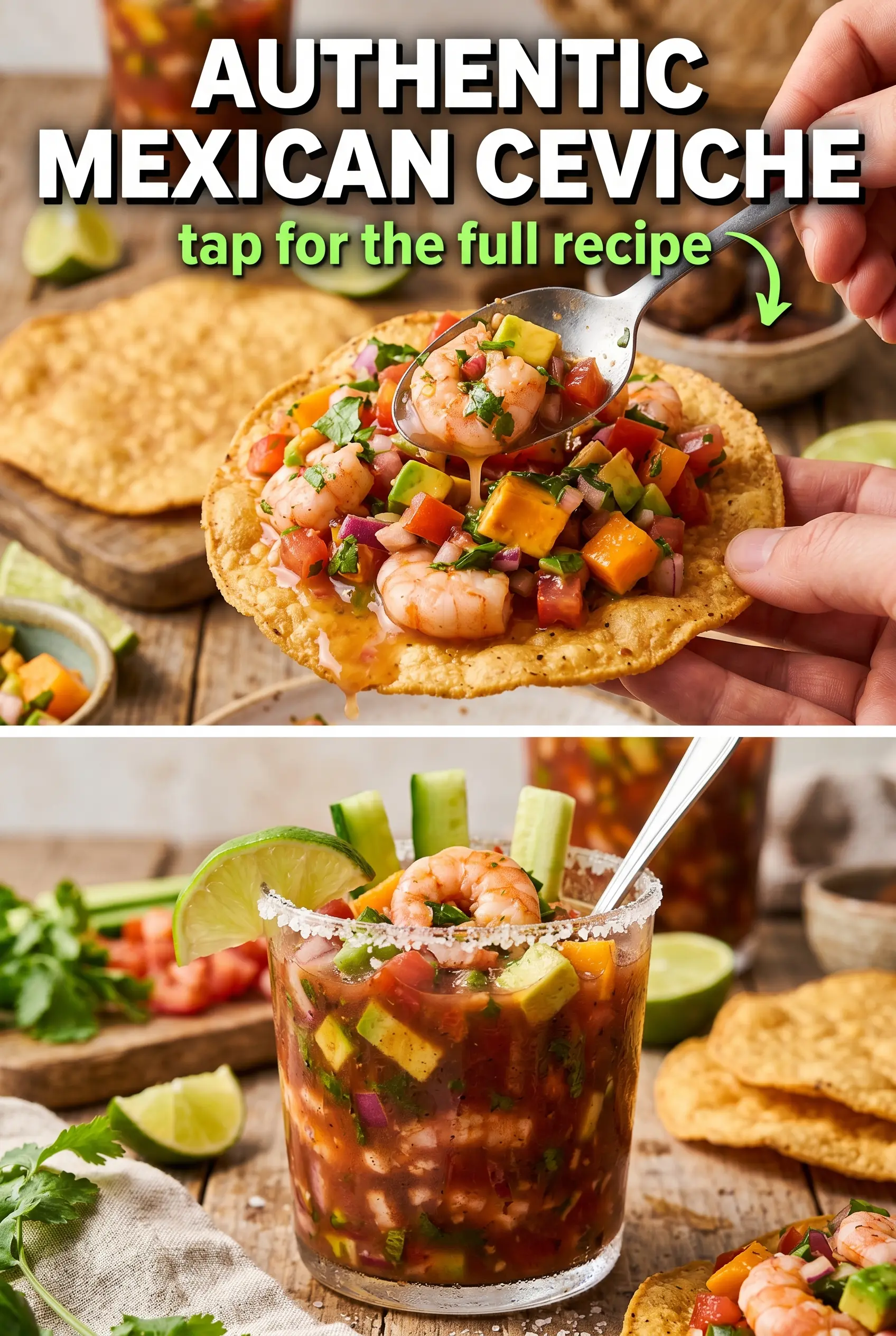
Authentic Mexican Ceviche
Ingredients
Equipment
Method
- Place diced fresh white fish in a non-reactive bowl. Pour fresh lime juice and fresh orange juice over the fish until fully submerged.
- Cover the bowl and refrigerate for 30 minutes, stirring occasionally. The fish should turn opaque, signaling it has been “cooked” by the citric acid.
- Add sliced red onion, minced jalapeños, chopped fresh cilantro, diced tomato, and diced avocado to the cured fish. Gently toss to combine without mashing the avocado.
- Season with salt and black pepper, then gently toss again. Taste and adjust lime juice if needed for a brighter, citrus-forward flavor.
- Serve ceviche immediately in chilled bowls or small glasses. Put tostadas or tortilla chips on the side for crunch with every bite.