Thin-sliced ribeye, sweet onions, and melted cheese on a toasted hoagie roll hit that fast, salty, satisfying balance that keeps a cheesesteak in regular dinner rotation. The Blackstone gives you the kind of high heat that sears the steak before it turns gray, while the onions and peppers pick up just enough char to taste cooked, not steamed. Every bite should be juicy, drippy, and sturdy enough to hold together for a few seconds before the cheese starts to run.
The part that matters most is managing the heat and the order. On the griddle, the vegetables go first so they can soften and caramelize while the steak cooks in a hot open space, and the rolls toast at the end in the rendered fat and butter left behind. Ribeye is worth using here because the marbling keeps the meat tender even after it’s chopped on the griddle. If you’ve had cheesesteaks that tasted dry or chewy, it usually means the steak was sliced too thick or left on the heat too long.
Below I’ll walk through the small details that make this sandwich taste like the real thing: how thin the steak needs to be, when the cheese should go on, and why the roll should get toasted last. That last step matters more than people think.
The steak stayed tender, the onions got that sweet griddle char, and the cheese melted over everything just right. Toasting the rolls on the Blackstone at the end kept them from getting soggy.
Save this Blackstone Philly cheesesteak for the nights when you want a hot, melty sandwich with real griddle flavor.
The Step That Keeps the Steak Tender on a Hot Griddle
The biggest mistake with a cheesesteak on a Blackstone is crowding the steak and leaving it alone long enough to steam. Ribeye needs high heat and movement. Once it hits the griddle, chop it up with spatulas and keep it turning so the outside browns before the inside dries out.
The other trap is cooking the onions and peppers until they collapse into a wet pile. You want soft, sweet, and a little browned at the edges, not limp enough to disappear inside the sandwich. Cook them first, then push them aside so the steak gets direct contact with the hot surface.
What the Steak, Cheese, and Roll Are Each Doing Here
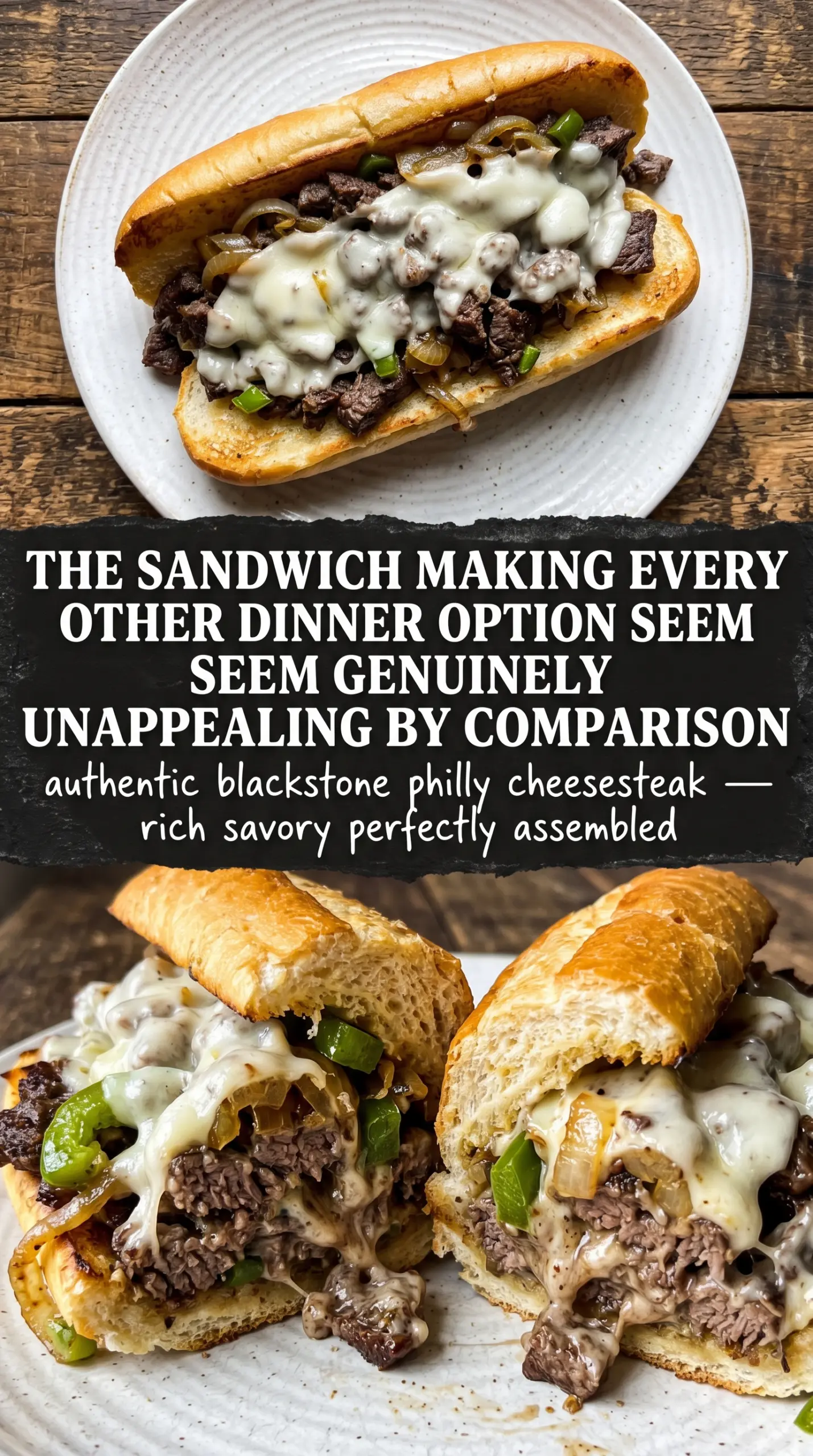
- Ribeye steak — This is the backbone of the sandwich. The marbling keeps it tender on a hot griddle, and it stays juicy even after chopping. If ribeye isn’t available, shaved sirloin works, but it won’t have the same rich finish.
- Provolone — Provolone melts cleanly and gives you that classic savory stretch without overpowering the beef. Cheese Whiz is the more old-school move if you want the saltier, saucier version. Pre-sliced cheese is fine here because even melting matters more than artisanal blocks.
- Hoagie rolls — The roll needs structure. A soft roll with enough chew holds the filling without falling apart, and buttering it before toasting helps it stand up to the steak juices. If your rolls are very soft, toast them a little longer than you think.
- Onions and green peppers — The onions bring sweetness, and the peppers add a sharp, grassy edge that keeps the sandwich from tasting flat. Slice them thin so they cook at the same pace and soften instead of char unevenly.
The Griddle Sequence That Gives You the Real Cheesesteak Texture
Caramelizing the Vegetables First
Heat the Blackstone to medium-high and add the oil before anything else goes on. Spread the onions and peppers out so they have direct contact with the surface, then leave them alone long enough to pick up color before stirring. If they start to stick, the griddle needs a touch more oil, not more stirring. When they’re soft and browned, move them to the cooler side of the griddle so they stay warm while the steak cooks.
Chopping the Steak Into Bite-Sized Pieces
Season the ribeye with salt and pepper, then lay it on the hottest open section of the griddle. The meat should sizzle the second it lands. Use two spatulas to chop and turn it until the pink fades and the edges just start to crisp; if you wait too long, the steak loses its juiciness fast. Four minutes is usually enough for thin-sliced ribeye, and that’s long enough to brown it without drying it out.
Melting the Cheese and Toasting the Rolls
Divide the cooked steak into four portions and drape cheese over each one while it’s still on the heat. The residual heat does the melting work, so you don’t need to keep cooking the meat while you wait. Butter the hoagie rolls and toast them cut-side down until golden. If the rolls are pale, they’ll go soft as soon as the filling goes in.
Building the Sandwich Fast
Scoop the steak, onions, and peppers into the toasted rolls right away. This sandwich waits for no one. If you let the filling sit around after the cheese melts, the meat cools down and the roll starts absorbing moisture. Serve it immediately while the cheese is still loose and the edges of the bread are crisp.
How to Adjust This Cheesesteak for Different Kitchens and Eaters
Cheese Whiz for the Classic Diner Version
Swap the provolone for Cheese Whiz if you want the saltier, smoother, more nostalgic version. It won’t give you the same mild dairy finish, but it melts fast and coats the steak in a way that feels unmistakably cheesesteak.
Gluten-Free Version
Use certified gluten-free hoagie rolls and keep the rest of the ingredients the same. The filling is naturally gluten-free, so the main job is finding a roll with enough structure to handle the juices without turning gummy.
Lower-Carb Cheesesteak Bowl
Skip the rolls and serve the steak, onions, peppers, and cheese over a bed of shredded lettuce or cauliflower rice. You lose the toasted bread contrast, but the beef, cheese, and griddle vegetables stay the star.
Storage and Reheating
- Refrigerator: Store the steak and vegetables separately from the rolls for up to 3 days. The meat will stay best if it’s cooled quickly and sealed well.
- Freezer: The steak filling freezes reasonably well for up to 2 months, but the onions and peppers will soften after thawing. Don’t freeze the assembled sandwiches.
- Reheating: Reheat the filling on the griddle or in a skillet over medium heat until hot, then toast fresh rolls separately. Microwaving the sandwich whole makes the bread soggy and the steak chewy.
Questions I Get Asked About This Recipe
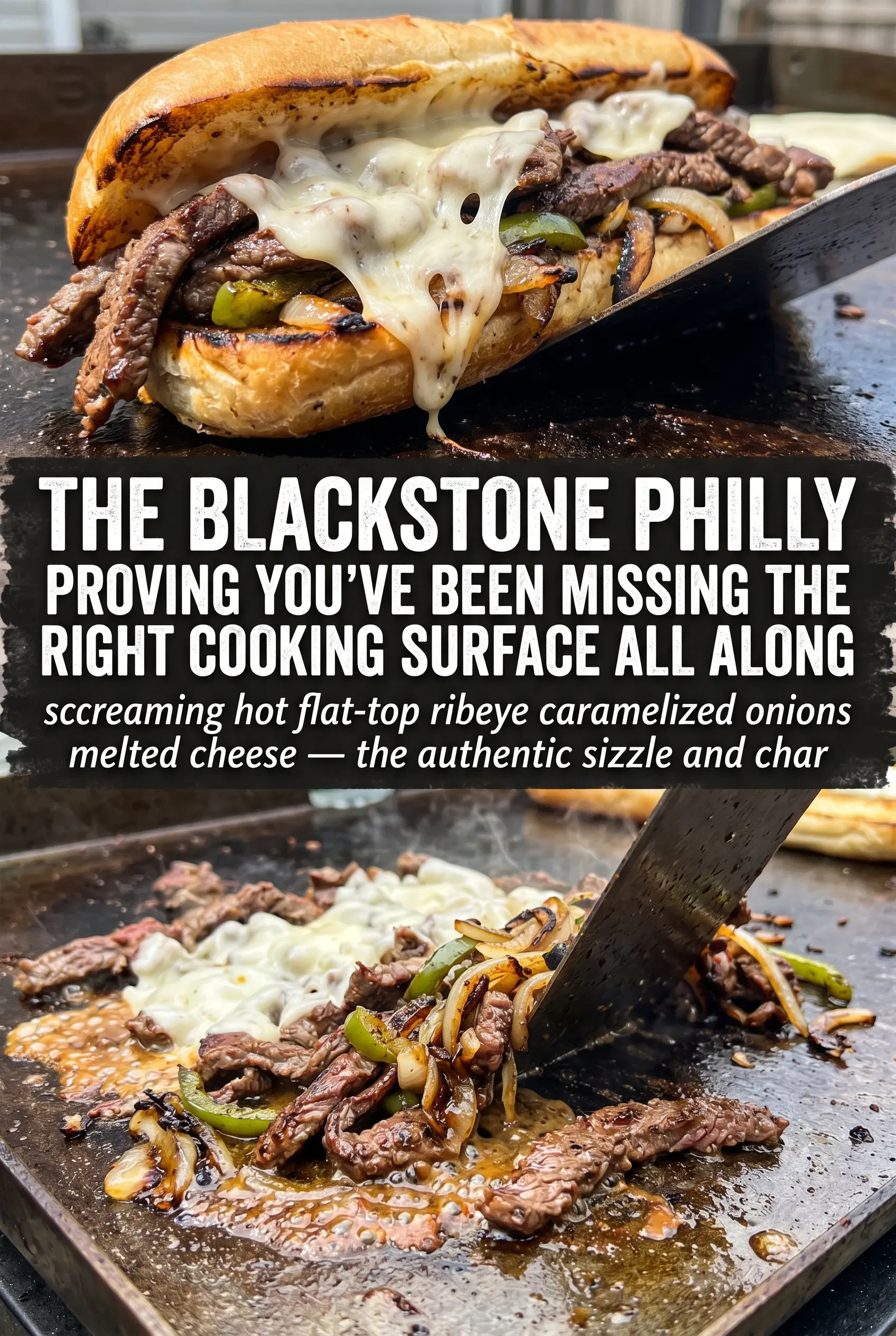
Authentic Blackstone Philly Cheesesteak
Ingredients
Equipment
Method
- Heat the Blackstone griddle to medium-high heat and add oil to coat the surface.
- Cook the onions and green bell peppers until caramelized, about 8-10 minutes, then move them to the side.
- Season the thinly sliced ribeye with salt and pepper to taste.
- Cook the steak on the hot griddle for 3-4 minutes, chopping with spatulas as it browns.
- Divide the steak into 4 portions and top each portion with provolone cheese (or Cheese Whiz), allowing the cheese to melt.
- Butter and toast the hoagie rolls on the griddle until golden.
- Scoop each steak portion with onions and peppers into toasted rolls.
- Serve immediately for the best hot, melty cheese texture.