Apple pie cookies bring all the best parts of apple pie into a hand-held cookie that bakes up with crisp edges, a tender crust, and a spoonful of cinnamon apples tucked in the center. The filling stays thick instead of running all over the pan, and that matters here. You want each cookie to hold its shape, crackle a little at the edges, and still taste like a warm slice of pie in miniature.
The trick is cooking the apples just long enough to thicken the juices before they go anywhere near the dough. If the filling is loose, the bottom crust turns soggy and the top can slide off during baking. A small amount of cornstarch and a short stovetop cook fix that, and chilling the filling before assembly makes the whole process cleaner and easier.
Below, I’ve included the dough options that work best, how to keep the cookies sealed, and a few variations if you want to swap the crust or change the finish. The caramel drizzle at the end is optional in the strictest sense, but it pulls the whole cookie together in a way that makes people reach for a second one before they’ve finished the first.
The filling thickened up perfectly and stayed right in the middle of the cookies. I used the pie crust version, and they baked up with golden edges and no leaks at all.
Save these apple pie cookies for the days when you want flaky pastry, cinnamon apples, and a caramel drizzle in one hand-held bite.
The Reason the Filling Stays Put Instead of Leaking Out
Apple pie cookies fall apart when the filling is too wet or the dough isn’t sealed with enough pressure. The apples need a short cook on the stove first, just until the sugar melts, the juices thicken, and the mixture looks glossy rather than soupy. That one step keeps the filling concentrated so it bakes inside the cookie instead of boiling out onto the pan.
The other thing that matters is size. A teaspoon of filling sounds tiny, but that’s the right amount for a 3-inch cookie. Overfilling turns the top into a lid that floats, and then the seams split in the oven. A small vent in the top lets steam escape without blowing the cookie open.
- Cook the apples first — Raw diced apples release too much liquid in the oven. A quick stovetop cook with brown sugar and cinnamon turns them into a thick filling that behaves like pie filling should.
- Cool the filling completely — Warm filling softens the dough before baking and makes sealing harder. Cold filling is easier to portion and keeps the crust from turning greasy.
- Seal with fork pressure — A firm crimp around the edges does more than look pretty. It helps lock the top and bottom together so the filling stays where it belongs.
What the Dough Choice Changes in the Final Cookie
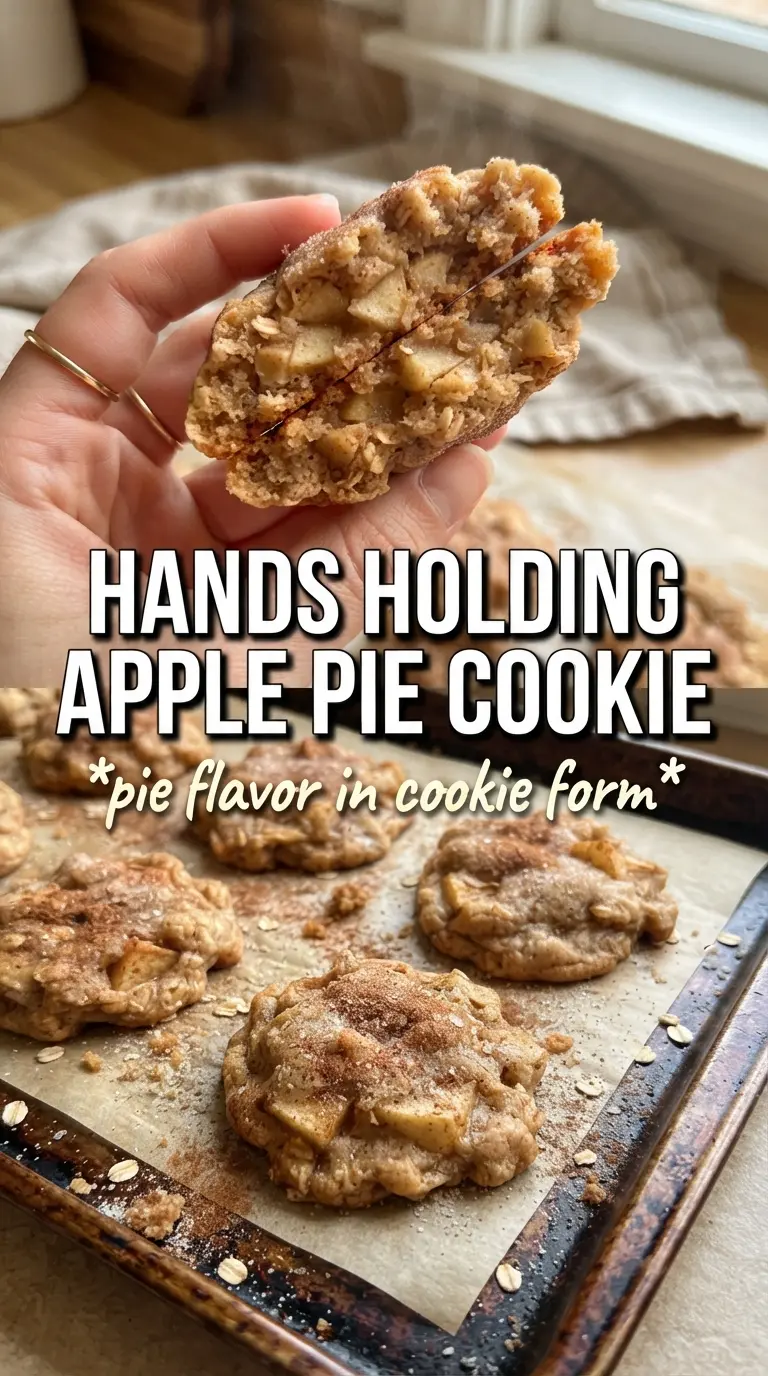
- Refrigerated pie crust — This is the fastest route and gives you the flakiest, most pie-like result. It bakes into a crisp shell that tastes closest to classic apple pie, especially once the cinnamon sugar and caramel go on top.
- Shortbread dough — Shortbread makes a sturdier, more tender cookie with a buttery snap. It’s the better choice if you want something that holds its shape neatly and tastes a little richer and more cookie-like than pastry-like.
- Brown sugar — Brown sugar deepens the apple filling and reinforces the caramel notes. Regular sugar works in a pinch, but the filling tastes flatter and less like apple pie.
- Caramel drizzle — This is the finish that ties the whole cookie together. It should go on after the cookies cool so it sits on top instead of melting off the edges.
Assembling the Cookies Without Tearing the Dough
Cutting the Bottoms and Tops
Roll the dough to an even thickness before cutting, because thin spots bake too fast and tear when you try to lift them. The bottom circles should be the larger cut and the top circles slightly smaller so the edges meet without stretching. If the dough gets soft while you work, chill it for a few minutes before continuing; soft dough bends and tears, especially with pie crust.
Filling and Sealing
Spoon just 1 teaspoon of filling into the center of each bottom round. The edges need a clean border so they can seal, and any filling touching the rim can keep the top from sticking. Press the top round on gently, then crimp with a fork all the way around. If the dough slips while you seal, a quick chill on the tray firms it back up.
Baking to the Right Color
Bake until the cookies are golden on the edges and lightly browned on top, not pale and soft-looking. Underbaked pie crust tastes doughy, while overbaked shortbread turns dry fast. The cookies continue to set on the baking sheet as they cool, so pull them when they still look a touch softer in the center than you want the finished cookie to be.
The Finish
Let the cookies cool before drizzling with caramel, or the drizzle slides right off and soaks in too much. A light dusting of cinnamon sugar is best before baking, while the caramel belongs at the end for contrast. Once they’re fully cool, the filling settles and the tops stay crisp enough to give each bite some structure.
How to Adapt These for Different Kitchens and Different Crusts
Use shortbread for a sturdier cookie
If you want a cleaner, more cookie-like bite, use the shortbread dough instead of pie crust. It’s less flaky and more tender, but it holds up beautifully under the filling and gives you a richer buttery finish.
Make them gluten-free with a gluten-free pie crust
A good gluten-free refrigerated pie crust is the easiest swap here. Keep the filling fully cooled and handle the dough gently, because gluten-free crusts are more likely to crack if you stretch them.
Add chopped pecans for extra crunch
A spoonful of finely chopped pecans in the filling adds texture and a toasted note that works nicely with the cinnamon. Keep the pieces small so the cookies still seal cleanly and don’t split at the edges.
Skip the caramel for a less sweet finish
If you want a cleaner apple pie flavor, leave off the caramel and finish with only cinnamon sugar. The cookies still taste complete, just a little less rich and a little more pie-forward.
Storage and Reheating
- Refrigerator: Store in an airtight container for 3 days. The crust softens a little as it sits, but the flavor stays good.
- Freezer: Freeze baked cookies without the caramel drizzle for up to 2 months. Wrap well and thaw at room temperature before reheating.
- Reheating: Warm in a 300F oven for 5 to 8 minutes. The oven brings back the crisp edges; the microwave makes the crust soggy and dull.
Answers to the Questions Worth Asking
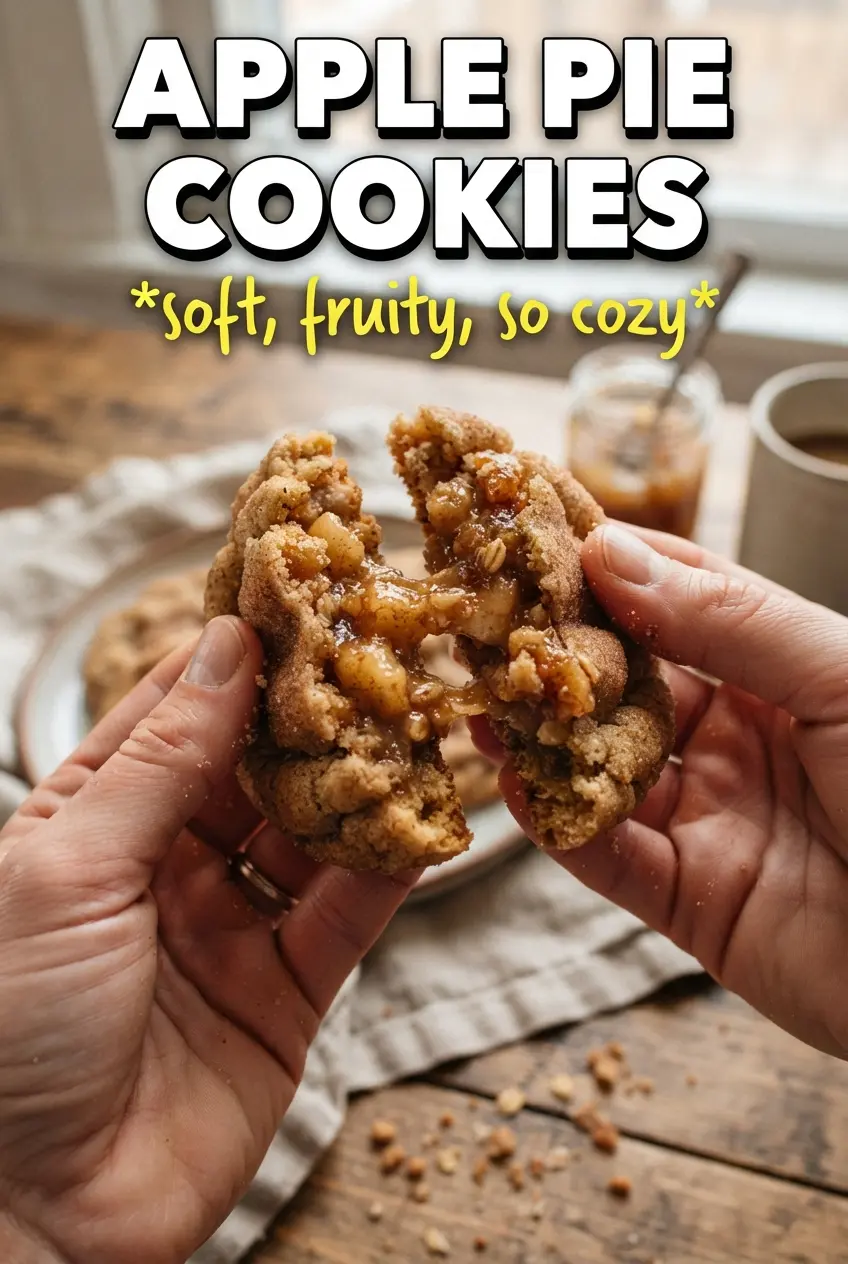
Apple Pie Cookies
Ingredients
Equipment
Method
- Cook diced apples with brown sugar, cinnamon, cornstarch, and butter for 5 minutes until the mixture thickens, stirring to coat every piece.
- Cool the thickened apple filling completely before assembling the cookies.
- Preheat the oven to 375F and line baking sheets for easy release.
- Roll pie crust or shortbread dough and cut 3-inch circles for the bottoms and 2.5-inch circles for the tops.
- Place the bottom circles on baking sheets and spoon 1 teaspoon apple filling into the center of each.
- Set a top circle over each filled bottom and press the edges with a fork to seal.
- Cut a small vent in the center of each cookie so steam can escape.
- Brush the tops with egg wash and sprinkle with cinnamon sugar.
- Bake for 12-15 minutes at 375F until the cookies turn golden at the edges and bottoms.
- Cool the cookies, then drizzle caramel over the tops for a glossy finish.