Moist apple coffee cake with a thick cinnamon streusel and a glossy apple cider glaze is the kind of breakfast bake that disappears before the coffee pot empties. The cake stays tender underneath, the top bakes into a crunchy brown sugar layer, and the glaze lands in sweet ribbons that soak just enough into the crumb without turning the whole pan soggy.
What makes this version work is the balance. Sour cream keeps the cake plush, diced apples bring little pockets of juice and texture, and the streusel gets its crunch from cold butter cut in by hand so it stays crumbly instead of melting into the batter. The reduced cider in the glaze matters too — it gives the drizzle actual apple flavor instead of just sweetness.
Below, you’ll find the small details that keep the topping crisp, the cake moist, and the glaze thick enough to sit on top instead of disappearing into the pan.
The streusel stayed crumbly and the cake baked up moist all the way through. I used Honeycrisp apples, and the glaze set into those pretty thick ribbons on top just like the photo.
Apple coffee cake with cider glaze is the kind of bake that keeps the streusel crunchy and the crumb tender for days.
The Trick to Keeping the Streusel Crisp Instead of Sinking
Streusel only stays pebbly when the butter is cold and the batter underneath isn’t overworked. If the butter softens too much, you get a paste instead of crumbs, and that paste melts into the cake before the top has a chance to brown. Cutting the butter in until the mixture looks like coarse sand with some larger clumps gives you those crunchy pockets that bake into a real topping.
The other thing that matters is the thickness of the batter. This cake batter is rich enough to support the streusel, but not so stiff that it bakes up dry. Spread it evenly in the pan, then scatter the crumbs all the way to the edges so every slice gets a little of that brown sugar crust.
- Cold butter — This is what creates the streusel texture. If the butter is warm, the topping melts flat. Cut it straight from the fridge into the dry mixture and stop as soon as the crumbs hold together when squeezed.
- Sour cream — It keeps the crumb tender and adds enough richness to carry the apples. Plain yogurt works in a pinch, but the cake will taste a little sharper and won’t be quite as plush.
- Diced apples — Keep the pieces small and even so they soften through in the oven. A firm apple like Honeycrisp, Fuji, or Granny Smith holds its shape better than a mealy apple.
What Each Ingredient Is Doing in the Pan

- Flour in both the cake and streusel — In the cake, it gives structure so the apples don’t sink. In the streusel, it helps the butter cling to the sugar and bake into crumbs instead of a greasy layer.
- Brown sugar in the streusel — This is where the deep caramel note comes from. Light or dark brown sugar both work, though dark brown sugar will give you a slightly richer molasses flavor.
- Apple cider — Reducing it first concentrates the apple flavor and keeps the glaze from tasting thin. Don’t skip that step, or the glaze will be runny and too sharp.
- Cinnamon and nutmeg — Cinnamon leads, nutmeg fills in the background. The nutmeg is subtle, but it gives the cake that bakery-style warmth that makes it taste complete.
Building the Batter and Baking It Evenly
Mix the Streusel First
Start with the streusel so the butter stays cold while you work on the batter. Cut it into the flour, brown sugar, and cinnamon until you have crumbs ranging from fine pebbles to small clumps. If the mixture starts looking greasy or pasty, it means the butter warmed up too much; pop the bowl in the fridge for a few minutes before moving on.
Make the Cake Batter Without Beating It Tough
Cream the butter and sugar until the mixture looks pale and fluffy, then add the eggs one at a time. Once the dry ingredients go in, mix only until the flour disappears. Overmixing here makes the cake dense and a little rubbery, especially once the apples go in. Fold in the diced apples at the end so they stay intact instead of breaking down into the batter.
Top, Bake, and Test the Center
Spread the batter into a greased 9×13 pan and level it out so it bakes evenly. Scatter the streusel over the top and press lightly in a few spots so it sticks, but don’t bury it in the batter. Bake until the top is deep golden and a tester comes out with just a few moist crumbs from the cake part. If the center still looks wet while the edges are already browned, give it a few more minutes and tent loosely with foil if needed.
Reduce the Cider and Finish the Glaze
Simmer the cider until it shrinks down to a small, concentrated amount and cool it before whisking it into the powdered sugar and cinnamon. If you add hot cider straight in, the glaze can turn thin and slippery. Drizzle it over the cake once it’s warm, not blazing hot, so it sits on top in thick ribbons instead of disappearing into the crumb.
Three Ways to Adjust This Coffee Cake for Your Kitchen
Gluten-Free Version
Use a 1:1 gluten-free baking blend in both the cake and streusel. The cake will still be tender, but it may need a few extra minutes in the oven because gluten-free batters often bake a touch slower in the center.
Dairy-Free Swap
Use plant-based butter in both the streusel and cake, and swap the sour cream for an unsweetened dairy-free yogurt with some body. The cake will still stay moist, though the crumb may be a little less rich and the streusel a little softer.
Apple Swaps That Still Hold Up
Firm pears can stand in for the apples if that’s what you have, but they’ll bake a little softer and sweeter. Stick with fruit that holds its shape so the cake doesn’t turn wet in the middle.
Storage and Reheating
- Refrigerator: Store covered for up to 4 days. The streusel softens a little, but the cake stays moist.
- Freezer: Freeze slices tightly wrapped for up to 2 months. Thaw in the fridge overnight for the best texture.
- Reheating: Warm individual slices in a 300°F oven or toaster oven until just heated through. The microwave works, but it softens the streusel fast, which is the easiest way to lose the best part.
Questions I Get Asked About This Recipe
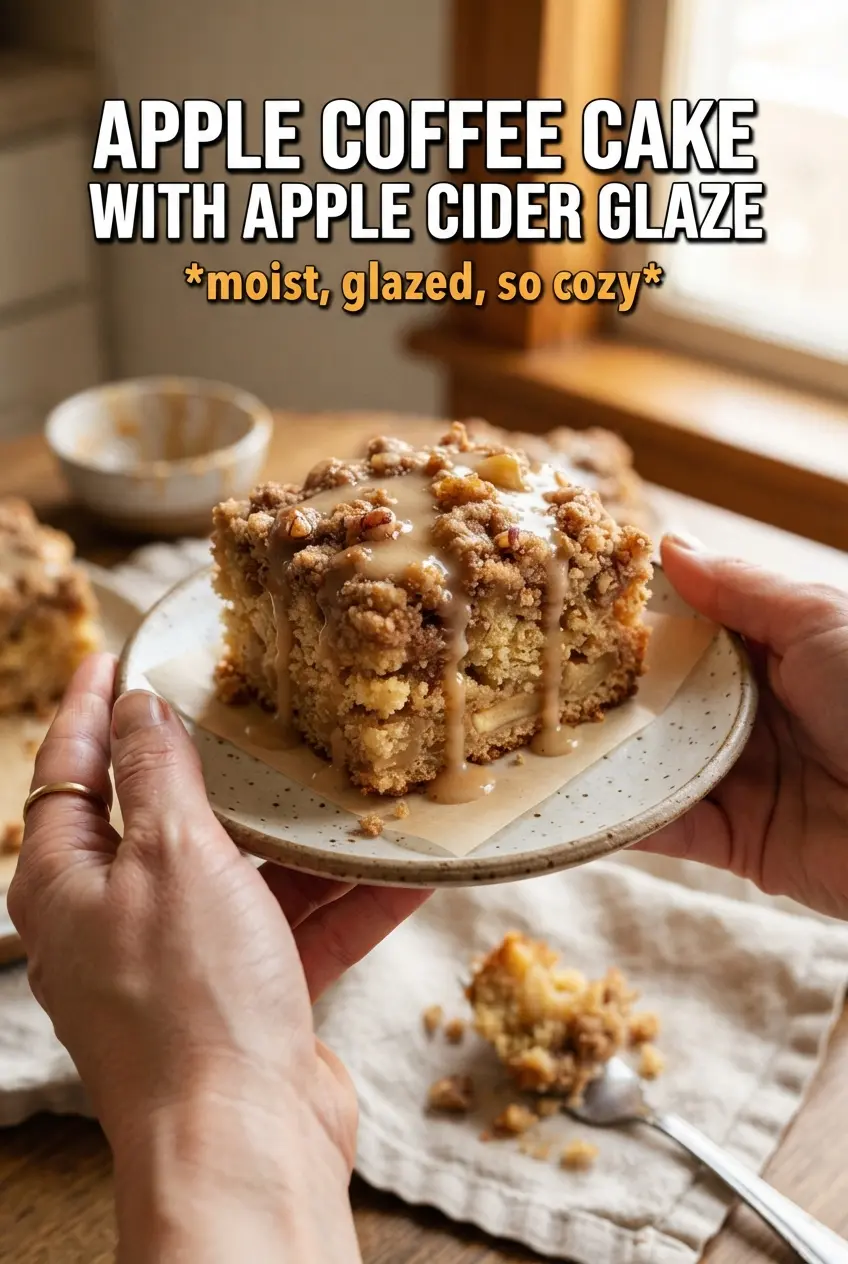
Apple Coffee Cake With Apple Cider Glaze
Ingredients
Equipment
Method
- Preheat oven to 350°F, then grease a 9x13 pan, making sure the corners are well coated (visual cue: no dry spots on the pan surface).
- Reduce the apple cider until it thickens slightly, then set it aside to cool a bit before glazing (visual cue: cider looks syrupy and coats the whisk lightly).
- Cut the cold butter into the flour, brown sugar, and cinnamon until crumbly (visual cue: small clumps form and no large butter chunks remain).
- Beat the butter and sugar until smooth, then add the eggs one at a time, followed by vanilla and sour cream (visual cue: batter turns glossy and cohesive).
- Fold in the dry ingredients and the diced apple just until no dry streaks remain (visual cue: apple pieces are evenly dispersed through the batter).
- Spread the batter into the greased 9x13 pan in an even layer, then scatter the streusel over the top (visual cue: streusel forms a thick, speckled layer).
- Bake at 350°F for 45-50 minutes, until the center springs back lightly and a tester comes out mostly clean (visual cue: streusel is deep golden brown).
- Cool the cake for about 10 minutes, then whisk the powdered sugar, reduced apple cider, and cinnamon until smooth (visual cue: glaze is thick enough to fall in ribbons).
- Drizzle the glaze over the warm cake in thick ribbons, letting it settle into the streusel (visual cue: shiny glaze pools slightly in patches).