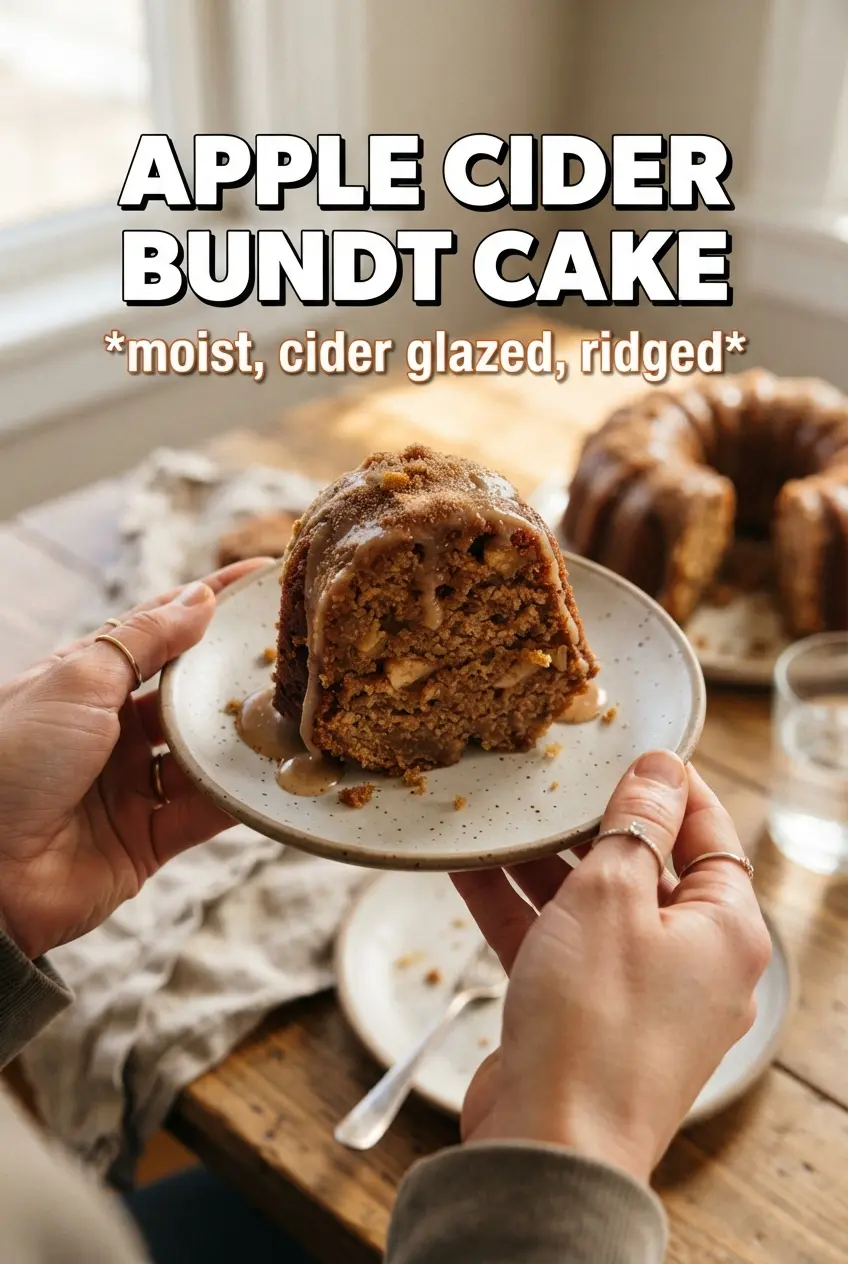
Apple cider bundt cake lands with that deep, almost caramel-like crumb that makes people go back for a second slice before the glaze has even set. The cider gives the cake a warm apple backbone without turning it into a spice cake that tastes flat or overly sweet, and the sour cream keeps the crumb tender enough to stay soft for days. What you end up with is a cake that slices cleanly, smells incredible, and looks like it took more effort than it did.
The key is reducing the cider before it ever meets the batter. That small step concentrates the apple flavor and keeps the cake from baking up watery. I also like this version because the butter is beaten until pale and fluffy before the eggs go in, which gives the crumb a lighter lift than most bundt cakes have. The glaze uses reduced cider too, so the flavor carries all the way through instead of sitting on top as plain sweetness.
Below, I’ll walk through the parts that matter most: how to keep the cake from sticking in the pan, why room-temperature ingredients help the batter come together, and the quickest way to tell when the center is actually done.
I reduced the cider like you said and the flavor came through in every bite. The cake released cleanly from the Bundt pan after 15 minutes, and the glaze soaked into the ridges instead of running off.
Save this apple cider bundt cake for the kind of dessert that bakes up moist, glazes beautifully, and tastes like real cider in every slice.
The Cider Reduction Is What Gives This Cake Its Depth
If you pour apple cider straight into the batter, the flavor stays thin and the cake can lean wet in the center. Reducing it by half concentrates the apple flavor and cuts out extra liquid, which matters in a dense Bundt cake where too much moisture can make the crumb gummy. Let the reduced cider cool before adding it, or it can soften the butter mixture and make the batter look broken.
The other thing worth paying attention to is the pan. A Bundt cake only looks impressive if it releases in one piece, and that means grease and flour every ridge, corner, and center tube. The cake also needs that full 15-minute rest in the pan after baking. Turn it out too soon and it can tear; wait until it’s fully cool and the sugar crust can cling.
What Each Ingredient Is Actually Doing in This Cake

- Apple cider — Reducing it is non-negotiable. That’s where the apple flavor gets concentrated, and it keeps the crumb from tasting bland or diluted.
- Sour cream — This brings tang and moisture without thinning the batter. Greek yogurt can work in a pinch, but use full-fat yogurt so the texture stays close.
- Butter — Softened butter beaten with sugar gives the cake structure and a lighter crumb. Cold butter won’t trap air well, and melted butter makes the cake heavier.
- Spices — Cinnamon does most of the work, but the nutmeg and allspice are what make the cider taste complete instead of one-note. Fresh spices matter here more than they do in a plain vanilla cake.
- Powdered sugar glaze — This sets fast and keeps the top glossy. If you want a thicker drip, use a little less cider; if you want it to run down the ridges, loosen it a touch.
Building the Batter Without Losing the Texture
Start with the Reduced Cider
Cook the cider down to 1/2 cup first, then let it cool. If it’s warm, it can melt the butter mixture and throw off the batter’s structure before the flour ever goes in. You want a concentrated cider that tastes like apple, not apple-flavored liquid.
Beat the Butter Until It Looks Pale
Butter and sugar need to be beaten until the mixture turns noticeably lighter in color and looks fluffy. That air is part of what keeps a Bundt cake from feeling heavy. If the butter is too cold, the mixture stays grainy and the cake bakes up dense.
Alternate the Dry Ingredients and Sour Cream
Add the flour mixture and sour cream in alternating additions, ending with the flour. This keeps the batter smooth and prevents overmixing, which can make the crumb tough. Stop as soon as the flour disappears; a few small streaks are better than beating the batter into submission.
Bake Until the Center Springs Back
Pull the cake when a tester comes out clean or with just a few moist crumbs and the top springs back when lightly pressed. Bundt pans can hide a raw middle under a dark crust, so don’t rely on color alone. If the top is browning too fast, cover it loosely with foil for the last part of baking.
How to Adapt This for Different Kitchens and Diets
Dairy-Free Version
Use a good plant-based butter stick and full-fat dairy-free yogurt in place of the sour cream. The cake still bakes up tender, though the flavor loses a little richness and the crumb will be slightly less plush.
Glaze Less, Serve More
If you want a more understated finish, drizzle on half the glaze and serve the rest on the side. That keeps the top from getting overly sweet and lets the cider flavor in the crumb stand out.
Mini Bundt Pans
This batter works well in mini pans, but the bake time drops a lot, so start checking early. The cakes should spring back and a tester should come out with just a few crumbs; overbaking them dries out the edges fast.
Storage and Reheating
- Refrigerator: Store covered for up to 5 days. The crumb stays moist, but the glaze will soften a bit.
- Freezer: Freeze slices tightly wrapped for up to 2 months. Thaw at room temperature while still wrapped so the cake doesn’t dry out.
- Reheating: Warm individual slices for 10 to 15 seconds in the microwave if you want the cake soft again. Don’t overheat it or the glaze can melt off and the crumb turns rubbery.
Answers to the Questions Worth Asking
Apple Cider Bundt Cake
Ingredients
Equipment
Method
- Reduce the apple cider until you have 1/2 cup, then cool it. The liquid should look thicker and darker amber as it reduces.
- Preheat the oven to 325F and grease and flour a 10-inch bundt pan. Make sure the ridges are fully coated so the cake releases cleanly.
- Beat the butter and sugar until very light. Stop when the mixture looks airy and pale.
- Add the eggs and vanilla, then beat until smooth. The batter should look creamy and fully combined.
- Add the reduced cider to the batter and mix to incorporate. The batter will turn a warm amber color.
- Alternate adding the flour mixture and the sour cream to the batter. Stop and scrape as needed so everything is evenly moistened.
- Bake at 325F for 65-75 minutes until the cake is done. Look for a deep golden top and a tester coming out clean.
- Cool the cake for 15 minutes, then invert it to release from the pan. The bundt ridges should hold their shape.
- Whisk the cider glaze until smooth, then drizzle it over the cooled cake. Let it cascade down the ridges for a glossy finish.