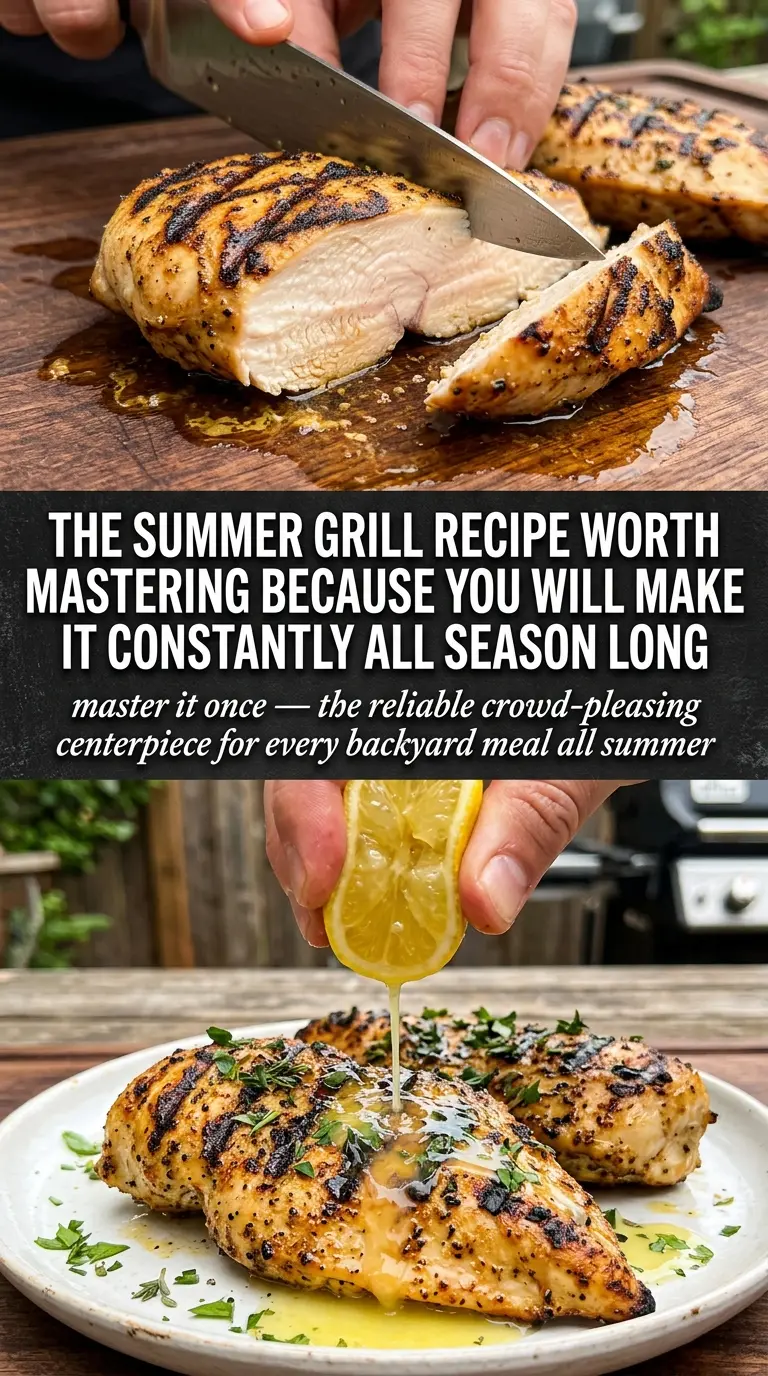
Juicy grilled chicken with deep seasoning and clean, balanced char earns its place in the regular dinner rotation fast. The outside picks up those dark grill marks and a little smoke, while the inside stays tender because the marinade does the work before the chicken ever hits the grates. This is the kind of main dish that feels laid-back enough for a weeknight and steady enough for a backyard cookout.
The marinade pulls double duty here. Soy sauce and Worcestershire bring salt and savor, lemon juice gives brightness, Dijon helps the marinade cling, and brown sugar encourages browning without making the chicken taste sweet. I like using olive oil for body and minced garlic for a sharp, savory edge, then letting the chicken sit long enough to absorb the seasoning but not so long that the lemon starts working against the texture.
Below you’ll find the one timing detail that keeps grilled chicken juicy, the ingredient swaps that still make sense, and the little cues I watch on the grill so the meat cooks through without drying out.
The chicken came off the grill juicy with those perfect marks, and the marinade had just enough lemon and soy to taste bold without being salty. I marinated it for about 4 hours and it was cooked through in no time.
Save this grilled chicken marinade for juicy, smoky chicken with a balanced lemon-garlic finish.
The Reason This Chicken Stays Juicy Instead of Drying Out
The biggest mistake with grilled chicken is treating the grill like the problem when the timing is usually the problem. Lean chicken dries out when it sits over heat too long, and a marinade can’t rescue it after that point. This version works because the marinade seasons all the way through, the sugar helps the surface brown, and the chicken comes off the grill as soon as it reaches 165°F in the thickest part.
That rest time matters too. Pulling the chicken from the grill and letting it sit for about 5 minutes gives the juices time to settle back into the meat instead of running out the second you cut into it. If your chicken has uneven pieces, arrange the thicker ones toward the hotter part of the grill and keep the thinner pieces moving so nothing overcooks while you wait for the center to catch up.
What Each Ingredient Is Actually Doing in All-Star Grilled Chicken
- High heat (essential for browning) — High heat creates crust and caramelization. Medium heat just cooks without developing flavor.
- Oil or fat (for browning and flavor) — The fat helps transfer heat and create crust. It also carries seasonings.
- Salt and seasoning (bold, applied before) — Season confidently. The high heat cooking mellows flavors slightly.
- No moving it around (let it sit) — The food needs time to develop crust. Constant flipping and moving prevents browning.
- Timing (watch carefully) — High heat cooks fast. Check doneness frequently to avoid overcooking.
- Optional: finishing sauce or glaze — Apply in the last minute for flavor without burning. Heavy sauces applied early can char.
- Resting time (5-10 minutes before serving) — Resting allows juices to reabsorb. Cutting right away lets them run out.
- Optional: smoke or char flavor (if available) — Wood smoke or char adds depth. Build the fire strategically for the flavor you want.
What the Marinade Is Doing Before the Chicken Ever Hits the Grill
- Olive oil — Gives the marinade body and helps the seasonings coat the chicken evenly. You don’t need a premium bottle here, just one that tastes clean and not bitter.
- Soy sauce — Adds salt and a deep savory backbone that plain salt alone won’t give you. Use regular soy sauce for the best balance; low-sodium works if you’re watching the salt, but the chicken may taste a little flatter unless you season more assertively elsewhere.
- Lemon juice — Brightens the whole dish and helps the chicken taste fresh instead of heavy. Fresh-squeezed is worth it because bottled lemon juice can taste dull and harsh at the same time.
- Worcestershire sauce — Brings a little tang, molasses, and umami, which gives this marinade its backbone. There isn’t a perfect substitute, but a splash of extra soy sauce plus a little vinegar gets you partway there.
- Dijon mustard — Helps the marinade emulsify so the oil and acid don’t separate immediately. It also adds a subtle sharpness that keeps the chicken from tasting one-note.
- Brown sugar — Encourages better browning on the grill and rounds out the acid. Don’t skip it unless you need a sugar-free version, because this is part of what gives the chicken that glossy, caramelized finish.
- Garlic, black pepper, and paprika — These build the grill-seasoned flavor people expect from classic BBQ chicken. Fresh garlic matters more than pre-minced here because the marinade is short and the garlic flavor needs to come through clearly.
How to Grill It So the Outside Charms and the Inside Stays Tender
Whisking the Marinade Until It Clings
Whisk the marinade until the brown sugar dissolves and the mixture looks glossy, not streaked with oil. If the sugar stays gritty, it tends to settle at the bottom of the bowl and you lose both flavor and browning power. Coat the chicken well, then turn it a few times in the refrigerator so every piece gets exposed to the marinade evenly.
Preheating the Grill the Right Way
Get the grill to medium-high heat before the chicken goes on. If the grates aren’t hot enough, the chicken sticks and steams instead of searing. Clean and oil the grates once they’re hot; that thin coat of oil gives you a better release and cleaner grill marks.
Cooking to Temperature, Not to the Clock
Lay the chicken on the grates and let it sear before you move it. If it sticks when you try to turn it, give it another minute; once the crust forms, it usually releases on its own. Turn the pieces occasionally and start checking for doneness early, because the difference between juicy and dry can be just a couple of minutes depending on thickness.
Resting Before Serving
Pull the chicken when the thickest part reaches 165°F and let it rest for 5 minutes. Cutting too soon sends the juices onto the cutting board instead of back into the meat. Rested chicken slices cleaner, stays moister, and tastes more seasoned because the juices are back where they belong.
How to Adjust This for Different Grills and Different Diets
For bone-in chicken pieces
Use the same marinade, but plan on a longer cook time over medium heat so the outside doesn’t burn before the meat near the bone cooks through. Bone-in pieces hold onto moisture well, but they need patience and a cooler zone on the grill so the sugars in the marinade don’t scorch.
For a gluten-free version
Swap in gluten-free soy sauce or tamari and check your Worcestershire sauce label, since some brands include gluten. The flavor stays close to the original, and you still get that same savory, well-rounded marinade.
For a lower-sugar finish
Cut the brown sugar in half and watch the grill a little more closely, since less sugar means less browning but also less risk of dark spots. The chicken will taste a touch sharper and less lacquered, which works well if you’re serving it with a sweeter side dish.
For gas grill or charcoal
Gas gives you easy temperature control, while charcoal adds a little more smoke and deeper browning. With either one, keep one part of the grill a little cooler so you can move the chicken if the glaze starts to darken too fast.
Storage and Reheating
- Refrigerator: Store leftovers in an airtight container for up to 4 days. The chicken stays good, though the grilled edges soften a bit.
- Freezer: Freeze cooked chicken for up to 2 months. Slice it first if you want quicker thawing and easier use in salads or wraps.
- Reheating: Warm it gently in a covered skillet over low heat with a splash of water or broth. High heat dries grilled chicken out fast, so skip the microwave blast if you want to keep the texture intact.
Answers to the Questions Worth Asking

All-Star Grilled Chicken
Ingredients
Equipment
Method
- Whisk together olive oil, soy sauce, lemon juice, Worcestershire sauce, Dijon mustard, minced garlic, brown sugar, black pepper, and paprika until the mixture looks evenly combined.
- Place chicken pieces in a container and coat with the marinade, then refrigerate for 2-8 hours.
- Preheat the grill to medium-high heat and arrange the grate for direct cooking.
- Grill chicken, turning occasionally, until the internal temperature reaches 165°F.
- Let the grilled chicken rest for 5 minutes before serving to help the juices settle.