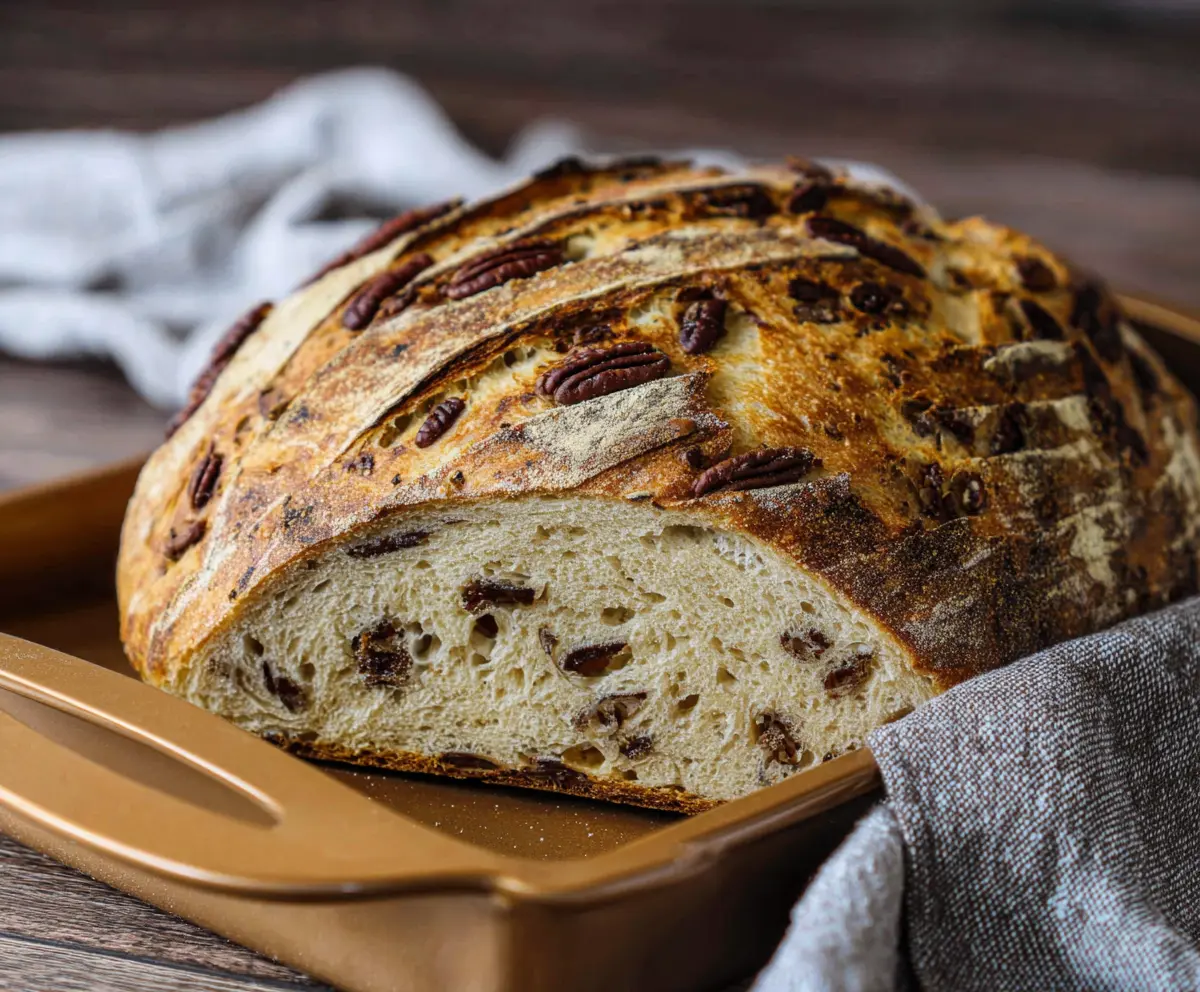
This Maple Pecan Sourdough Bread is a delicious mix of sweet maple syrup and crunchy pecans. It has a lovely golden crust and a soft, chewy center that you’ll love!
Baking this bread fills your kitchen with a warm, inviting aroma. I can’t resist toasting a slice with a little butter—it’s simply the best start to my day! 🥰
Key Ingredients & Substitutions
Bread Flour: Bread flour is ideal for this recipe because it has a higher protein content, giving the bread structure and chew. If you don’t have it, all-purpose flour works just fine, but your loaf might be a bit softer.
Sourdough Starter: Make sure your sourdough starter is active, fed, and bubbly for the best rise. If you don’t have one, you can use instant yeast instead—about 1 tsp should do the trick, but your bread may lose that classic sourdough tang.
Pecans: Pecans add a lovely crunch and flavor, but you can swap them for walnuts or almonds if you prefer. If allergies are a concern, try adding sunflower seeds for a nut-free option.
Maple Syrup: Pure maple syrup gives the bread its unique sweetness. If you need a substitute, try honey or agave syrup, but the flavor profile will change slightly.
Optional Butter/Oil: Coating the pecans in butter or oil before roasting enhances their flavor. If you want to keep it lighter, skip this step or use coconut oil for a different twist.
How Do You Get the Perfect Rise with Sourdough?
The key to getting a great rise with sourdough is understanding fermentation. First, give the dough enough time to bulk ferment at room temperature. This is where the probiotics in your starter work their magic, building flavor and structure. Don’t rush this step!
- Perform stretch and fold techniques during the first 2 hours of fermentation—this helps develop gluten, making your bread airy and light.
- Watch the dough; it should double in size. If it hasn’t risen noticeably, give it a little more time. A warmer environment can help, so consider placing it in a slightly warm spot.
Final proofing is also important. If you have the time, letting it proof in the fridge overnight can enhance flavor, so don’t skip this if you can plan ahead. Remember, the longer the fermentation, the more complex the flavors!
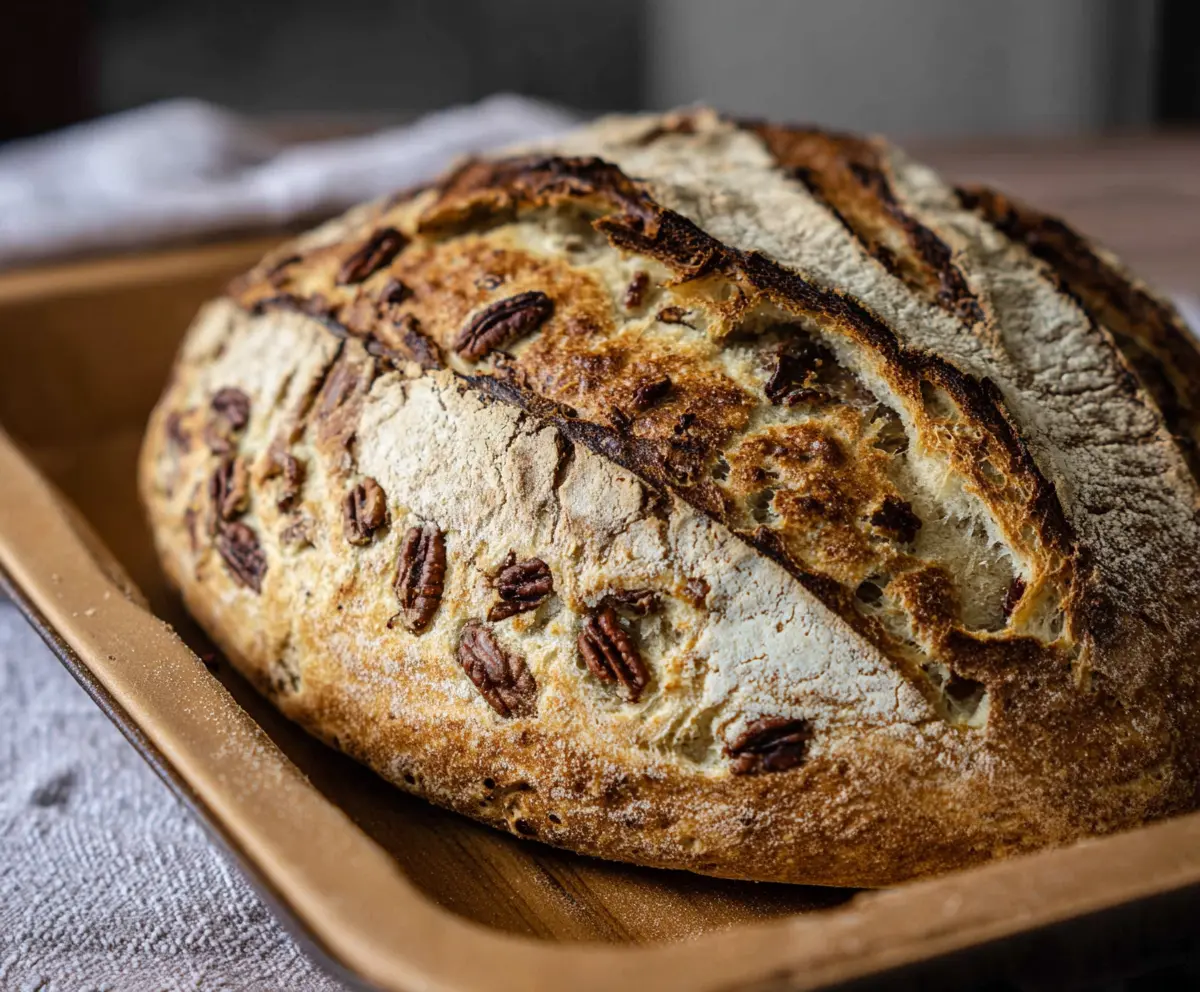
How to Make Maple Pecan Sourdough Bread
Ingredients You’ll Need:
For the Bread:
- 500g bread flour or all-purpose flour
- 100g active sourdough starter (fed and bubbly)
- 325ml water, room temperature
- 10g salt
- 150g pecans, roughly chopped (plus extra for topping)
- 3 tbsp pure maple syrup
- Optional: 1 tbsp softened butter or oil (to coat pecans for extra flavor)
How Much Time Will You Need?
This delicious maple pecan sourdough bread takes about 5-6 hours in total to prepare, including 4-5 hours for bulk fermentation and 1-2 hours for final proofing. Plan ahead if you want to refrigerate it overnight for enhanced flavor!
Step-by-Step Instructions:
1. Prepare the Pecans:
Start by preheating your oven to 350°F (175°C). In a baking tray, toss the chopped pecans with maple syrup. If you want, add melted butter or oil for a little extra flavor. Spread them evenly on the tray. Roast the pecans in the oven for about 8-10 minutes, giving them a stir halfway through cooking until they’re toasted and fragrant. Once done, let them cool.
2. Mix the Dough:
In a large mixing bowl, combine the flour and water. Stir until just mixed. Cover the bowl and let it rest for about 1 hour—this is your autolyse phase that helps with kneading later.
3. Add Starter and Salt:
After the resting period, add the active sourdough starter and salt to the dough mixture. Mix well until everything is fully combined. This step is essential to introduce the starter’s yeast and flavor into your dough.
4. Incorporate the Pecans:
Gently fold in your cooled maple-roasted pecans into the dough. Make sure they’re distributed evenly so every slice has some nutty goodness!
5. Bulk Fermentation:
Cover the bowl with a damp cloth or some plastic wrap. Now, let the dough rise at room temperature for about 4-5 hours. During the first 2 hours, perform 3-4 sets of stretch and folds every 30 minutes to help develop the dough’s gluten structure.
6. Shape the Dough:
Once the dough has fermented, gently transfer it to a lightly floured surface. Shape the dough into a round loaf or boule. Once shaped, place it into a floured banneton or bowl lined with a kitchen towel, seam side up.
7. Final Proof:
Cover again and let it proof at room temperature for 1-2 hours. You can also refrigerate it overnight for a deeper flavor, which is a great option if you want to prep ahead!
8. Preheat Oven:
About 30 minutes before you plan to bake, place a Dutch oven or baking stone in your oven and preheat it to 475°F (245°C). This will give your loaf a perfect crust.
9. Prepare for Baking:
Carefully transfer the dough onto a piece of parchment paper or right into the hot Dutch oven. Score the top with a sharp knife or lame so that it can expand while baking.
10. Bake:
Cover the Dutch oven with its lid and bake for 20 minutes. Then, remove the lid and bake for an additional 20-25 minutes until the crust is a rich golden brown and crisp to the touch.
11. Cool:
Once the bread is done baking, remove it from the oven and transfer it onto a wire rack. Let it cool completely before slicing to allow the crumb to set perfectly.
This recipe yields a wonderful sourdough loaf that’s crusty on the outside and tender inside, with delightful chunks of maple-roasted pecans. Enjoy every slice!
Can I Use Different Nuts in This Recipe?
Absolutely! While pecans are a delicious choice, you can substitute them with walnuts, almonds, or even hazelnuts. Just keep in mind that the flavor profile will change slightly depending on your choice!
How Should I Store Leftover Bread?
To store any leftover bread, wrap it tightly in plastic wrap or aluminum foil and keep it at room temperature for up to 2-3 days. For longer storage, slice it and freeze it in a freezer-safe bag for up to 3 months. Just toast or reheat slices as needed!
What If My Sourdough Starter Isn’t Active?
If your starter isn’t bubbly and active, it won’t provide the best rise for your bread. Try feeding it and letting it sit at room temperature for a few hours until it becomes bubbly. If you’re in a pinch, you can use instant yeast—about 1 tsp should replace the starter, but your bread might lack that sourdough flavor.
Can I Make This Bread Without a Dutch Oven?
Yes! If you don’t have a Dutch oven, you can bake the bread on a baking stone or baking sheet. Just place a shallow pan of water at the bottom of the oven to create steam, which helps develop a nice crust.