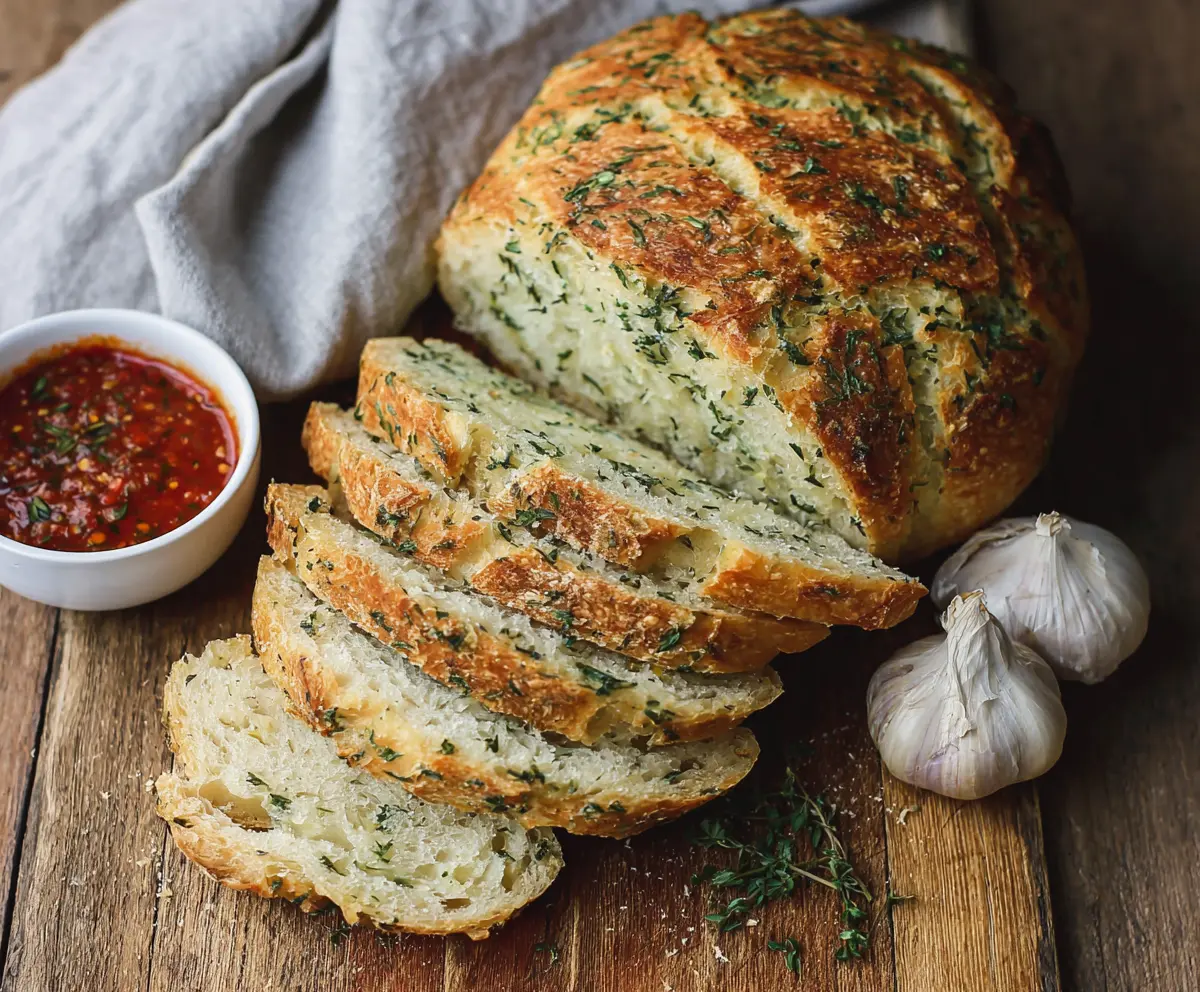
This garlic and herb sourdough bread is bursting with flavor! The warm, crispy crust and soft center make it a real treat. Plus, the delicious smell will have your kitchen feeling cozy.
I love serving this bread with soup or just slathered in butter. It’s so easy to make, and trust me, your friends will be begging for the recipe—if you choose to share! 😉
Key Ingredients & Substitutions
Sourdough starter: A healthy, bubbly starter is crucial for great bread. If you don’t have one, try using a store-bought sourdough culture or make a quick poolish (a mixture of flour, water, and yeast) as an alternative.
Flour: All-purpose flour works beautifully, but you could use bread flour for a chewier texture. For a whole grain option, consider a mix of whole wheat and all-purpose flour, but be aware it may need more water.
Garlic: Fresh garlic gives the best flavor, but garlic powder is a good substitute if you’re in a pinch—just use 1 teaspoon instead of fresh cloves. Try roasted garlic for a sweeter taste!
Herbs: While parsley and thyme are fantastic, feel free to swap these for other herbs like basil or oregano based on your taste preference or what you have on hand!
Water: If you’re in a dry climate, you might need the full 1 1/4 cups. Start with less and add more until your dough feels slightly sticky, but not wet.
How Do I Get My Bread to Rise Well?
Rising is crucial for that great texture. Start by allowing your dough to rest after mixing, called autolyse, which develops gluten. Then, during bulk fermentation, keep it warm but not hot – around 75-80°F (24-27°C) is ideal. Remember to cover it to keep moisture in.
- Check for readiness by gently pressing the dough. If it springs back slowly, it’s good to go!
- Don’t rush the fermentation process; longer fermentation builds better flavor and rise.
- If you find the dough isn’t rising well, make sure your starter is healthy and active before starting.
With these tips, you’ll have a beautiful garlic and herb sourdough bread rising to the occasion! Happy baking!
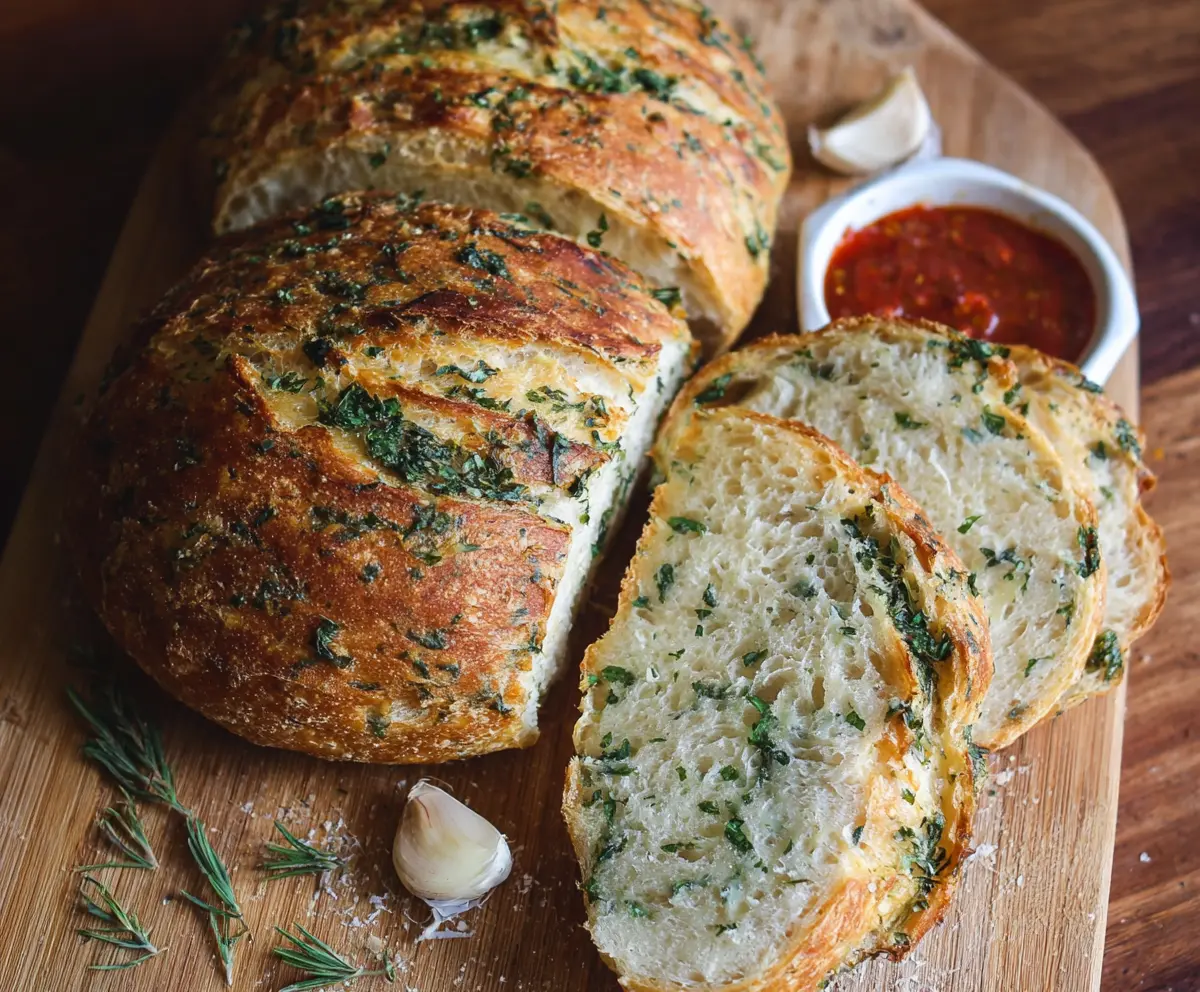
Garlic And Herb Sourdough Bread
Ingredients You’ll Need:
- 1 cup (240g) active sourdough starter (fed and bubbly)
- 3 cups (360g) all-purpose flour
- 1 to 1 1/4 cups (240-300ml) water, lukewarm
- 1 teaspoon salt
- 4-5 cloves garlic, finely minced or grated
- 2 tablespoons fresh parsley, finely chopped
- 1 tablespoon fresh thyme leaves or rosemary, chopped
- 2 tablespoons olive oil or melted butter (optional, for flavor in dough)
- Coarse sea salt and extra herbs for topping (optional)
How Much Time Will You Need?
This delicious garlic and herb sourdough bread takes about 15 minutes to prepare, followed by around 4-6 hours of fermentation and a final rising time of 2-3 hours. When you include the baking time of 40-45 minutes, you can expect the whole process to take about 7-10 hours, but most of that is waiting for the dough to rise!
Step-by-Step Instructions:
1. Feed Starter and Prepare Dough:
In a large mixing bowl, combine the active sourdough starter, 1 cup of the flour, and 3/4 cup lukewarm water. Stir until just combined. Cover the bowl and let this mixture rest for 30 minutes to encourage autolyse, which helps in gluten formation.
2. Add Remaining Ingredients:
After the rest, add the salt, minced garlic, chopped herbs, and olive oil or melted butter, if you’re using it. Mix in the remaining 2 cups of flour and gradually add more water as needed to create a slightly sticky dough.
3. Mix and Knead:
Use your hands or a dough hook to mix until all ingredients are fully combined. Knead the dough on a lightly floured surface for about 8-10 minutes until it feels smooth and elastic. Alternatively, you can do the stretch and fold method every 30 minutes for 2 hours if you prefer less hands-on kneading.
4. Bulk Fermentation:
Place the kneaded dough in a clean bowl and cover it with a damp towel or plastic wrap. Let it rise at room temperature for 4-6 hours until it has roughly doubled in size. If your kitchen is cool, it may take a bit longer.
5. Shape the Dough:
Once the dough has risen, carefully turn it out onto a lightly floured surface. Gently shape it into a round boule by folding the edges into the center and then flipping it seam-side down. Allow it to rest for 20 minutes.
6. Final Proof:
After resting, place the dough into a well-floured proofing basket or a bowl lined with a floured kitchen towel. Cover it and let it rise for another 2-3 hours at room temperature, or you can refrigerate it overnight for a more developed flavor.
7. Preheat the Oven:
About 30 minutes before you plan to bake, place a Dutch oven or heavy oven-safe pot with a lid in your oven and preheat to 450°F (230°C). This will ensure your pot is hot enough to create steam when you bake.
8. Score and Bake:
When ready to bake, carefully remove the hot Dutch oven from the oven. Turn the dough out onto a piece of parchment paper. Score the top with a sharp knife or razor blade to allow for expansion. Place the parchment and dough into the Dutch oven and cover it with the lid.
9. Bake Covered for 20 Minutes:
Baking the bread covered traps the steam and helps develop a crispy crust.
10. Bake Uncovered for 20-25 Minutes:
After 20 minutes, remove the lid and continue to bake until the crust is golden brown and the bread sounds hollow when tapped on the bottom.
11. Cool Before Slicing:
Once baked, transfer the bread to a wire rack. Allow it to cool completely for about 1-2 hours before slicing. This helps to finish baking inside and sets the crumb nicely.
This scrumptious garlic and herb sourdough bread is fantastic on its own, or served alongside soups, salads, or simply dipped in olive oil or butter. Enjoy your baking adventure!
Can I Use Dried Herbs Instead of Fresh?
Yes, you can use dried herbs in place of fresh. Generally, use about 1/3 of the amount since dried herbs are more concentrated. For this recipe, about 1 teaspoon of dried thyme or rosemary should work well!
What If My Dough Isn’t Rising?
If your dough isn’t rising, it could be due to a few factors, such as a weak starter or temperature. Ensure your starter is active and bubbly before use. Additionally, try placing the dough in a warmer area, or give it more time to rise. Sometimes, especially in cooler climates, dough can take longer than expected!
Can I Make This Recipe Ahead of Time?
Absolutely! You can prepare the dough up to the final proof stage, then refrigerate it overnight. Just be aware that cold dough may take a little longer to bake, so plan accordingly!
How Should I Store Leftover Bread?
Store any leftover sourdough bread in a paper bag or wrapped in a kitchen towel to keep the crust crisp. For longer storage, you can slice the bread and store it in an airtight container in the freezer, where it will keep for up to 3 months. Just toast or warm the slices before enjoying again!