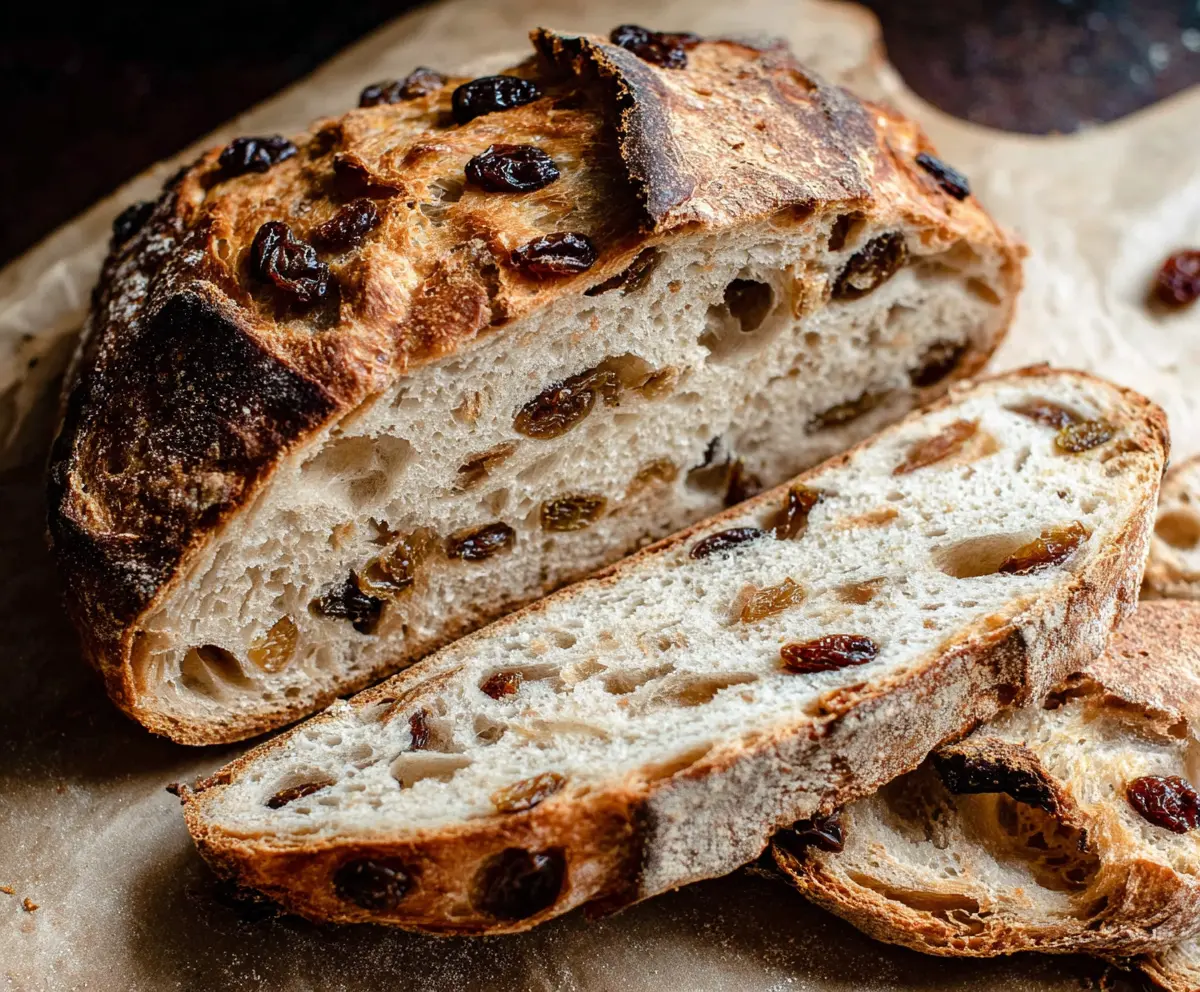
This Cinnamon Raisin Sourdough Bread is a warm, comforting treat that brings a bit of sweetness to your day. With its soft texture and the delightful mix of cinnamon and raisins, it’s simply irresistible!
Slicing into this bread while it’s still warm is my favorite thing. The smell alone is enough to make anyone smile. I often enjoy it toasted with a little butter—so yummy! 😋
Key Ingredients & Substitutions
Bread Flour: This is essential for a sturdy structure. If you don’t have bread flour, you can use all-purpose flour, but your bread may be a bit less chewy. I often mix in some whole wheat flour for additional flavor and nutrition, about 1/4 of the total amount.
Active Sourdough Starter: A lively starter is key to good fermentation. If you’re new to sourdough, try to use a portion of store-bought sourdough starter to get going. In a pinch, you can use instant yeast (about 1 tsp) to speed things up, but the flavor won’t be quite the same!
Raisins: Both dark and golden raisins work well. If you’re not a fan of raisins, try cranberries, chopped dates, or even dried apricots. Sometimes, I like to mix in nuts for added crunch!
Cinnamon: This gives your bread that lovely warm flavor. You can adjust the amount to your taste, or try using other spices like nutmeg or allspice for a twist.
Honey or Sugar: This is optional but gives a slight sweetness and helps with yeast activity. Maple syrup or agave can be used as alternatives if you’re looking for something different.
What’s the Best Way to Develop Gluten Without Overworking the Dough?
Gluten development is important for good texture in your bread. A series of stretch and folds during the bulk fermentation phase can help achieve this without excessive kneading:
- After your dough has rested for 30 minutes, wet your hands to prevent sticking.
- Grab one edge of the dough, stretch it up and fold it over the middle. Turn the bowl 90 degrees and repeat this process until you’ve stretched and folded all four sides.
- Do this every 30 minutes for the first 2 hours of fermentation. This gentle stretching helps strengthen the gluten without deflating the dough too much.
Remember, the goal is a smooth and elastic dough. Listening to your dough is just as important as the timing! If it feels strong and stretchy, you’re on the right track.
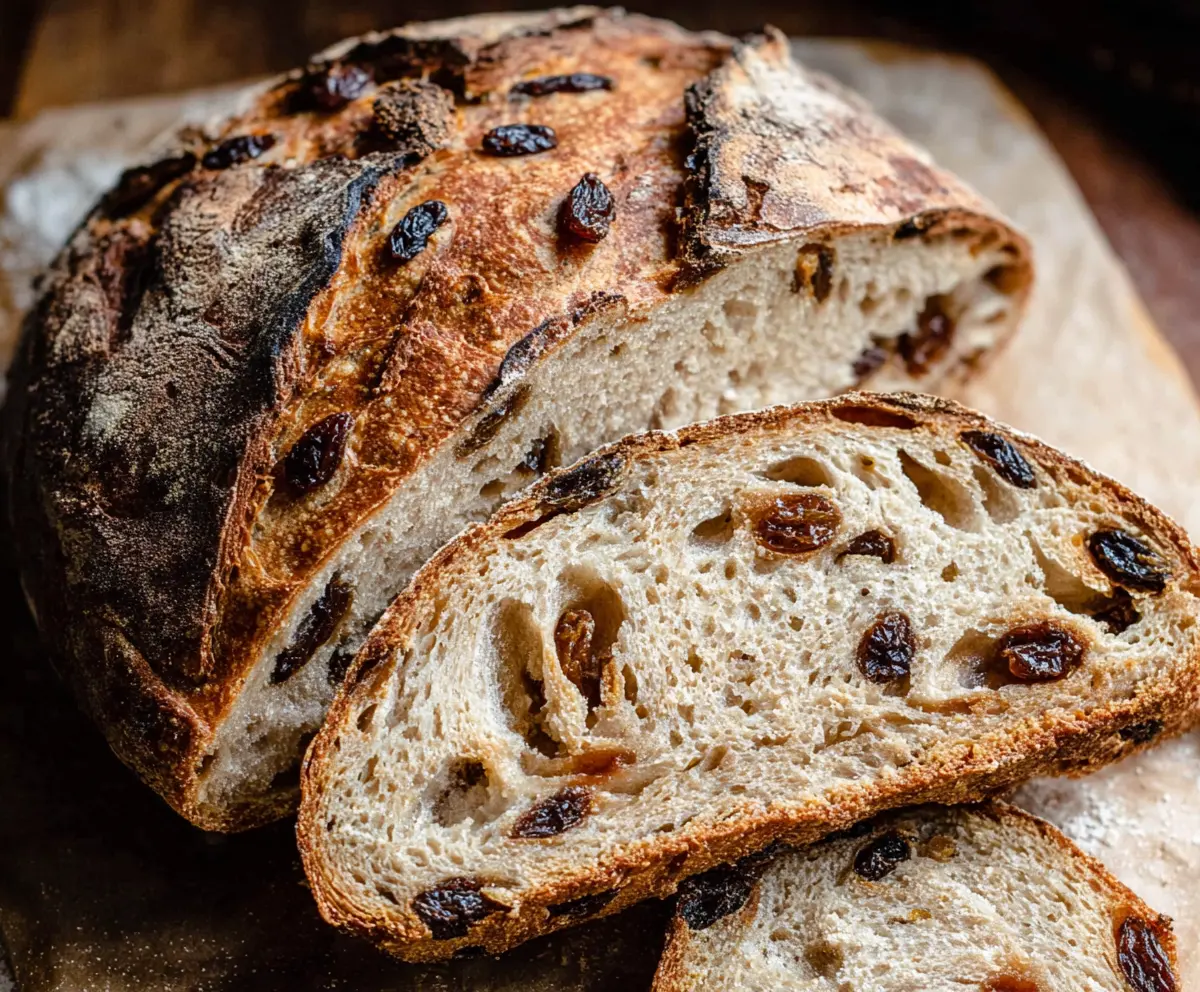
How to Make Cinnamon Raisin Sourdough Bread
Ingredients You’ll Need:
For the Dough:
- 500g bread flour
- 350g lukewarm water
- 100g active sourdough starter (100% hydration)
- 10g salt
- 150g raisins (dark or golden, or a mix)
- 2 tsp ground cinnamon
- 1 tbsp honey or sugar (optional, to enhance sweetness and yeast activity)
How Much Time Will You Need?
This recipe takes about 20 minutes of active preparation time. You’ll need around 4 to 5 hours for bulk fermentation, plus an additional 2 to 4 hours for final proofing (or 8-12 hours if you decide to refrigerate it overnight). The total time from start to finish, including baking, will be approximately 6 to 8 hours, which mostly takes care of itself while you wait! Perfect for a cozy weekend project.
Step-by-Step Instructions:
1. Prepare the Raisins:
Start by soaking the raisins in warm water for about 15 minutes. This will help plump them up and make them juicier. After they’re soaked, drain them and pat them dry with a clean towel. Set aside for later!
2. Mix the Dough:
In a large mixing bowl, combine the bread flour, ground cinnamon, and salt. Mix them together so everything is evenly distributed. Next, add the active sourdough starter and lukewarm water. Mix thoroughly until all the flour is hydrated and you have a shaggy dough. It doesn’t need to be perfect at this stage—just mixed!
3. Let It Rest (Autolyse):
Cover the bowl with a clean kitchen towel or plastic wrap and let the dough rest for 30 minutes. This rest period helps develop gluten and makes the dough easier to work with.
4. Incorporate the Raisins:
After the resting period, gently add the drained raisins to the dough. Use your hands or a dough scraper to fold or knead the dough gently, incorporating the raisins without crushing them. This will give your bread tasty bursts of sweetness!
5. Start Bulk Fermentation:
Cover the dough again and let it ferment at room temperature (around 21-24°C / 70-75°F) for about 4 to 5 hours. During the first 2 hours, every 30 minutes, perform a series of stretch and folds. To do this, wet your hands, grab one edge of the dough, stretch it up, and fold it over the middle. Rotate the bowl and repeat this for a total of 4 sides. This helps build gluten strength in the dough.
6. Shape the Dough:
Once the bulk fermentation is complete, gently turn the dough out onto a floured surface. Shape it into a round boule or an oval loaf without deflating it too much and trying to preserve those lovely air pockets inside.
7. Prepare for Final Proofing:
Place the shaped dough seam-side up into a floured banneton (a proofing basket) or a bowl lined with a flour-dusted towel. Cover it and let it proof for 2 to 4 hours at room temperature, or you can pop it in the fridge overnight (8-12 hours) for a slower fermentation and deeper flavor.
8. Preheat the Oven:
When you’re ready to bake, preheat your oven to 230°C (450°F) with a Dutch oven or baking stone inside. This helps get the crust nice and crispy!
9. Bake the Bread:
Carefully transfer the dough onto a piece of parchment paper. Use a sharp blade to score the top of the loaf—this allows the steam to escape while it bakes. Then place the dough with the parchment into your preheated Dutch oven and cover it with the lid. Bake for 20 minutes.
10. Finish Baking:
After 20 minutes, remove the lid of the Dutch oven and continue baking for another 20-25 minutes until the crust is golden brown and feels firm to the touch.
11. Cool and Enjoy:
Once baked, place the bread on a wire rack to cool for at least 2 hours before slicing. This lets the crumb set nicely, ensuring your slices don’t fall apart. Enjoy the warm, cinnamon-sweet aroma that fills your kitchen as you wait!
This cinnamon raisin sourdough bread combines the tangy flavor and airy texture of traditional sourdough with the warm sweetness of cinnamon and juicy bursts from raisins. Perfect for breakfast, snacking, or as a dessert! Enjoy every bite!
Can I Use Instant Yeast Instead of Sourdough Starter?
Yes, you can use instant yeast for a quicker rise! Replace the sourdough starter with about 1 teaspoon of instant yeast and adjust the liquid slightly. The flavor won’t be as complex, but it’ll still yield delicious bread!
What If I Don’t Have a Banneton?
No problem! You can use a regular bowl lined with a well-floured kitchen towel instead. Just make sure to flour it generously to prevent sticking. The dough will still hold its shape nicely!
Can I Freeze This Bread?
Absolutely! Once the bread has cooled completely, you can wrap it tightly in plastic wrap and aluminum foil before freezing. It’ll stay fresh for up to 3 months. Just thaw it at room temperature when you’re ready to enjoy it again!
How to Tell if My Sourdough is Overproofed?
If your dough has risen too long and starts to sag or look flat, it’s likely overproofed. For future batches, keep an eye on the time and do a poke test: gently poke the dough with a finger—if it springs back slowly, it’s ready; if it doesn’t spring back at all, it’s overproofed!